Given the tens of thousands of generations that precede us, I think human beings - homo sapiens - can be thought of in the following ways:
Humans are experiential, feeling, thinking, remembering, imagining, sentient, networking, idiosyncratic, embodied, procreating computers {conscious, cultural, distributed input-think/feel-output bodymind systems that can have babies and can self-program (“add/remove programs?”;) / learn / plan and that also have been 'selected for' / “encoded” in ancestral environments via Darwinian natural selection, and by family and community (acculturation)}.
I see this as the beginning of a 'theory' of the 'person' - as well as the 'subject,' the 'individual' and the 'actor', in anthropological and social theory senses - that incorporates information technology metaphors, evolutionary biology {Darwinian evolution by natural selection}, as well as a conception of agency {choice}. I contextualize this conception of human-ness in this letter - scottmacleod.com/daltonletter.htm - about love and loving bliss vis-a-vis a kind of far-reaching 'realism' :).
Thursday, July 31, 2008


Wednesday, July 30, 2008
Tree: Evolutionary Biology & Nontheist Friends
Here's an overview of one possible way of thinking about evolutionary biology and nontheist friends, involving a kind of historicization of biological developments as I see them.
{For one definition, see the Wikipedia entry on nontheist friend. Although partly engaging a contemporary Quaker conversation, I think of this term in a broad sense}.
There are so many tens of thousands of generations that precede us - to the beginning of life 3.5 billion years ago - and a predisposition for people affiliated with even nontheism (atheism) not to engage questions concerning evolution. This is curious to me, perhaps because this seems to represent a significant disjunction between biological legacies and cultural ones, to use language I engage.
So, a quick sketch from my perspective vis-a-vis life and nontheistic (atheistic) friends:
In the Cambrian explosion some 530 million years ago, a little cordate creature developed, through evolution by natural selection, - perhaps something that could have been an ancestor of ours. (See Gould's "Wonderful Life" on the fossil finds in the Burgess Shale from the Cambrian).
65 million years ago, dinosaurs disappeared in the K-T extinction, but frog-size reptiles and squirrel-size mammals survived. (It was warm and there was food, even if it was dark for extended periods of time, is one main hypothesis).
7-5 million years ago homo sapiens emerged, standing upright.
About 60 000 - 100 000 all of our ancestors left Africa. (See anthropologist and geneticist Spencer Wells' research).
Language's emergence is lost in the depths of time and generations (although see Terrence Deacon's "The Symbolic Species: The Co-evolution of the Brain and Language" for an explanation of how the human brain got bigger due to articulation of symbols (his thesis)). 5500 years ago is the first evidence for the beginnings of writing.
There's lots of history to 1660s, when Friends (Quakers) started to sit in silent meeting, and conduct meeting for business, and develop the peace testimony, generating social forms that have continued through to today.
Staying with the biological, I wonder if the centering down that occurred in a) silent meeting and the listening that occurred in b) meetings for business, as well as the orientation to c) peaceableness, were forms of the relaxation response (Benson 1972 - a biological phenomenon, that can be very harmonizing and integrating), leading to calm, group, social networking, and a successful approach to age-old, human, group, conflictual tensions through nonviolence, in an increasingly prosperous, yet industrializingly-chaotic Britain - with long, evolutionary biological antecedents. (Were Quakers somehow more like Bonobo chimps {Pan paniscus}, about whom data so far shows to be peaceful and without war or homicide, than common chimps (Pan troglodytes}, which make war and commit homicide?) In this privileging of biology, early Friends would have troopbonded (Money 1988) around the above practices, as well as early Friends' (Quaker) language, which they found beneficial and socially integrative for the group, but wouldn't even have considered explaining these in biological terms, as this discourse didn't exist 350 years ago.
Nontheistic friendly thinking emerges (see link above), and the 'biological' logically (if not theism, then biology ... ) comes into the conversation, but with thus far a lack of engagement with questions of biology and human evolution by nontheist friends, that I have read.
Originating from anthropological, sociological and information technological interests and knowledge, I think that engaging questions of biology/human evolutionary history & nontheist friends' discourse, exclusive of identity questions (vis-a-vis anthropology), if possible, has merit.
And given the centrality of the Internet (as a new, far-reaching cultural development) to this nontheistically friendly conversation, perhaps giving rise to a new nontheistically friendly {Quaker identity & other}, where are nontheistically friendly kids (biology)?
I think it would be fascinating to engage questions of evolutionary biology to complement the questions nontheist friends have been exploring thus far. Looking forward to further conversation with nontheists and theists.
{For one definition, see the Wikipedia entry on nontheist friend. Although partly engaging a contemporary Quaker conversation, I think of this term in a broad sense}.
There are so many tens of thousands of generations that precede us - to the beginning of life 3.5 billion years ago - and a predisposition for people affiliated with even nontheism (atheism) not to engage questions concerning evolution. This is curious to me, perhaps because this seems to represent a significant disjunction between biological legacies and cultural ones, to use language I engage.
So, a quick sketch from my perspective vis-a-vis life and nontheistic (atheistic) friends:
In the Cambrian explosion some 530 million years ago, a little cordate creature developed, through evolution by natural selection, - perhaps something that could have been an ancestor of ours. (See Gould's "Wonderful Life" on the fossil finds in the Burgess Shale from the Cambrian).
65 million years ago, dinosaurs disappeared in the K-T extinction, but frog-size reptiles and squirrel-size mammals survived. (It was warm and there was food, even if it was dark for extended periods of time, is one main hypothesis).
7-5 million years ago homo sapiens emerged, standing upright.
About 60 000 - 100 000 all of our ancestors left Africa. (See anthropologist and geneticist Spencer Wells' research).
Language's emergence is lost in the depths of time and generations (although see Terrence Deacon's "The Symbolic Species: The Co-evolution of the Brain and Language" for an explanation of how the human brain got bigger due to articulation of symbols (his thesis)). 5500 years ago is the first evidence for the beginnings of writing.
There's lots of history to 1660s, when Friends (Quakers) started to sit in silent meeting, and conduct meeting for business, and develop the peace testimony, generating social forms that have continued through to today.
Staying with the biological, I wonder if the centering down that occurred in a) silent meeting and the listening that occurred in b) meetings for business, as well as the orientation to c) peaceableness, were forms of the relaxation response (Benson 1972 - a biological phenomenon, that can be very harmonizing and integrating), leading to calm, group, social networking, and a successful approach to age-old, human, group, conflictual tensions through nonviolence, in an increasingly prosperous, yet industrializingly-chaotic Britain - with long, evolutionary biological antecedents. (Were Quakers somehow more like Bonobo chimps {Pan paniscus}, about whom data so far shows to be peaceful and without war or homicide, than common chimps (Pan troglodytes}, which make war and commit homicide?) In this privileging of biology, early Friends would have troopbonded (Money 1988) around the above practices, as well as early Friends' (Quaker) language, which they found beneficial and socially integrative for the group, but wouldn't even have considered explaining these in biological terms, as this discourse didn't exist 350 years ago.
Nontheistic friendly thinking emerges (see link above), and the 'biological' logically (if not theism, then biology ... ) comes into the conversation, but with thus far a lack of engagement with questions of biology and human evolution by nontheist friends, that I have read.
Originating from anthropological, sociological and information technological interests and knowledge, I think that engaging questions of biology/human evolutionary history & nontheist friends' discourse, exclusive of identity questions (vis-a-vis anthropology), if possible, has merit.
And given the centrality of the Internet (as a new, far-reaching cultural development) to this nontheistically friendly conversation, perhaps giving rise to a new nontheistically friendly {Quaker identity & other}, where are nontheistically friendly kids (biology)?
I think it would be fascinating to engage questions of evolutionary biology to complement the questions nontheist friends have been exploring thus far. Looking forward to further conversation with nontheists and theists.
Sunday, July 27, 2008
Evolutionary Biology & Nontheist Friends
I'm writing to see if we might develop a far-reaching conversation about evolutionary biology vis-a-vis nontheist friends. Here's an overview of one possible way of thinking about evolutionary biology and nontheist friends, involving a kind of historicization of human evolution.
More soon ... limited internet access.
More soon ... limited internet access.
Friday, July 25, 2008
Forest: World University as Linux-like OS for world learning * * * Updated this CC-4 licensed MIT OCW-centric wiki World University and School blog post from Friday, July 25, 2008 on Tuesday, January 16, 2024 - * and re https://wiki.worlduniversityandschool.org/wiki/Nation_States & https://wiki.worlduniversityandschool.org/wiki/Africa & https://wiki.worlduniversityandschool.org/wiki/Languages ~
Come and join the last class of the summer in-world (Second Life) this upcoming Wednesday, July 30, 2008) to converse - socinfotech.pbwiki.com - click on "How to Get There."
As we've been envisioning it, anyone might add courses to or take courses from this University, like Wikipedia, although degree-granting, at first, would be for matriculated students, perhaps, for example, at Harvard, MIT or Cal Berkeley. While all countries (around 200, perhaps starting with the countries in Global Voices Online) and all languages (possibly 3000, but starting with those languages in Wikipedia) will be part of this, I'd like to focus at first on the countries that MIT's One Laptop Per Child is also engaging: Rwanda, Ethiopia, Colombia, Haiti, Mexico, Peru, USA (Birmingham, Alabama), Uruguay, Afghanistan, Mongolia, Cambodia, & Papua New Guinea.
World University might offer four courses, at first, in each of these countries, to be engaged possibly on One Laptop Per Child and iPhone-like devices (and see, for example: https://wiki.worlduniversityandschool.org/wiki/IPhone_as_musical_instrument). And people in these countries can, of course, add their own courses to the wiki, with knowledge they would like to share. And Harvard professors, for example, might also teach 4 courses at the undergraduate level, and 1 graduate level course, in the fall of 2009, with at-large participation possible. A video-capable iPhone-like device would allow people who are illiterate to take and post courses to this wiki.
World University is doable and far-reaching. It's also already open in rudimentary form, to which you can add courses, and could extend thousands of years in the future - http://globaluniversity.pbwiki.com, generating a remarkable archive of courses over time. Perusing this wiki will give you an idea of ways in which this University may develop, and you can add to this wiki by, at present, contacting me. In addition to academic courses, this "Multilingual University" will be open to almost all possible courses, including Ph.D.-related ones, and those in Medicine, Music (both Western and Indian classical, with instrumental training possible), Veterinary, Law, Electrical Engineering, etc., as well as 'harmonizing' and therapeutic courses like yoga, Watsu, and acupuncture.
At present, if you're oriented to learning on your own, you can start taking courses from, for example, MIT's Open Course Ware listing of 1800 courses, with many video lectures already posted. But credit and degree-granting isn't yet pragmatic in this envisioning, and I think this might take possibly 10 years to develop. People ultimately train their own minds in whatever learning context, and World University may well facilitate this in new ways.
Almost every aspect of learning that takes place in a classroom or learning situation now, is possible to engage in virtual worlds like Second Life today, and these virtual world technologies will develop a lot in the next few years.
I've posted the roughly 9 transcripts about "World University," so far, from the "Society and Information Technology" course I teach in Second Life here http://socinfotech.pbwiki.com.
I think this project might cost at least 1 billion U.S. dollars per year, and a "World University Foundation" would facilitate the financial side of this project, but this University would be free to students.
We've been talking about names for this University, and right now World University, Multilingual University, Aphilo's Multilingual University, Rainbow University, World School or Knowledge University have come up for discussion.
Please share your thoughts about "Global School," "Aphilo's University Multilingual" or "World University and School." Enjoy this forest :)
World University, in Africa
Why not create a U.S. $10 solar, video-capable, iPhone-like device, in conjunction with One Laptop Per Child, to distribute easily in Africa, for example, in the Congo, so that peoples there might start to teach and learn courses vis-a-vis World University's Wiki, in Agriculture, Business, Computer Science, English, and in Kikongo, Lingala, Tshiluba, Swahili, French and English languages (of the estimated 242 languages of the Congo)?
With this World University Wiki, local teachers could use such devices to teach one-to-many wherever Internet access is available, in conjunction, to start, with the most competent University there, and to record courses directly to the World Wide Web.
*
Updated this CC-4 licensed MIT OCW-centric wiki World University and School blog post from Friday, July 25, 2008 on Tuesday, January 16, 2024 -
Scott
and re
Society, Information Technology, and the Global University (2024, forthcoming)
Scottish Small Piping album #2 - Honey Piobaireachd (2022)
- https://twitter.com/TheOpenBand (Berkeley)
Scottish Small Piping album #1 Honey in the Bag ~ Out of the Air tune (2020)
Order Book #4 To the Dance or the Pools? ~ Virtually! How different it is to soak at Harbin Hot Springs, than to realize it in virtual reality (2019)
Order Book #3 Winding Road Rainbow: Harbin, Wandering & the Poetry of Loving Bliss (2018)
Order Book #2 Haiku-ish and Other Loving Hippie Harbin Poetry (2017)
Order Actual-Virtual Ethnographic Book #1: Naked Harbin Ethnography (2016)
- Scott GK MacLeod
Founder, President, CEO & Professor
CC-4 licensed MIT OCW-centric, Wiki,
World University & School (WUaS)
- PO Box 442, Canyon, CA 94516
- 5816 Callowhill St., Pittsburgh, PA 15206
1) non-profit 501(c)(3) Public Charity
MIT OCW-centric,
World University and School - http://worlduniversityandschool.org
2) for profit general stock company WUaS Corporation in CA - http://worlduniversityandschool.org/AcademicPress.html
(o) 415 480 4577 - sgkmacleod@worlduniversiryandschool.org
(m) 412 478 0116 - sgkmacleod@gmail.com
World Univ & Sch Innovation Research - scottmacleod.com
- https://twitter.com/sgkmacleod (all 7,168 known living languages at WUaS)
*

...
Thursday, July 24, 2008
Sun: Watsu ~ water shiatsu
Harbin Hot Springs experimented a lot in the 1970s, affirming massage, bodywork and touch, as modalities in human interaction, and as part of the Human Potential Movement. Watsu {water shiatsu} developed uniquely at Harbin, in the context of its pools and beautiful milieu. And from this, a Watsu school emerged at Harbin.
At the end of a Watsu {water shiatsu treatment} recently, I found much relaxation & inspiration. In Watsu a practitioner draws a recipient of Watsu through the water, generally on top of the water; waterdance is done underwater. The recipient of the session, which might last an hour, is cradled, nurtured and moved through warm (96 degrees?) water in a way that is kind of a dance between two people in the most fluid and enjoyable environment imaginable. The recipient can explore releasing.
A communication grows out of this between the two that is very receptive, opening & wonderful. It's a kind of dance in the sun in water, a watery sundance.
At the end of a Watsu {water shiatsu treatment} recently, I found much relaxation & inspiration. In Watsu a practitioner draws a recipient of Watsu through the water, generally on top of the water; waterdance is done underwater. The recipient of the session, which might last an hour, is cradled, nurtured and moved through warm (96 degrees?) water in a way that is kind of a dance between two people in the most fluid and enjoyable environment imaginable. The recipient can explore releasing.
A communication grows out of this between the two that is very receptive, opening & wonderful. It's a kind of dance in the sun in water, a watery sundance.
Wednesday, July 23, 2008
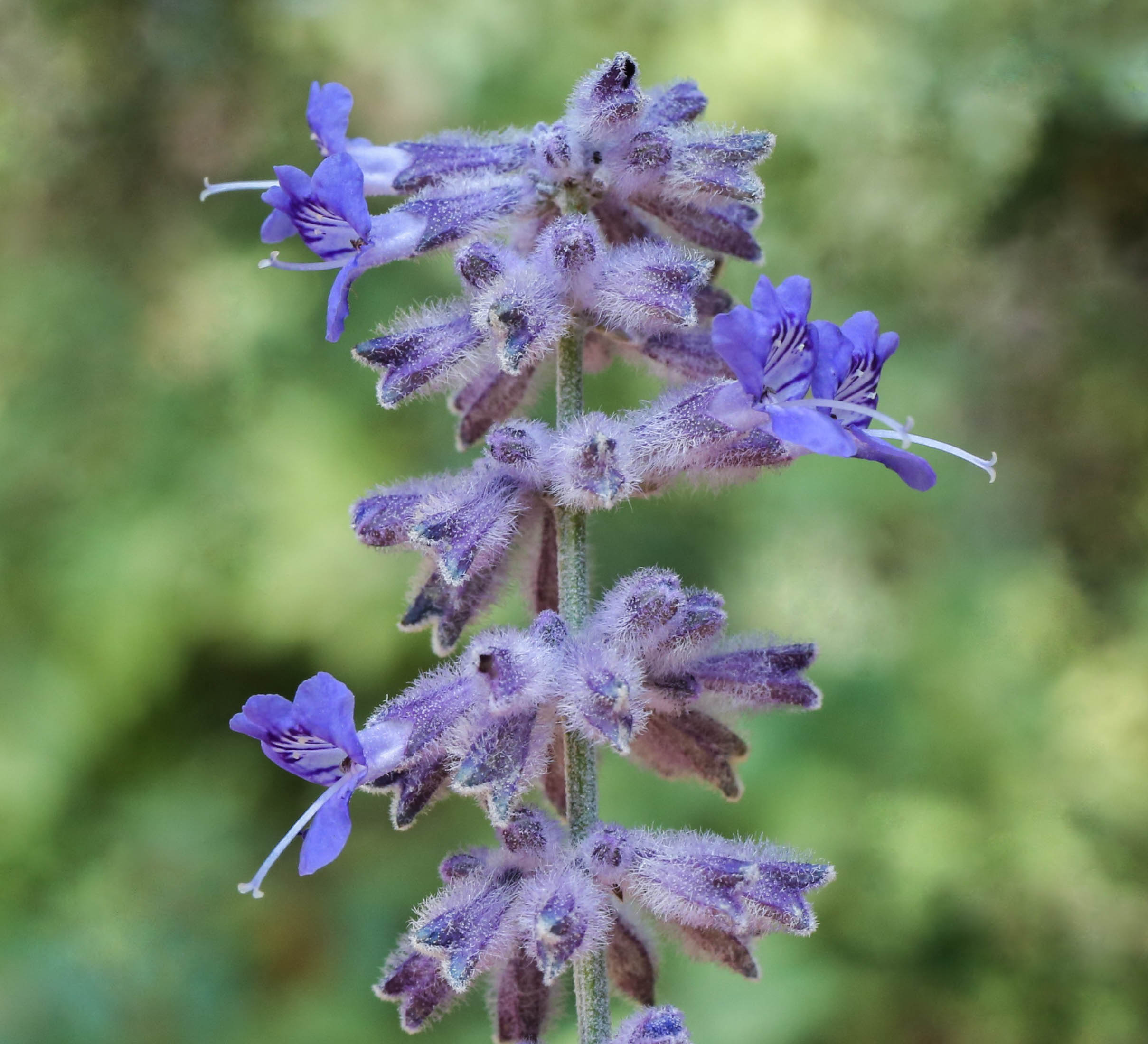
Purple Sage: Ishvara, Words & 'Flow' Experiences
Ishvara
Ishvara bought the Harbin land in 1972 and something remarkable has emerged there since then. {Ishvara is the name for lord or 'supreme controller' in the Hindu pantheon of concepts of divinity}. I think Harbin gives rise to whole new kinds of 'flow' experiences in the aggregate ~ the pools, the relaxation response there, the clothing-optional pool area, Watsu {water shiatsu}, the 'New Age' language and related, shared understandings, the sociality, dances in the conference center, and in the mini-masterpiece of a new cob and bale Temple, that's like a rose, the free films, the restaurant, the openness and freedom, the nature - all these come together to shape a milieu that is unique and wondrous. Much of this originates in relation to the warm pool, and leads me to consider how the Harbin pools are 'technologies' for both releasing, as well as 'virtualization.' Harbin hasn't developed very much in terms of building since the time when Ish bought the land, which also contributes significantly to its beauty and milieu. :)
Words
In the context of ongoing study of counterculture, I'd like to examine how words are technologies, that can have virtualization effects. I'd also like to examine ways in which reading is a technology of the mind, that can have similar qualities to virtualization. Both of these can not only be 'trippy,' - a psychedelic experience, characterized by the perception of aspects of one's mind previously unknown, including hallucinations, changes of perception, synesthesia, altered states of awareness, and mystical states, and literally meaning 'mind-manifesting' - but also rich, 'flow' experiences. When both come together, what occurs can be wondrous, wild & beautiful. Since language is with us in so many ways from early childhood, it's hard to see how remarkable and virtual language is. It's also difficult to cultivate it explicitly as 'virtualization' techniques, say, to explore loving bliss or 'trippiness.'
Someone gave me a new name recently at Harbin in the pool area, I think:
~ Plant Trees Scott
*
Tuesday, July 22, 2008
Water: Harbin Hot Springs
Harbin Hot Springs
I enjoy how free-flowing going into and out of the Harbin pools is. People trickle in and out at all times of the day and night, all days of the year, - quite wonderfully. The process is very organic, like water flowing down hill. When people come out of the pools, things seem quite harmonious for them, and they’ve only been soaking in warm water.
I’d like to document Harbin in the form of an ethnography to create an interpretive record. I’d like to start by characterizing the physical property of Harbin as a field site, leaving aside, for the moment, Sierra Hot Springs and the other properties that Heart Consciousness Church (Harbin) owns.
An anthropology of communities like Harbin on the west coast of the U.S., informed by the 1960s and 1970s, would also include Alpha Farm and Breitenbush Hot Springs in Oregon, for example. They have many aspects in common as communities and organizations, including having achieved economic sustainability. And they each have developed in conjunction with ‘cultural’ developments of the 1980s, 1990s, and 2000s. Perhaps there is less idealism, exploration, radicalism, and free-thought in U.S. culture at large, and, instead, a kind of basic business orientation. But each of these communities has survived because individuals here have paid attention to the business side of the communities that have emerged.
I see Harbin also as a kind of far-reaching 'virtual' space, with a unique fabric of life. I think many people share this at Harbin, as well. In one sense, Harbin is a leading expression of the New Age. Significantly influenced by the 1960s and 1970s, Ishvara bought the land in 1972 to be a Gestalt Center with hot pools. Lots of hippies came here in the 1960s as well, when Harbin was nominally Harbinger University. Institutionalized as Heart Consciousness Church around 1975, Harbin perhaps expresses its visionary aspect here, as well in its architecture, and the residents who live here.
What are the effects of the Harbin waters? People come to visit the Harbin pools, and some settle in the area, so Harbin contributes to building a fabric of life beyond the Harbin valley. The relaxation response that Harbin's pools elicit has an effect on people's sense of ease and community, which then translates Harbin 'rippling' in to the local community. And there are a lot of other effects of the pools, including 'virtualization' ones ... :)

.
Monday, July 21, 2008
Flax Seed: Loving Bliss, Omega-3 Fatty Acids & Harbin's Warm Pool ~ L.B. 'Musical' Explorations
Loving Bliss
What's the biology, or more specifically, neurophysiology of the experience of loving bliss? And what is the anthropology of loving bliss?
Again, here's my definition of loving bliss:
~ experiences that are deeply, gratefully, reciprocally appreciative and affectionate, both with a friend or friends, and alone, as well as profoundly and naturally high at the same time, and which are ongoing, biological, 'flow' experiences.
Omega-3 fatty acids (1000 mg 3-4 times per day from flax seed oil, for example) seem to allow for the neurophysiology of loving bliss's emergence, in my experience. For me, ingesting omega-3 fatty acids lead to a biological, harmonizing effect. (Please let me know of studies that support this clinically as this is anecdotal, but Dr. Andy Weil's web site is a rich reference).
For me, too, Harbin Hot Spring's warm pool, as well as Harbin's milieu, can lead to a far-reaching, relaxation response (Benson 1972) which richly contributes to a basis for loving bliss.
{And Ecstasy - [MDMA - methylene_dioxy_meth_amphetamine] is another instance that loving bliss is neurochemical, although I don't recommend taking it.}
For 'flow,' Csikszentmihalyi's book "Flow: the Psychology of Optimal Experience," about how enjoyment works, shows empirically that this process involves focus or concentration with a goal in mind.
In an anthropological sense, some liminal spaces - places outside social structure - e.g. Harbin, some religious gatherings, Grateful Dead concerts, ragas, traveling, etc. - are sometimes where communitas emerges, and can give rise to loving bliss, in my experience. But I find the 'flow' experience of releasing to elicit the relaxation response particularly salutary, and especially in the Harbin warm pool.
Thinking novelly, with a knowledge-orientation, and systematically, how to access loving bliss when one wants to, and in the ways one wants to, naturally and in far-reaching ways, while functioning well in Modernity, and raising kids, for example?
Loving Bliss Explorations
Seeking loving bliss 'chamber music' musicians, improvisers and composers :)
for the next many decades
For a creative exploration of loving bliss qualities
Naturally and neurophysiologically
Contact - scott@scottmacleod.com
Loving Bliss as Musical Explorations
Guidelines
for practicing loving bliss
scottmacleod.com/GuidelinesPracticingLovingBlissvavMusicalInstrument.htm
vis-à-vis practicing a musical instrument
for the next many decades
For a creative exploration of loving bliss qualities
Naturally and neurophysiologically
Contact - scott@scottmacleod.com
Loving Bliss as Musical Explorations
Guidelines
for practicing loving bliss
scottmacleod.com/GuidelinesPracticingLovingBlissvavMusicalInstrument.htm
vis-à-vis practicing a musical instrument
Sunday, July 20, 2008
Light at Rainbow: Photo Show, Countercultural Places & Organizations
Here's a Rainbow Gathering 2008 photo show:)
And here are some 'places' and organizations that started in the 1960s and 1970s, emerging from counterculture:
Harbin Hot Springs (Ishvara bought the land in 1972): harbin.org
Esalen Institute (1962): esalen.org
Naropa University (1974): naropa.edu
Omega Institute (1977): mahalo.com/Omega_Institute
Alpha Farm in the Oregon coastal range (1972): pioneer.net/~alpha/index.htm
Rainbow Gathering (1972): welcomehome.org
The Hog Farm (1960s): campwinnarainbow.org
The Farm in Tennessee (1971): thefarm.org
Green Tortoise Adventure Bus Line : greentortoise.com
Oregon Country Fair (1969): oregoncountryfair.org
Twin Oaks Intentional Community (1967): twinoaks.org
Grateful Dead (1965): dead.net
Contact Improv (1972): contactimprov.net
And these places played significant roles, as well:
Hot Springs
Wilderness areas
Cal Berkeley: berkeley.edu
Saturday, July 19, 2008
Roots: Source code, Anthropology & Counterculture
Countercultural Roots
Harbin Hot Springs, the Rainbow Gathering and the Internet (like reading) all 'generate' source code, metaphorically, and especially vis-a-vis counterculture.
Hippies are creative and can be very amusing and clever in responding to Modernity. Harbin is one such example. Wavy Gravy is another {wavygravy.net}. There are a lot of these ;)
Field Sites
I'm interested in the anthropology of counterculture, information technology {cyberspace & TCP/IP}, in California and the west coast of the U.S., India (esp. Kerala and the Malayalam language), Switzerland (German, Italian, French and Romansh languages), Greece, Turkey, and Scotland (Scots' Gaelic), - as field sites.
Rainbow Gathering
I didn't see any money changing hands at Rainbow. It was also free to attend the Rainbow Gathering, and the kitchens and camps gave away good food, so food is free there. There were also trading circles, where people exchange things about which value they agreed upon. These are interesting ways of doing things differently in contemporary America.
At Rainbow I heard people talk about the end of Babylon (which, for me, means Modernity, but is Rastafarian meaning corrupt and decadent society) and the envisioning of a new age. It was particularly Rainbow people from northern California – Mendocino, Humboldt and Trinity counties - that I heard express this. I haven't heard this language much at Harbin.
Blogging
And we can all generate 'source code' to the Internet for free with blogs, - here: blogger.com (one of the easiest and best) to participate in this conversation.
Harbin Hot Springs, the Rainbow Gathering and the Internet (like reading) all 'generate' source code, metaphorically, and especially vis-a-vis counterculture.
Hippies are creative and can be very amusing and clever in responding to Modernity. Harbin is one such example. Wavy Gravy is another {wavygravy.net}. There are a lot of these ;)
Field Sites
I'm interested in the anthropology of counterculture, information technology {cyberspace & TCP/IP}, in California and the west coast of the U.S., India (esp. Kerala and the Malayalam language), Switzerland (German, Italian, French and Romansh languages), Greece, Turkey, and Scotland (Scots' Gaelic), - as field sites.
Rainbow Gathering
I didn't see any money changing hands at Rainbow. It was also free to attend the Rainbow Gathering, and the kitchens and camps gave away good food, so food is free there. There were also trading circles, where people exchange things about which value they agreed upon. These are interesting ways of doing things differently in contemporary America.
At Rainbow I heard people talk about the end of Babylon (which, for me, means Modernity, but is Rastafarian meaning corrupt and decadent society) and the envisioning of a new age. It was particularly Rainbow people from northern California – Mendocino, Humboldt and Trinity counties - that I heard express this. I haven't heard this language much at Harbin.
Blogging
And we can all generate 'source code' to the Internet for free with blogs, - here: blogger.com (one of the easiest and best) to participate in this conversation.
Subscribe to:
Posts (Atom)

 Posts
Posts