Saturday, January 31, 2009

Cuillin Mountains: Friends, Academics, Hippies, Loving Bliss

Here's a recent correspondence with a friend in Scotland:


Hello Be,

Long time ... You might find World University and School interesting - http://worlduniversity.wikia.com/wiki/World_University - Teach or take a class, - a Global, Virtual, Open, Free, Multilingual University and School, based on a ... Read MoreWikipedia model. All languages and subjects. Join the Facebook group for more updates - http://www.facebook.com/group.php?gid=48753608141&ref=ts. :)

And Happy New Year :)
Scott


Scott

Good to hear from you. World University looks extremly intresting!
It's a very exciting idea. Will have to look into it more.

Green shoots of recovery here to use a politicaly toxic phrase. Just recovering finaly from a post viral illness which started many years ago.
So not being doing very much apart from researching away on my own

Looking at the four humours as the methodology behind the monsters and wonders I was looking at during m.phil. I am also viewing the four humours as an important ethnological methodology in late 17th century Scotland and looking at relationships with oral culture and its roots from the 12th cen onwards in a range of texts. Focusing in particular on melancholia and lovesickness/greif from the 12th to 18th cen. With a sideline in Barnacle geese.

Just doing it independantly.

Just starting to get ideas into a wider world.

{sign up}

This is about the only major thing of any note I have done will hopefully start churning out some papers at a steady rate this year.

Its a vast subject not at all sure what to do with it. May do some joint work with a Celtic Academic who has better language skills than me with 12th cen. Irish material Ive examined.

Looking forward to obama's speech on Tuesday. It's such a changed world since we last spoke.

Be


Be,

Nice to hear from you.

We have a new world, and a black president. There's hope and optimism in the air here, even as Bush seemed to ride the economy into the ground, but not innovating or thinking - and it seems to be getting worse, with unemployment jumping a lot quickly. Interesting to watch what 'cards' Obama will play and what software he'll run.

I teach college "Society and Information Technology" in the 3-D virtual island of Second Life. I'm writing an ethnography of Harbin Hot Springs - http://harbin.org - in northern California, and plan to create a virtual Harbin in Second Life and Open Sim for ethnographic study. Last year I was in and out of Harbin for 10 months doing field work. I live near Berkeley. This fall, while teaching through Penn State from California, I was also taking 5 classes at Berkeley, as I taught a class, to focus the writing of some chapters, and going half of the time to Harbin. So I'm continuing to do research about anthropology and information technology. I'd like to shape a rigorous ethnography about the hippie trail {all over, but London to southern India}, with a virtual world component, as well as work on questions of loving bliss, naturally and neurophysiologically - my Friends' Dalton Letter - http://scottmacleod.com/daltonletter.htm - and 4 related letters are about this.

I continue to do a little yoga, too. I enjoy Angela and Victor's unique and creative approach to it - http://angela-victor.com/work.html - and enjoy teaching it sometimes. Yoga can have so many benefits.

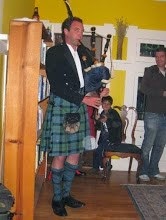
I'm playing my bagpipes for weddings and things, as often as possible.

I'll like to realize 'World University and School' wiki richly ... it's a great idea, and it's time is here. To facilitate anyone posting a course, in conjunction with a wikipedia-like interface, and MIT Open Course Ware will make a lot possible. All languages, all subjects.

How are your daughters?

Happy New Year,
Scott


Scott


Kids are doing well Sens nearly 18 off to music school, Lacie seems to share my gift for drama and wants to go to the old vic like I did. Majies only 7 so no career plans yet.

Yoga, could never get into it but was perhaps down to the class I went too.

I was taught how to move by Rudi Shelley the "dancing master" at the old vic. Labin and Alexander were his major influences. An amazing man he fled Germany when the Nazis came to power (he was gay and jewish ballet dancer). Seemed to know everyone in 1930's Berlin. Just relized in the last few years how much of my own intelectual development owes to him. He always refered to actors training as a training for life. His textual analysis of Chekov, Ibsen etc. was something you don't forget.


Spent a few days in the garden cleaning up the dead leaves and getting it ready for new life. Hard work but rather relaxing and the nearst I get to being spiritual about anything.

Start looking at lovesickness next week, looking forward too it, looks like a rewarding subject.

Hippie trail sounds like a very good idea. I know a number of people who did it in the 60's and early 70's and still take the princples very seriously.
But a subject you can come at from a number of diffrent directions.

Be


Be,

:) - The following is neither an ethnography - "Magic Bus: On the Hippie Trail from Istanbul to India" - http://www.amazon.com/Magic-Bus-Hippie-Trail-Istanbul/dp/0978843193, - nor a virtual world, but it is good news that it just was published. I may explore the hippie trail after I write my harbin ethnography - http://harbin.org - and create a virtual harbin as ethnographic representation, and for ethnographic comparison, as field site. Need to get money for this. Harbin is, to some degree, at first glance, a response to modernity - part of my argument {or did Modernity produce Harbin - what's the genaology here?}. (So is, I suppose, the School of Scottish and Celtic Studies at the Univ of Edinburgh - attempting to preserve 'tradition,' as it does). When in Edinburgh, I didn't read much about how Scots' or the British, view modernity - or the contemporary in a Foucauldian sense - from a 'social science' perspective. i suppose malinowski, firth, evans-pritchard, radcliffe-brown et al. were all 'practicing' 'forms; of modernity - but that's reifying modernity - by traveling to distant places for study. nevertheless, haven't read too many critical analyses of modernity. giddens? Gidden's "runaway world"?

I continue to be interested in eliciting the neurophysiology of loving bliss here:
http://scottmacleod.com/LovingBlissPractices.htm - learning how to do this is an fascinating question, and assumes the brain and bodymind are biological systems. Relaxation response is a helpful first step for me, and can be delicious.

Kids will come along with time - I've enjoyed a degree of freedom thus far. Would like to stay free even with having children, and dealing sensibly with the pragmatics of life ... i guess i'm on the bus :)

What's wild to me is that the 1960s and 70s transformed people's minds and practices dramaticaly. People fundamentally came to see things differently - away from norms and practices of modernity. Culture changing biology? How does that work? And where's it all gone? And how did it occur ... and it was pretty fun at the time (I was young:) ... Why not something as fun for the next 50 years?

Greetings from Canyon (Janis and Country Joe Fish both used to live in this community which is in the Oakland watershed in a redwood forest:), which like Harbin, Berkeley, Oakland, (but not SF) LA, San Diego is in the California sunbelt.


Scott


Scott,

I must confess I am not sure what the School of Scottish Studies actualy is or what it's methodological basis is. It has yet to be written and will have some significant diffficulties when it comes to provide a definition of Ethnicity based on it's current practise.

Ive sort of ignored the mind body thing it's certainly crucial to understanding the humours but I am more intrested in the history of the subject it's use in the development of ethnology and cosmology.

I think one of the key experiances of my life was meeting Lindsey Kemp I was about 4 at the time he worked with my Father.

http://en.wikipedia.org/wiki/Lindsay_Kemp

Was my first awarness that their were alternative lifestyles, something I have always been very attracted to I suppose thats when I decided to jump on the bus. I retired sort off when I had kids. I worked with alternative bands for years with the D.I.Y ethos of the hippie movement and Punk.

Institutions and Institutional forms of knowledge have never held much appeal. I never read Foucault as an undergrad but had clearly been drawn to what Foucault was drawn too as he simply reflected what i thought was my own original hard one approach. It would have made me far more confident if I had confronted him as an undergrad but would have made study even more problematic in such a conservative institution.

The relationship between biology and ethnology in the 17 th cen is something I find very fascinating indeed. I correspond on occasion with an Austrailian Philosopher of Science who has some shared intrests.

Biology is a subject I must take more of an intrest in.

Came across something rather exciting today by my old history teacher.

He seems to have moved on a subject of particular intrest to me significantly. Still chewing it over but it fits rather well.

http://www.st-andrews.ac.uk/history/staff/alexwoolf/Apartheidandeconomics.pdf

Be


Be,

Identity, and broader identity, for administrative and bureaucratic purposes (ah, modernity and Weber?) emerge again and again, linguistically and materially. What to do, except travel, study, love - which seems to rekindle identity issues? Oh, Be ... Must head to Harbin soon - in an hour or two - milieu can be transformative, so, to travel? and in-world (as in Second Life?) ... I've been getting into contact improv - there's a jam every night of the week in the Bay Area it seems. It's great. Maybe I'm a Bonobo wannabe, but except for hippie culture find the perceived costs too high, and hippie culture is small and shrinking. How to change milieu dramatically - the 60s and 70s transformed ways of thinking on a very widespread basis. There were protests in every major western capital against the wrongdoings of government ... Biology, except in the most general way (memes and evolutionary biology), is easily distinguishable from cultural processes, of which identity is an anchor, from which travel is liberating. Natural mdma (ecstasy) - what is it, how to access it, and through shifts in milieu (harbin) or minds (the 60s)? I think I'll head to harbin right now :) Are you dancing these days? All kinds of dance are fun, and the movement makes one feel well, and it's creative ... and you meet loves who are in their bodies .... sweet ....

Scott


Scott

caught youre message last thing will repond more fully tommorow.

I kept forgetting to say not read it yet but high on a long to do list
You may have already come across it.

http://en.wikipedia.org/wiki/Descartes%27_Error

http://en.wikipedia.org/wiki/Somatic_markers_hypothesis

This was the defining moment for my generation and the relisation of what was confronting us. A rather vast army deployed on far two many occasions over the next few years. Looking back it just seems crazy what they did in the name of order

http://uk.youtube.com/watch?v=N3YtmBD_thM&feature=related

Be


Be,

I might complement Damasio, which I must look at more closely, with John Money's “Concepts of Determinism” (Money 1988: 114 ff.) - pairbondage, troopbondage, abidance, ycleptance, foredoomance, with these coping strategies: adhibition (engagement), inhibition & explication - where evolutionary biology and sex are partly central - available in parts on Google books - also some other sections per my Dalton Friends' letter ... http://scottmacleod.com/daltonletter.htm Have to check out some of the places, people and activism in the video - more research needed ... sgip gnikcuf

Doris signing off ... :)

{Scott}


Scott,

I know some people who were there fortunatly I was due to go to Stonehenge the day later and missed it but the battle of the beanfeild was an important event and has entered the releams of foklore.

My freind was their and was very involved with the peace convoy; rather a close knit group many live in Scotland these days. Their were some negative aspects to this culture as well, I always maintianed a distance from it, the older hippies were great but there was also a peculiar elitest attitude that existed amongst younger folk involved and a rather stupid and selfish side to it, drugs and booze playing a major role in the darker side of the culture. But their was certainly a lot of social pressure at the time, you did feel under attack and some younger people responded to the pressure in negative ways.

Alternative culture can demand a strict conformity and a code of it's own which is some what ironic given it's aims; often very close to what it claims to oppose with strict dress codes, customs and manners. Looking like you had slept in a hedge for a month without washing became a fashion statement amongst some and it demanded total cultural conformity; particularly from younger members. An utter air of snobbery about it. But it could also be a lot of fun.

I can get in touch with someone still in contact with many of the people involved. There is a festival each summer in Scotland The Green Man.

Its considered by many to be the only festival left which still has the spirit of the old ones from the 70's and 80's many people from this time still meet up at it.

I susect I may be able to track down the people in the vid for you if you would like or certainly get in touch with others very involved.

I would be more than happy to help with some groundwork and introductions, it's part of my own ethnology and history. Would be intresting to see some balanced research undertaken on the subject.

Be

Friday, January 30, 2009

Tulip Orchard: Virtual, Networks, Significance

When thinking about the 'virtual,' interpreting the significance of networks is key.

There's a worldwide system of computers and nodes - the distributed network of the internet - which make possible all this new activity in our minds, relating to kinds of social networking. Email lists are examples, Facebook and Twitter are examples, having access to the WWW is the basic network for social networking technologies. ...


Queen Anne's Lace: Father's Birthday, Free Thinking, Realizing Things in Life

It would have been my father's 80th birthday today - en.wikipedia.org/wiki/Gordon_K_MacLeod (b. January 30, 1929). He died on November 25, 2007 in hospice in Pittsburgh, Pennsylvania, having sustained a concussion on Semester at Sea on December 30, 2004, which led to two subdural hematomas.

Here's a video from his memorial service on Cuttyhunk Island, Massachusetts from August 2, 2008 - scottmacleod.com/family.htm. I miss him.

As a medical doctor and a professor, he was very free-thinking, and able to realize fascinating things in life.

Thursday, January 29, 2009

Pink Roses: Contact Improv Jam in Berkeley, Good Touch, Freeing Mind

Heading to a contact improv jam in Berkeley this evening ...

Finding 'flow' through movement which is releasing and inspiring is a fascinating possibility with contact improv, and changes your focus after a day spent at a computer. Ah, good movement leading to health, good touch, and freeing mind through contact improv ...

Freedom bodymind ...


This is contact improv:

http://www.youtube.com/watch?v=GUNfM-n_Soo

(Yee, Sandra M. 2006. Making Contact: Atlanta Contact Improv Jam 2006. Atlanta, GA: A 7Adinkras Production).


{Hawrbin and writing ahead ... loving bliss neurophysiology}

Wednesday, January 28, 2009

Alps Wilderness: World University and School

Some of the things unique about this World University and School Wiki approach are the following.

First, it uses a Wiki approach, where I think a lot of creativity and innovation will come from, because anyone can post or take a class. Like Wikipedia and Craig's List, I hope it will make available courses and information people want, and to a lot of people, freely and openly - to complement learning opportunities already available on the WWW and on the ground.

Second, it focuses on excellence in education, vis-a-vis great universities, including MIT, Ivy League Schools, Stanford, U.C. Berkeley, Oxford, T.U.M., Sorbonne, L.M.U., Juilliard, Cambridge, Caltech, Berlin Technical University, University of Chicago, etc., first by aggregating what's already on the World Wide Web. There's a lot 'out there' already. If a degree-granting side emerges, engaging an already existing University system makes most sense.

Third, it also focuses on the developing world, as well as everyone, which may make chip, telecommunication and computer makers want to support WUaS, because it offers a rationale for extending the WWW further in the name of learning. Here's a book from the MIT press which addresses how to wire the developing world: "The Road to Broadband Development in Developing Countries Is By Competition Driven By Wireless and Internet Telephony" -
mitpressjournals.org/doi/abs/10.1162/itid.2007.3.2.21?cookieSet=1&journalCode=itid as a complementary perspective.

And fourth, WUaS's vision includes the beginnings of a virtual medical school, Ph.D. program, music school, and International Baccalaureate certificates, - potentially all degrees in all languages and subjects.


World University and School - worlduniversity.wikia.com/wiki/World_University

World University and School Facebook Group - facebook.com/group.php?gid=48753608141&ref=ts

World University and School has the potential to help a lot of people.

Tuesday, January 27, 2009

Leaves on the Ground: World University and School Wikipedia Entry Which Was Deleted.

Here's a version of the Wikipedia entry 'World University and School,' one before the last one, which was deleted. [See this Friday, January 23, 2009 blog entry for what happened: http://scott-macleod.blogspot.com/2009/01/milkweed-wikipedia-world-university-and.html]


World University and School is a global, virtual, open, free-to-students, multilingual university (potentially degree-granting, with great universities as key players) and school, using a Wikipedia with MIT Open Course Ware 'model,' for the developing world (One Laptop per Child countries to begin with} and everyone.

Anyone can add or take a course or class by posting videos to http://youtube.com, for example, in all subjects and in all languages. World University and School encourages creativity and innovation in courses. World University and School participants can meet in real time in virtual worlds to share ideas, or via a variety of other technologies.

Contents [hide]
1 History
1.1 Organizations
1.2 Song
1.3 Library system and museums
1.4 Admissions
2 Campus
2.1 Major expansion
3 Sustainability
4 Further reading
5 See also
6 References
7 External links


[edit]
History

Scott MacLeod started World University and School in 2008. He taught "Society and Information Technology" on two islands in 3-D virtual world of Second Life for 5 semesters prior to that. World University and School is applying for grants to generate revenue to develop it.

[edit]
Organizations

World University and School is developing a foundation with an advisory board.

[edit]
Song

World University and School does not have any songs yet.

[edit]
Library system and museums

World University and School will link with multiple library systems, as well as potentially create online libraries and museums.

[edit]
Admissions

World University and School is an open University and School.

[edit]
Campus

World University and School meets virtually.


[edit]
Major expansion

World University and School through its Wiki seeks to lead in facilitating online digital learning and education in all languages and subjects. World University and School uses a Wiki approach.

[edit]
Sustainability

Endowments Institute on its College Sustainability Report Card 2008 does not rate World University and School "College Sustainability Report Card 2008". Sustainable Endowments Institute. Retrieved on 2008-05-21.

[edit]
Further reading

[edit]
See also

Potentially in development:
World University and School Open School
World University and School Arts
World University and School Business School
World University and School College
World University and School Dental Medicine
World University and School Graduate School of Arts and Sciences
World University and School International Baccalaureate Courses
World University and School Law School
World University and School Medical School
World University and School Music School
World University and School of Engineering and Applied Sciences
World University and School of Public Health
World University and School School of Design
World University and School School of Education
World University and School School of Government
World University and School Veterinary Medicine

[edit]
References


[edit]
External links Wikimedia Commons has media related to: World University and School

Official website

World University and School - worlduniversity.wikia.com/wiki/World_University

World University and School Facebook Group - facebook.com/group.php?gid=48753608141&ref=ts

And the Wikipedia entry web site URL was http://en.wikipedia.org/wiki/World_University_and_School

Old Growth Forest: Loving Bliss Neurochemistry as Winning, Musical Forms, Studies of Gatheredness

If, after all these tens of thousands of generations, the neurochemistry of loving bliss is highly desirable, and may be freely and easily attainable or accessible, say, over decades, when and as we want, in conjunction with the great visions of the 1960s and early 1970s {environmentalism, sustainability, social justice, civil rights, peace and anti-war, communitarianism, equity for all, freedom, et al.}, and the pragmatics of daily life (whether this be as a father, a mother, a philosophy professor, or a wooden boat builder, for example), would accessing this when and as we want be a kind of 'winning' in life? The bodymind and brain are biological systems, so we may be able to figure how to create our own ecstasy {viz. MDMA}, naturally, freely and easily. In the context of a kind of evolutionary biological, love-life nihilism, I think accessing the neurochemistry of loving bliss, naturally, with contentment, when and as we want it, is 'winning.'

And what's the 'musical form' of free and easy love all the time, in a kind of structural sense - but without the musical notation - so, through practices {so, code or thinking, e.g. Tibetan Buddhist chanting, which I've seen to have a transformative effect - e.g. a Tibetan man in a shop in Berkeley, California}? If such musical forms, like some of Mozart's arias, can give rise to loving bliss neurochemistry {as they do for me}, what's the form to do it, without listening to these arias, for example? What's the thinking?

And how would one begin to study this anthropologically, as well as share this, besides via the World Wide Web?

Could I, for example, as an expression of this code, begin to play my bagpipe to give explicit form to qualities of loving bliss? (The great pipers Donald MacLeod and Duncan Johnstone played in ways, for example, that created aspects of these qualities for me}.


*

Here's another e-mail I sent to a nontheist friends email list recently.

If we wanted to develop or pursue a scientifically-grounded, related, nontheist friends' study of 'gathered meetings,' I think communicating with Harvard cardiologist Herbert Benson MD, at the Massachusetts General Hospital, who wrote "The Relaxation Response" in 1972 would be a good first starting point. His research from that time showed that oxygen intake lessened with the relaxation response (he was looking at meditation in the context of Transcendental Meditation, at the time, I think). This approach might not, at first, address questions of Quaker discourse, or nontheist friends' discourse vis-a-vis 'gathered meetings' - what is said during and after, and the historical context of Quakerism or nontheist friends - but it might be able to address 'group' aspects of the 'relaxation response.' I'm not sure how we might begin to examine scientifically questions of "gatheredness," vis-a-vis this nontheist friends email list, but let's explore this.

I find the ability to elicit 'gatheredness' facilitated richly, on my own, in warm pools, like at Harbin Hot Springs, or in my own bath tub. The warm water and releasing help.

With friendly greetings,
Scott

Monday, January 26, 2009

Wild Oats: Go Back to the Back Country


Go back to the back country


Go back to the back country
to dance in the wind
and laugh with the sun.

Rest easy on the rock,
and be there
with someone you like.

Everything changes,
day by day,
when you go there,
as you come home.

Make contact there,
make music there,
be present
with a friend, -
there in the wild oats.

Sing together,
and care.
Travel together,
and explore ~
And create, ~
yes, love.


*


...


(http://scott-macleod.blogspot.com/2009/01/wild-oats-backcountry-poetry-contact.html - January 26, 2009)

Sunday, January 25, 2009

Black-Eyed Susans: Omega-3 Fatty Acids, Contra Dance, Bliss


I continue to be impressed with the harmonizing effects of Omega-3 fatty acids (1000 mg of flax seed oil, 3-4 times a day, for example). I'd like to see the clinical evidence for this. And how does this work neurochemically, in brief?

How to generate harmony in multiply ways in life, profoundly and neurophysiologically, as practices, is a question I'm thinking about.

*

Here's a great contra-dance youtube.com/watch?v=UlVZtX4dpAQ - :) with far-reaching, bliss-eliciting qualities. The music is played by The Groovemongers {with "rhythm, flair and drive"} at Contra Carnivale 2009 on the
central coast in California. Contra-dances are very kid-friendly and also offer great opportunities for movement.

Time to go to a lot of these.

How does this bliss work in contra-dance? While an appreciation for this music and dance plays a role, I think the following are significant: the music for a variety of reasons, the related movement, twirling, the progression in the dances, touch, the 'groove,' flirtation, giving weight, smiling, beaming, falling in love ...


**

I began
to re-read Ursula K. Le Guin's remarkable "Always Coming Home" today, noting Taoist ideas. It's an extraordinary vision. Ursula writes:

"The only way I can think to find them, the only archaeology that might be practical, is as follows: You take your child or grandchild in your arms, or you borrow a baby, not a year old yet, and go down into the wild oats in the field below the barn. Stand under the oak on the last slope of the hill, facing the creek. Stand quietly. Perhaps the baby will see something, or hear a voice, or speak to somebody there, somebody from home" {from "Always Coming Home's" introduction: 'Towards an Archaeology of the Future,'
pp 4-5}.

Being as simple as a baby is a theme in Lao Tzu's "Tao te Ching," - the sage is like a baby.


In 10

"Carrying body and soul as well as embracing the One,
Can you escape from the distinction?
Attending fully and becoming supple,
Can you be a Newborn baby?"


In 20

"And am cheerless, like a baby who has not yet learned to smile..."


In 28

"If become the Valley for heaven and earth,
You will be inseparable with the constant virtue (potency),
And you will returns to a new born baby."


In 55

"The person charged with the virtue resembles to a new born baby.
Neither wasp, nor serpent, stings him.
No predator devours him.
No bird of prey strikes him.
His bones are still weak, his muscles are indeed yielding."

Lao Tzu: The Tao Te Ching / An English Translation, 1998© by Eiichi Shimomissé
http://www.csudh.edu/phenom_studies/laotzu/taoteching.htm


In 55

"One who remains rich in virtuous power
Is like a newborn baby."

Translated during the summer of 1991 by Charles Muller
Revised, July 1997
http://www.mindgazer.org/tao/


Here's Feng and English's translation of the "Tao te Ching."


And in "Always Coming Home," the author's {Ursula's} baby becomes a symbol of the future ... coming home. 


...


Saturday, January 24, 2009

Jellyfish: Eliciting Resting Neurochemistry, Relaxation Response, Ethno-wiki-virtual-world-graphy

Can we also elicit resting neurochemistry, when and as we want it? We sleep for so long regularly - with the rest it brings - in spite of the possible threat of predators in ancestral environments over millions of years. It seems to be some kind of bodymind program - 8-12 hours of sleep, over tens of thousands of generations.

Enough sleep makes me feel well, and not enough, tired. Eliciting the relaxation response shows that it's possible to elicit certain kinds of neurophysiology. And the relaxation response also is restful and regenerative, but not like sleep is. How would one even begin to elicit the neurophysiology or neurochemistry of restfulness, when awake, for example, and tired, naturally?

How to begin?


*

Here's an e-mail I posted to a nontheist friends' email list I participate in, about how to conceive of Quaker silent meeting, biologically and socioculturally.

Focusing on the biological and the 'sociocultural' vis-a-vis nontheist friends, I think that the relaxation response (something biological and neurophysiological) - relaxationresponse.org/steps - may well be an aspect of Quaker 'gathered meetings,' for individuals, which is then shared through language (sociocultural) during and after the rise of meeting, where people express their experiences of the 'gathered meeting.' What people share in the context of meeting may deepen, for some, such gathered meetings, which I might also call group relaxation responses (but which are not necessarily experienced by everyone). I find thinking about biological and sociocultural aspects of 'gathered meetings' vis-a-vis nontheist friends possibly logically entailed by the word 'nontheism.'

I also find gathered meetings salutary. I explore the relaxation response almost every day. :)

With friendly greetings,
Scott


***

Conceiving of Ethno-wiki-virtual-world-graphy

An example:

An anthropology or sociology graduate student could start a Wiki {editable web pages} for the Haight Ashbury area in San Francisco, or Goa, India, for example, where anyone could add anything about, say 1967-1972 {lots of fascinating neural activity, music, ideas ...}, or whenever, and you have a new form of multi-voiced (and multi-media) ethnography. Add an on-going group building project {Wiki-world-building?} of that place in a virtual world, like Second Life, for the time period you're interested in, bring the Wiki and virtual world together and you have a new kind of group, 'textual,' ethnographic production, which, over time, lets a lot of people who live in that place, and are-were 'there' at the time, add their own experiences, ideas, viewpoints, representations and dreams. What emerges is a new form of group knowledge production, which will then get even richer as these information technologies develop, and as more technologies are engaged.

The ethnographic researcher would invite and engage people to add their knowledge, possibly over decades, and eventually through generations ahead. I'd love to get to know many of the fascinating folks in the Haight who have been there continually since the 1960s. And many of these people may have video, photos, art from this time, which they might want to share and digitize on the web in the context of this Wiki-Virtual-World ongoing Haight community, building on their connections over 40 years. The 1960s time had far-reaching effects in so many ways. :)


A new ethno-wiki-virtual-world methodology ...


****

Ah, Monterey Aquarium jellyfish ...

and in warm water? :)


.