Wednesday, May 25, 2016

Ethiopian Highlands: Berkeley Bowl mini-ethnography here, hippy humor?, See, the person at the cash register back at the Bowl is from Ethiopia, part of the large Amharic-speaking community in the East Bay ... , Here's a beginning startup online Amharic language University - http://worlduniversity.wikia.com/wiki/Amharic_language - not yet in Amharic ... And here's the beginning Ethiopia World University and School, not yet in Amharic or other languages there ... Open Band (Berkeley) musical flower opens from 8-10 pm on Mondays As a musician bee I co-pollinate this wee flower ... Some related Berkeley Bowl posts

Berkeley Bowl mini-ethnography here, hippy humor? ...


Kai, (who grew up in Berkeley and went to Reed College in Portland, Oregon, like I did - I texted the following to her)

Berkeley Bowl (co-op like grocery store) mini-ethnography here: strawberries for $1.39/lb, the guy with the dreads has a head band over them near the meats, and his glasses are cool ... into the fruits and veggies ... journeying in in in to this pool of visual mind expansion :)

Swimming in colors as I back in to the check out line to barter with not bicycling bitcoin, not cash, but credit with the chip on the card ... so yes returning here to political economy qs .. but soon now to return to visual media 

Loss leader seeker here - cukes for .29 each...but, on Skyline Drive now, soon to head home to Canyon, with a different palette of visual media, Kai! 

See, the person at the cash register back at the Bowl is from Ethiopia, part of the large Amharic-speaking community in the East Bay and she, who is centered and great and I think appreciating being in the States, is an example of the people-focus of this mini Anthropology in text messaging  ... I bet there could even be a dissertation up in the UC Berkeley Anthropology library ... but anyway, Kai, here's a beginning startup online Amharic language University - http://worlduniversity.wikia.com/wiki/Amharic_language - not yet  Amharic ... not sure whether the Ethiopia WUaS (http://worlduniversity.wikia.com/wiki/Nation_States) is already begun or not. How are you? :) Your Bowl-ethnographer signing off for awhile. :)

*
O, just checked  - it is ... here's the beginning Ethiopia World University and School - http://worlduniversity.wikia.com/wiki/Ethiopia - but not yet in Amharic or other languages there ...


*
(This old Berkeley Bowl is on Oregon Street in Berkeley ... and they expanded about 3 years ago to another Berkeley Bowl possibly 2 miles away and close to Highway Interstate 80 :)


*
Just found these two papers online about Amharic ...


Amharic infixing reduplication targets heavy syllables
Hannah Sande January 2, 2015 
http://linguistics.berkeley.edu/phonlab/annual_report/documents/2014/Sande_Amharic.pdf


Weight-dependent infixing reduplication in Amharic∗ 
http://linguistics.berkeley.edu/~hsande/documents/Sande_Stanford_2015.pdf

*
On another Berkeley note: )

Open Band (Berkeley) musical flower opens from 8-10 pm on Mondays As a musician bee I co-pollinate this wee flower w dancers pas de basque-ing around:)
*
Some related Berkeley Bowl posts ~

Dew: Soaking in the Harbin warm pool as coming home to relaxation response, Skippering a small sail boat as human agency, Illuminated Berkeley evening

http://scott-macleod.blogspot.com/2010/02/dew-soaking-in-harbin-warm-pool-as.html

Great Horned Owl Chicks: What's the Neurophysiology of 'Now'?, Berkeley Student Fee-Rise Protest, Zil-lions of motifs & rifs for Loving Bliss

http://scott-macleod.blogspot.com/2009/11/great-horned-owl-chicks-whats.html

*
And another post re Kai ~

Behavioral ecology: Exploratorium's ...

http://scott-macleod.blogspot.com/2015/12/behavioral-ecology-exploratoriums.html

*


...


Tuesday, May 24, 2016

Marine habitats: Stanford talk, Jeff Dean, on "Deep Learning for Text Understanding and Information Retrieval," In what ways could WUaS possibly co-develop parallel projects with Google Brain/AI/Search which would further support your interesting projects and help develop the WUaS Universal Translator, and in a realistic virtual earth as well?, In what ways could WUaS become a co-developer? WUaS is planning to facilitate each countries' main language creating their own major research university with free CC accrediting degrees (e.g. on http://ocw.mit.edu/courses/translated-courses/)


Hi Jeff (and Chris and Pandu), 

Thanks for your fascinating Stanford talk, Jeff, on "Deep Learning for Text Understanding and Information Retrieval" last week on Th, May 19th - http://web.stanford.edu/class/cs276/. In addition to posting below my recent email (on F, May 6) to Eric Schmidt and Peter Norvig, about which WUaS would like to inquire with you about please, I'd like to ask you about the following. 

Re the AI word focus in your recent Stanford talk, in addition to WUaS planning to work with all 7,943+ languages (re my recent IBM CSIG Universal Translator talk with slides here http://worlduniversityandschool.blogspot.com/2016/05/12-initial-foci-of-wuas-universal.html), WUaS wants our wiki-informed Universal Translator to work with so-called "dead" and "invented" languages too, and so develop an etymological history approach to our Universal Translator. CC WUaS, which is like CC Wikipedia/Wikidata/Wikibase (in ~300 languages) with best STEM CC OCW (accrediting on CC MIT OCW in 7 languages and CC Yale OYC, for planning purposes, in all countries' main languages) would like to develop this word/lexical-centricity potentially with Google Translate / CC Wiktionary / CC Wikimedia Foundation Content Translation, as well as potentially with phoneme-centricity (for voice) all of which will be central to the planned WUaS Universal Translator. Wikimedia's Creative Commons' licensing is also central to Creative Commons' licensed WUaS. And WUaS's Universal Translator in its lexicality focus will eventually further WUaS and other multi-lingual online brain-language research - http://ocw.mit.edu/courses/brain-and-cognitive-sciences/ and via the Brain_and_Cognitive_Sciences wiki subject page  http://worlduniversity.wikia.com/wiki/Brain_and_Cognitive_Sciences - planned in many/all languages. 

WUaS would like also its universal translator to eventually be in a realistic virtual earth (i.e. film-realistic, interactive, 3D, wiki-build-able, with avatars (both realistic and fantastic - e..g Google Hangouts in Street View? - and in all 7,943 languages) such as in Google Street View/Maps/Earth with its time slider with a precise OpenSim/SecondLife build-ability, in which your Google AI word-focus eventually could be seen, for example, in classrooms therein (e.g. in rooms at the virtual Cambridge University in this planned realistic virtual earth with time slider), but also in a variety of other ways. 

WUaS eventually will be able to support your creative Google AI work faculty- and language-wise since World University and School is planning to hire first graduate student instructors (and eventually faculty members) in all languages on both WUaS's degree side in ~204 countries and on our open wiki school side, in all 7,943+ languages. 

In what ways could WUaS possibly co-develop parallel projects with Google Brain/AI/Search which would further support your interesting projects and help develop the WUaS Universal Translator, and in a realistic virtual earth as well? In what ways could WUaS become a co-developer? WUaS is planning to facilitate each countries' main language creating their own major research university with free CC accrediting degrees (e.g. on http://ocw.mit.edu/courses/translated-courses/). How might you, Jeff, see us collaborating further in generative ways? 

CC WUaS donated WUaS to Wikidata last autumn with its 3.5 year old inter-lingual database developing with A.I., machine learning and machine translation. Central to WUaS again is CC MIT OCW in 7 languages, which WUaS plans to add to Wikidata and develop further.

In what ways could we further engage the Stanford Computer Science students in Chris Manning's and Pandu Nayak's class in all of this (http://web.stanford.edu/class/cs276/)? 

Thank you.

Best, Scott


Dear Eric and Peter, 

Greetings, and how are you? Having just this spring been in a UC Berkeley Law "New Business Practicum" course as a client developing World University and School, which is like CC Wikipedia with best STEM CC OpenCourseWare (and accrediting on CC MIT OCW in 7 languages and CC Yale OYC), I'm writing with a few questions about developing World University further in collaboration with Google. WUaS is planning to be in all ~204 countries' main languages as accrediting universities offering online Creative Commons' licensed BA/BS, Ph.D., law and M.D. degrees (and also CC MIT OCW-centric I.B. high school diplomas), as well as facilitate wiki schools in all nearly 8,000 languages for open teaching and learning, and developing in interlingual Wikidata in 300 languages. WUaS is also in Google Classroom thanks last year to the very helpful (Evan) P.S. at Google and WUaS is therefore Google-verified.

This spring also, CC WUaS in a lengthy correspondence with MIT Assistant Dean of Online Learning Cecilia d'Oliveira (and former executive director of CC MIT OCW) clarified ways in which CC WUaS can both "share" and "adapt" CC MIT OCW in 7 languages (and ways in which we can't commercialize this on WUaS's CC Core non-profit side - since forking WUaS, again re this same Berkeley Law course, is further planning a commercial side).


WUaS is looking to improve our main web page - http://worlduniversityandschool.org/ - focusing it for ~17 year old students (we may matriculate possibly 2000 students in the autumn of 2017 for free CC BA/BS degrees) applying this autumn from all over the world for online CC MIT OCW-centric undergraduate degrees. WUaS is planning many other developments including a universal translator between all 7,943 languages, about which I just gave an online IBM CSIG talk yesterday morning - https://www.youtube.com/watch?v=f48b0Z4VffQ .

I just talked on the phone with a Google representative at Google Sites - https://apps.google.com/intx/en/products/sites/ (which costs $5 per user per month, she confirmed) - who said they don't really do web sites (WUaS hasn't become financially operational to speak of yet, whatsoever). They only support very simple web sites as kinds of intranets for company team work - which I think WUaS could be interested in, but the Google person said supportively she didn't think it was what we want. 


And Google Business Site Builder seems to be closed - https://support.google.com/businesssitebuilder/?hl=en#topic=1660607). 


What suggestions please might you have for collaboration of all of this within the Google ecosystem? 

Since World University has Google Classroom and plans to build major online accrediting universities (the Harvards of the internet) in all countries' main languages, and using Classroom, would there be a possible way you could see please for World University and School to work with a Google team in developing WUaS further? 

And would it be possible please to talk in person with you or even in combination with Peter Norvig whom I know a little, and who has been on the WUaS monthly business meeting email list for years further about this as well? Thank you very much.

Sincerely,
Scott


*


....


Monday, May 23, 2016

Hathor: Excellent Stanford talk - "Embodying the Goddess: Revealing the Practice of Tattooing in Ancient Egypt," Thanks to your talk, I may in subsequent Harbin books I write seek to make distinctions about questions of culture - e.g. "religious culture" and "culture more generally," How will all of this emerge digitally and for "publishing" Harbin in a film-realistic, 3D, interactive, group build-able, wiki with avatars, and in all 8K languages, and for later research are fascinating questions for me ...


Hi Anne,

I enjoyed your excellent "Embodying the Goddess: Revealing the Practice of Tattooing in Ancient Egypt" - http://events.stanford.edu/events/608/60867/ archaeological/anthropological talk (with its interpretive emphasis on the Egyptian Goddess Hathor) on Friday evening at Stanford a lot. Your recent remarkable and unusual find from about 3200-3500 years ago of a (female) mummy with tattoos in Egypt raises all kinds of creative and interesting new interpretive possibilities in your discipline (which are approaches I enjoy, for example, and in writing my Actual~Virtual Harbin Hot Springs' ethnography - http://www.scottmacleod.com/ActualVirtualHarbinBook.html). How does the academic literature on Ancient Egypt further distinguish between religious culture/discourse and culture/discourse beyond Ancient Egyptian "religion" and "decorum"? Thanks for your helpful reply to my question. (I asked this question with "religious culture" in India and religious culture in "U.S." today  in mind, for example, and by way of very loose comparison, as distant as these are from each other and from scholars' understandings of Ancient Egypt's "religion," which is not generally as "culture," in my very, very limited reading. India is still very religious in my interpretation and in ongoing ways in the modern world / the information age, having visited 3 times). Ancient Egyptian "culture," archaeologically, is such a fascinating topic and so distant, especially given Anthropology's theoretical developments over the past, say, 100 years. 

Understanding Ancient Egyptian culture, both "religious" and in complementary "not-religious" ways further would be significant in, for example, beginning to create a data set which might inform a virtual earth in Google Street View/Maps/Earth with time slider - for ethno-wiki-virtual-world-graphy (here's the Ethno-Wiki-Virtual-World-Graphy label in my blog
http://scott-macleod.blogspot.com/search/label/ethno-wiki-virtual-world-graphy) - in the places and periods in which you do field work, Anne, and the questions you are asking. Both tattooing and how such new data, and finds, might create very new developments in interpreting Ancient Egyptian culture (fabric of daily life) could be further engaged very generatively with developing information technologies in so many ways (not to overstate the obvious:). 

Your talk also highlighted the significance of digital technologies in revealing new finds. In my ongoing Harbin ethnographic research, where I hope in part to create a virtual Harbin Hot Springs as ethnographic field site for ongoing comparative anthropological study in something like Google Street View with time slider with OpenSimulator, your talk on tattooing suggested to me that people reading my book 3,500 years from now, or looking at the virtual Harbin/earth then from around now might also begin to ask questions of (or make discoveries about) tattooing at Harbin, for example - of which there is some, and viewable in the Harbin pool area. 

And thanks to your talk, I may in subsequent Harbin books I write seek to make distinctions about questions of culture -  e.g. "religious culture" and "culture more generally" - further re Harbin, which emerges out of California in the 1960s and 1970s as counterculture, in my interpretation, and is also a little New Agey as well as "California" culturally. Harbin is both two churches, HCC (http://scott-macleod.blogspot.com/search/label/Heart%20Consciousness%20Church) and NACOB - but which aren't affiliated with any other churches and which may have been a hippy tax dodge in 1975 and 1996, and Harbin embodies a kind New Age clothing-optional hippy culture (e.g. hippy Hinduism and Buddhism and language etc.) a few decades after the 1960s. How will all of this emerge digitally and for "publishing" Harbin in a film-realistic, 3D, interactive, group build-able, wiki with avatars, and in all 8K languages, and for later research are fascinating questions for me. Harbin is also simply a nice place to visit. (Have you been there?) 

(More about CC World University and School possibly in the future). 

Would you be available to have a coffee at Stanford (https://history.stanford.edu/people/anne-austin - http://www.anneeaustin.com - https://stanford.academia.edu/AnneAustin) to talk possibly further about some of these questions?

Thanks for your great talk.

Best regards, 
Scott


P.S.
Here's a slide presentation I gave at UC Berkeley in November re Ethno-Wiki-Virtual-World-Graphy - http://scott-macleod.blogspot.com/2015/11/waters-36-slides-from-uc-berkeley-talk.html


Naked Harbin and Ethno-Wiki-Virtual-World-Graphy:
Methodologies for Ethnographically Studying Virtual Place: Virtual Harbin
36 slides from UC Berkeley talk on F 11/6/15


*


...


Sunday, May 22, 2016

Arctic hare: Re Freud's "Jenseits des Lustprinzips" ("Beyond the Pleasure Principle"), much appreciating John Money's Concepts of Determinism+, In reading the Yale summary: while "Freud (1st edition cover) doesn't provide a language whatsoever for the eliciting of loving bliss neurophysiology in a biological way, I'll riff a little with his translated title into English, Cover to Karl Marx's 1st edition of "Das Kapital," Probably heading to Stanford today and will try to set some goals in getting my Harbin ethnography index done yet after Stanford's Anne Austin's talk on Friday evening, and re creating a 1st edition, I have further reasons to finish my Harbin index, Hope to develop further research approaches and clinical approaches to the medical practice of online psychiatry at World University out of the above and multi-lingually, and re eliciting loving bliss biology


Re Freud's Jenseits des Lustprinzips https://modernism.research.yale.edu/wiki/index.php/Beyond_the_Pleasure_Principle much appreciating John Money's Concepts of Determinism+ http://scott-macleod.blogspot.com/2014/05/eastern-cottonhead-rabbit-building-on.html


*

Eastern cottonhead rabbit: Building on John Money’s exigencies in his section on “Concepts of Determinism” to inform a new kind of theory for talk psychotherapy and study of this clinically, What could such developments add to current outcomes, and especially in terms of diagnoses, as well as in terms of happiness-generation? {e.g engage music, engage loving bliss neurophysiology eliciting, engage Csikszentmihalyi's "Flow: The Psychology of Optimal Experience," plus, ... as well as strategy vis-a-vis these exigencies to do so ?}, Develop this in the psychiatry department of Friends' Hospital in Philadelphia (in the context of medicine, psychiatry and Quakers)?, Here's Michael First, the author of the DSM V, in VIDEO talking about its recent publication - DSM-5 Handbook of Differential Diagnosis: Meet the Author, "Psychiatry," "Psychology," "Psychotherapy," as well as the "Hospital" wiki subjects at WUaS


http://scott-macleod.blogspot.com/2014/05/eastern-cottonhead-rabbit-building-on.html


*

Loving bliss eliciting ...

Loving Bliss (eliciting this neurophysiology)
http://worlduniversity.wikia.com/wiki/Loving_Bliss_(eliciting_this_neurophysiology)

Loving Bliss label in this blog ~
http://scott-macleod.blogspot.com/search/label/loving%20bliss

*
In reading the above Yale summary: while "Freud (1st edition cover) doesn't provide a language whatsoever for the eliciting of loving bliss neurophysiology in a biological way, I'll riff a little with his translated title into English," in seeking to go way way beyond the pleasure principle ...


Freud 
Jenseits des Lustprinzips (1st edition cover)
(translated as "Beyond the Pleasure Principle" in English)


*
Here's the cover to Karl Marx's 1st edition cover to "Das Kapital" (translated as "Capital" in English)

Hi M, 

Probably heading to Stanford today and will try to set some goals in getting my Harbin ethnography index done (http://www.scottmacleod.com/ActualVirtualHarbinBook.html), which I'm doing daily, but balking at indexing too, yet after Stanford's Anne Austin's talk on Friday evening (related blog post tomorrow), and re creating a 1st edition, I have further reasons to finish my Harbin index.

L, S

*
I hope to develop further research approaches and clinical approaches to the medical practice of online psychiatry at World University (http://worlduniversity.wikia.com/wiki/Psychiatry & http://worlduniversity.wikia.com/wiki/Psychoanalysis - and digitally informed) out of the above (Lacan>John Money>online psychoanalysis to loving bliss elicitation) and multi-lingually, and re eliciting loving bliss biology. 


*


...


Saturday, May 21, 2016

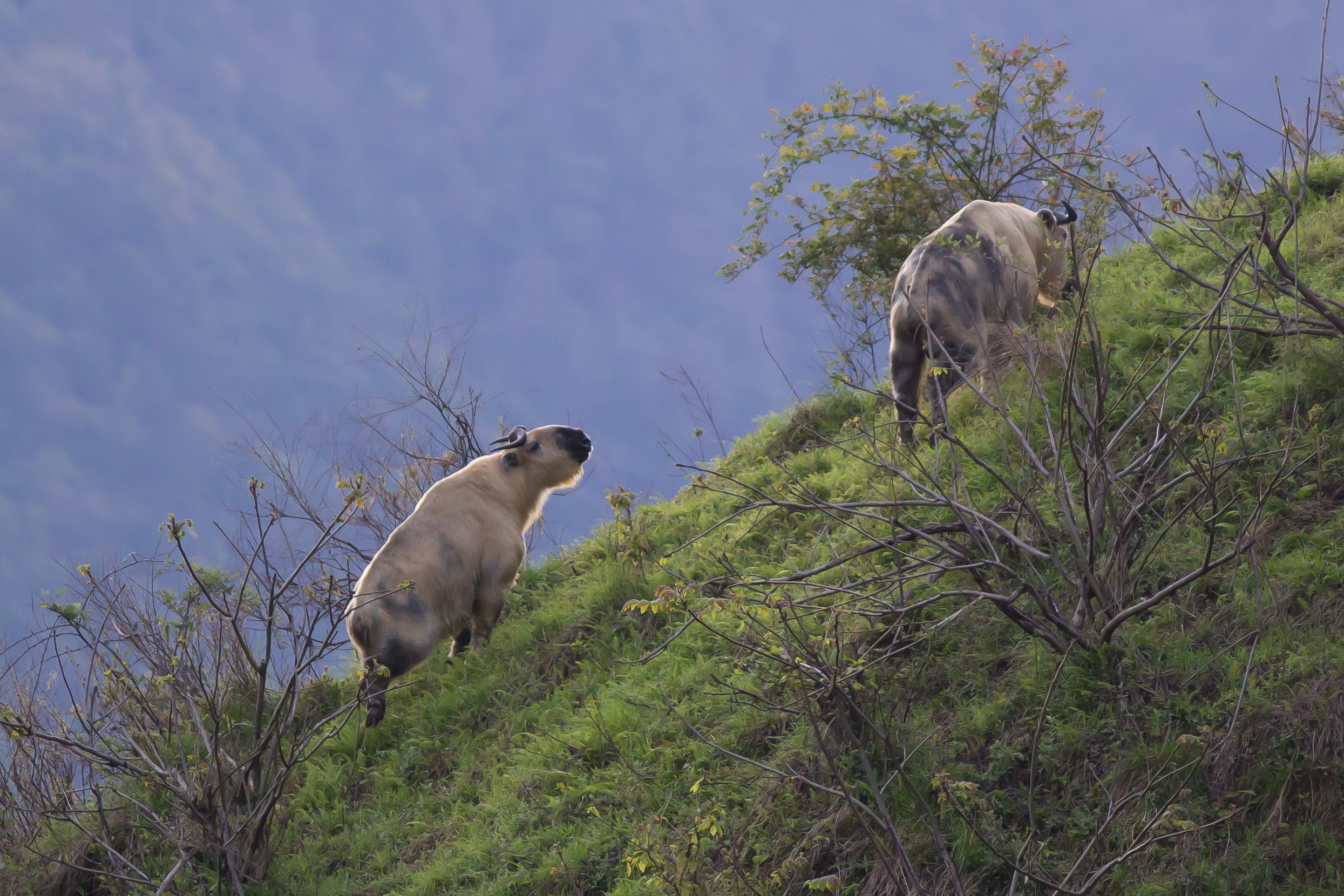
Takin: Wiki universities & schools in each of all of Myanmar, Bhutan, Bangladesh and Kazakhstan's countries' languages at World University, China World University in Chinese

Hi June and Xiangyan,

Great to meet you at Stanford, June at - "The New Great Game: China And South And Central Asia In The Era Of Reform" talk -https://events.stanford.edu/events/606/60613/ - and thanks for your fascinating questions to Stanford East Asian Studies' professor and China specialist Tom Fingar about most of the countries you email about! Greetings, Xiangyan. There's much creative education potential at wiki World University and School, which is like CC Wikipedia (in ~ 300 languages) with best STEM Creative Commons' licensed OpenCourseWare (accrediting on CC MIT OpenCourseWare in 7 languages and CC Yale OYC).

World University and School is seeking high school students from around the world to apply this autumn (from those countries and China, too) and matriculate online in autumn of 2017 for free Creative Commons' licensed MIT OpenCourseWare- and Yale OpenYaleCourses-centric undergraduate BA/BS degrees first in English - http://worlduniversityandschool.org/ - in Google group video Hangouts, for planning purposes. 

On WUaS's wiki side (which is editable like Wikipedia) and which complements WUaS's degree side, planned in all countries' main and official languages - http://worlduniversity.wikia.com/wiki/Nation_States & http://worlduniversity.wikia.com/wiki/Languages) - it will be particularly great to cultivate wiki schools in each of all of Myanmar, Bhutan, Bangladesh and Kazakhstan's countries' languages, so that people speaking those languages can openly teach and learn. (Wikipedia is in ~ 300 languages with millions of articles because of the relative ease of wiki information technologies to enable people to co-create encyclopedia articles).

Here are the beginning - 

Bangladesh World University and School (not yet in Bangla) -

Burma_(Republic_of_the_Union_of_Myanmar) WUaS (not yet in Burmese) - 

Bhutan WUaS (not yet in Bhutanese) -

Kazakhstan WUaS isn't yet begun - 

(And here's China World University and School - 

And WUaS is planning an online law school in each of these countries - e.g. http://worlduniversity.wikia.com/wiki/China_Law_School_at_WUaS - in your countries' main languages, June, and on hiring nationals from these countries to become law faculty, for example.

World University plans to move to a new Wiki emerging from CC Wikidata/Wikibase (Wikipedia's 3.5 year old inter-lingual database developing with Artificial Intelligence, machine learning and machine translation in 300 languages), and hopefully this spring/summer. This will facilitate greatly the open-ended creativity of wiki teaching and learning at WUaS in many ways. 

Could your contacts, June, in Myanmar, Bhutan, Bangladesh and Kazakhstan, possibly help find online undergraduate students first in English? Where are you from Xiangyan and what languages do you speak? In what ways do you want to create education online anew? While World University and School is planning for students to learn from their high school rooms, engaging your ideas or your contacts' thoughts could lead to in-an-existing-school WUaS focus too. 

WUaS is planning to become the online Stanford / Harvard / MIT {Media Lab} of the Internet to offer free, CC online BA/BS, Ph.D., Law, and M.D. degrees, as well as I.B. high school diplomas, in all countries main and official languages, as well as with wiki schools in all 7,943+ languages for open teaching and learning. CC MIT OCW - http://ocw.mit.edu/ - in 7 languages -http://ocw.mit.edu/courses/translated-courses/ - is our/WUaS's starting place for the free CC degrees. 

Please let me know your questions, ideas, thoughts and interests in these regards and I can send you further information. 

Thanks so much for your email, June!

Best regards, Scott

*
Dear Scott, 

Glad to hear from you. Thank you so much for reaching out to me first. 

I came from China in 2005. I have been in the U.S. for about 11 years. I grew up in Beijing. I can speak Mandarin Chinese. I also learned Korean and Japanese in college. I am interested in your work that tries to build an online global learning community. I love the idea of providing learning opportunities and educational resources to people all over the world for free. I appreciate and respect the work your organization has done so far. 

As you might have heard, K-16 schools in China are growing so fast and trying to catch up with the West in terms of reforming their curriculum development and teaching methods. Over there, students, parents, teachers, educational leaders are very starving to learn from the outside to improve their own system and everything. I went back to China two months ago and talked to some of my friends who are developing Apps and other platforms for online learning. Those friends are my peers in the graduate school of education in China. There is a huge demand for this type of learning methods and materials. Because of a strong exam-driven system, Chinese parents, particularly those from upper-class, and educators from magnet schools started to seek an alternative approach to provide educational resources and opportunities for the kids to complement what they learned at school. You can tell, kids in cities are in a rush to get prepared well. Also, there is a huge gap between kids in urban and rural areas in China. Lacking of access and networks to the technology-based resources, kids in rural areas cannot get the same level of education in terms of both quality and quantity as those in urban areas for education. After reading your email, I am thinking it would be fantastic if the open learning sources could be provided to those not only in urban but also to those in rural areas. This is just a quick thought. I believe innovation is not just creating something new from nothing, but also making something already there better. 

I would love to learn more from you about the organization. I live in San Jose. Do you live in the Bay Area? Please let me know how I can be further help. Thank you so much! 

Best, 
Xiangyan

*

Hi Xiangyan (and June), 

Thanks so much for your email and your interest in reaching out to Chinese students, for example. In responding to your "I am thinking it would be fantastic if the open learning sources could be provided to those not only in urban but also to those in rural areas," and re CC MIT OpenCourseWare centric World University and School, I see the possibility here of translating this open course ware further into Chinese (than http://ocw.mit.edu/courses/translated-courses/traditional-chinese/) so that WUaS could offer these courses online for free CC university degrees in China in Mandarin. Access to this in rural areas would happen with broadband in China there, and possibly even with a kind of partnership with Google/Stanford/University of California if we could develop this.

So all of this would involve developing a team for translating some of the ~2,300 CC MIT OCW courses here in English here - http://ocw.mit.edu/ - into Traditional Chinese MIT OCW here - http://ocw.mit.edu/courses/translated-courses/traditional-chinese/ (with these ~100 courses in Mandarin as models/examples for course translation - to the STEM - science, technology, engineering and mathematics' MIT standard), again for free Creative Commons' University degrees (BA/BS, Ph.D., law, MD and IB) for Chinese students in Chinese. This would involve probably organizing translation of this within a Chinese University (since MIT OCW didn't share contact information recently about the Chinese university which translated the already existing MIT OCW in Chinese).

We could explore developing some of these courses partly in the form of video games eventually even - and see too MIT Professor Dick Yue's quote here about getting started with CC MIT OCW ...http://ocw.mit.edu/help/get-started-with-ocw/.

I live in the east bay hills of the SF Bay Area, about and hour and 15 minutes from (excellent) Stanford, for example (where June and I went, and where June studied in college). Shall we 3 explore possibly meeting at Stanford to talk further about some of this (and the countries you're interested in, June) at some point soon?

I just came across this interesting Stanford education talk with President John Hennessy, Sal Khan, and Stanford Professors Sean Reardon, Linda Darling-Hammond - https://www.youtube.com/watch?v=G0XG80yt-xo - which you might be interested. China is mentioned only a little. 

Thanks again for your email.

Best, 
Scott


*


...


Friday, May 20, 2016

Roseate spoonbill: Google Brain re Artificial Intelligence and language at Stanford, Thanks Jeff Dean, Developing computational neuronal modeling in a co-constituting relationship with actual neurons, Brainwave headsets, ethno-wiki-virtual-world-graphy and a virtual Harbin/virtual earth as Classroom and re Google Classroom for which WUaS is Google-verified, An online WUaS Teaching Hospital in all countries' main languages, Interesting possible angles for focusing brainwave research with digital media: "Moran Cerf: This scientist can hack your dreams"


Hi Aldis (Dianne, Jim and Nancy at IBM), 

Your email came just as I was heading to a Stanford talk with Jeff Dean, a Senior Fellow and head of engineering at Google, and who was talking about their Google Brain project in many ways re Artificial Intelligence and language. He showed the computational model of a neuron which Google Brain is iterating on (among many key AI foci for Google). Further developing computational neuronal modeling in a co-constituting relationship with actual neurons doesn't appear to be a main focus for Google yet - and yet this will make AI and machine learning remarkably robust and generative. And this co-constituting relationship however is where Virtual Reality could be the amazing bridge between computational neurons and biological neurons and especially re room-size classrooms (and WUaS is Google-verified for Google Classroom, but also, as I understand it, China blocks Google). Jeff Dean's research is fascinating re Google's relatively open, excellent, free, best-value ecosystem (e.g. TensorFlow, Google group video Hangouts (... and potentially in ...), Street View/Maps/Earth, Google Translate in 180 languages, Social Media, Youtube, Google Cardboard, Android ... and all their AI/machine learning/machine translation work beyond Brain - and they're using data from Wikidata/Wikipedia a lot!) and with their licensing. Because of Google's relative openness licensing-wise, and the possibility for CC WUaS to build upon this and with CC MIT OCW in 7 languages and with WUaS's plans to be in all 7,943 languages+ in Virtual Reality especially (for ethno-wiki-virtual-world-graphy in Google Street View/OpenSim with time slider and for all languages - http://scott-macleod.blogspot.com/search/label/ethno-wiki-virtual-world-graphy), I'll introduce you to the very knowledgeable MIT Professor (and possibly a polymath) Ed Boyden - esb@media.mit.edu - for one - e.g. http://ocw.mit.edu/courses/brain-and-cognitive-sciences/9-123-neurotechnology-in-action-fall-2014/. CC WUaS's brain research and courses will focus on http://ocw.mit.edu/courses/brain-and-cognitive-sciences/ - and are planned in all 7,943+ languages. Tan Le's email is tan@emotiv.com - https://www.visualcv.com/tanttle - and I'll introduce you to her as well. WUaS would like to head toward developing classrooms for online teaching hospital classrooms in all countries' main languages and in VR (e.g. something like Google Cardboard) as well as brain research in Google Street View/Ecosystem / OpenSim as our own project as we grow. 

Best, Scott

*
Interesting possible angles for focusing brainwave research with digital media:

Moran Cerf: This scientist can hack your dreams

http://www.ted.com/talks/moran_cerf_this_scientist_can_hack_your_dreams


*


...


Thursday, May 19, 2016

Sunflower: Two possible directions I see here in terms of translating "the courses into Chinese," 1) One would involve translating my Harbin Hot Springs' ethnographic book - http://www.scottmacleod.com/ActualVirtualHarbinBook.html - (for which Nelson has written the Foreword, as well as some text for the back of my book) into Chinese, 2) The other involves translating from some of the ~2,300 CC MIT OCW courses here in English here - http://ocw.mit.edu/ - into Traditional Chinese MIT OCW here - http://ocw.mit.edu/courses/translated-courses/traditional-chinese/


Hi Scott,
Thank you for letting me know this [i.e. Stanford Law China Guiding Cases Project, MIT OCW in Chinese, ethno-wiki-virtual-world-graphy and http://scott-macleod.blogspot.com/2016/05/egret-in-planning-for-teaching-my.html]. That's interesting, what do you mean by translate the courses into Chinese? Look forward to communicating with you.

Yours Sincerely
Yindong Wei

*

Hi Yindong (Chen, Li Fei and Nelson),

Thanks for your email. There are two possible directions I see here in terms of translating "the courses into Chinese."

1
One would involve translating my Harbin Hot Springs' ethnographic book - http://www.scottmacleod.com/ActualVirtualHarbinBook.html - (for which Nelson Graburn has written the Foreword, as well as some text for the back of my book) into Chinese, so that Chen and I, for example, could create a MIT OpenCourseWare-centric course - e.g. (for example) http://scott-macleod.blogspot.com/2016/05/cattle-egret-as-professor-of.html and http://scott-macleod.blogspot.com/2016/05/egret-in-planning-for-teaching-my.html - based on my book, which course itself would involve translation in both directions. Chen and I would thus co-teach this course in English and Chinese. This course could develop partly in the form of a video game even - and see too MIT Professor Dick Yue's quote here about getting started with CC MIT OCW ...
“The idea is simple: to publish all of our course materials online and make them widely available to everyone.”
Dick K.P. Yue, Professor, MIT School of Engineering
http://ocw.mit.edu/help/get-started-with-ocw/.

2
The other involves translating from some of the ~2,300 CC MIT OCW courses here in English here - http://ocw.mit.edu/ - into Traditional Chinese MIT OCW here - http://ocw.mit.edu/courses/translated-courses/traditional-chinese/ (with these ~100 courses in Mandarin as models/examples for course translation - to the STEM - science, technology, engineering and mathematics' MIT standard) for free Creative Commons' University degrees for Chinese students. This would involve probably organization within a Chinese University for translation (since MIT OCW didn't share contact information recently about the Chinese university which translated the already existing MIT OCW in Chinese).

I hope both will happen. 

Sincerely yours, 
Scott


*


https://en.wikipedia.org/wiki/Helianthus_annuus

These 3 posts are linked: 

Monday, May 16, 2016
Cattle egret: As a professor of Anthropology and Sociology at startup WUaS (e.g. accrediting on CC MIT OCW in 7 languages and CC Yale OYC) and exploring how I'd teach a course entitled "The Anthropology of Harbin Hot Springs …


Tuesday, May 17, 2016
Egret: "The Anthropology of Virtual Reality: Building a Field Site for Ethno-Wiki-Virtual-World-Graphy" (and possibly as touristic destinations in Street View in Google Cardboard headset for example) ... 


Thursday, May 19, 2016
Sunflower: Two possible directions I see here in terms of translating "the courses into Chinese”… 
...


Wednesday, May 18, 2016

Victoria amazonica: !) Thanks for your contributions on a fascinating "Peace with Justice or Peace Versus Justice in Colombia: The Role of Amnesty in Colombian Peace Negotiations" panel yesterday, May 17, 2016, at Stanford Law, 2) Thanks for a fascinating Constitutional Law and Big Data talk yesterday


Dear Doug, José Miguel, and Jim, 

Thanks for your contributions on a fascinating "Peace with Justice or Peace Versus Justice in Colombia: The Role of Amnesty in Colombian Peace Negotiations" panel today at Stanford Law - http://events.stanford.edu/events/607/60701/.

Here's the Human Rights' wiki subject page at CC World University and School - http://worlduniversity.wikia.com/wiki/Human_Rights - with a few CC MIT OCW courses but not yet any CC Yale OYC courses, to give you an idea of how WUaS works on its wiki (like Wikipedia) side. Potentially anyone can start a wiki subject at WUaS (e..g academic or creative) in any of 8K languages, add CC MIT OCW courses if they exist or teach to their web camera about some thing they love, for example, or creatively in other ways. 

On WUaS's accrediting free CC degree side, only CC MIT OCW in 7 languages and CC Yale OYC courses would be for credit. WUaS is seeking our first high schools students to apply this autumn 2016 and matriculate online as undergraduates in 2017. Please invite 17 year olds whom you know to apply - http://worlduniversityandschool.org/.

For your information, here too are the beginning Law Schools at World University and School (planned in main languages in them, and in all 204+ countries - per the 2008 Olympics): 
And lastly, while the Colombia World University and School isn't yet begun, WUaS is planning the beginning of a major online Colombian university online, in Spanish, and offering free CC online BA/BS, Ph.D., Law, M.D. degrees as well as I.B. high school diplomas, like this Mexico World University and School - http://worlduniversity.wikia.com/wiki/Mexico - with its MIT OCW in Spanish - http://ocw.mit.edu/courses/translated-courses/spanish/ - and also as wiki. 

I hope WUaS, which seeks to become the online Harvard of the Internet (in all countries' languages), will help contribute further to the unfolding peace process in Colombia, both in the society as a whole as well as legally through the WUaS law faculty we hire, first perhaps as graduate students at Stanford, Harvard and Yale, for example. How can we all help to give flourishing form to Colombia World University and School?

Thank you again. 

Sincerely, Scott

*
Dear Sharad and Michael, 

Thanks for a fascinating Constitutional Law and Big Data talk yesterday, Sharad and Michael - https://law.stanford.edu/event/law-order-algorithms-criminal-justice-age-big-data/

I was impressed with the level of engagement and questions and your responses, Sharad, but found it fascinating that there seemed to be no questions asking about implications of big data for Constitutional Law. 

Here's a recent blog post of mine re World University and School's plans for online law schools that are CC MIT OpenCourseWare-centric (currently in 7 languages) and planned in all countries' main languages - http://scott-macleod.blogspot.com/2016/05/victoria-amazonica-thanks-for-your.html (and relating to another Stanford Law talk yesterday too) - as a way of saying thank you further.  

Thank you, Sharad and Michael. 

Sincerely, 
Scott

*
Hi Scott — Glad you enjoyed the talk, and thanks for the link to your blog post!

All the best,
Sharad

--
Sharad Goel
https://5harad.com


*


...