Soaking in the Harbin warm pool at body temperature is coming home to deep relaxation response, with ease. Out of the warm pool, in the city, there's a disjunction which isn't as easy, although body temperature is 'inside' - simply no pools to move into, toward ease ... anthropological observation & into the pools, soon.
*
Skippering a small sail boat is a great metaphor for human agency - sailing with the winds, fair and heavy, going under deck & ashore in storms, navigating with charts ...
Harbin ethnography chapters & World University & School wiki are my current waters, with warm pools ... Now to make for point after point at sea and on land ... & with the eliciting the sunny weather of the neurophysiology of loving bliss along the way ... ready about ...
*
Here's Jefferson Airplane - White Rabbit - Live at the Fillmore East 1968 -
*
Welcome Home, Rainbow Family:
*
Illuminated Berkeley evening ... cherry trees are blooming & the air is soft ... Berkeley Bowl is so diverse w lots of folks in ... age-old market scene ... raga is playing ...
just picked & ate a fresh grapefruit growing on a tree hanging over the sidewalk in someone's yard in a quiet neighborhood & and the pinks and purples of this sunset are magnificent and changing by the minute
flowers are blooming in profusion this day
(http://scott-macleod.blogspot.com/2010/02/dew-soaking-in-harbin-warm-pool-as.html - February 15, 2010)
Monday, February 15, 2010


Sunday, February 14, 2010
Curly grass ferns: Neuroscience and Spirituality, Transcendental Meditation to Relaxation Response, Primates and Nontheist Quakers
Nontheist Friends,
Thanks for this article on neuroscience and spirituality (http://www.physorg.com/news185027522.html)!
I think the Harvard cardiologist Herbert Benson MD attempted to study, rigorously, Transcendental Meditation in the late 1960s and early 1970s, and wrote, from this research, "The Relaxation Response" (1972), coming up with the relaxationresponse.org/steps as practice, vis-a-vis neurophysiology. See, for example, his 1971 paper "A wakeful hypometabolic physiologic state," mentioned at the bottom of the above web page.
I wonder, too, what related and comparative studies on the primates closest to us - the 2 species of chimps, 2 species of gorillas, and 2 species of orangutans (and which are also the most intelligent primates, as I understand it), who learn language in the lab, might show. I'm particularly interested in these species, especially vis-a-vis all of our abilities to symbolize. Can they cultivate the 'relaxation response'? How is this translated, by researchers? What do they say about words like 'spiritual.'
Language in the context of an historically and predominantly Catholic country (this is an Italian study above), as well as self-reporting surveys, after disparate brain injuries, seem really difficult to translate to universal findings ("Thus, dysfunctional parietal neural activity may underpin altered spiritual and religious attitudes and behaviors" - I'm also skeptical of the 'thus' word, here, too), especially operationally in the lab, given our very old bodyminds, due to evolution by natural selection. (Self-transcendence may be a curious notion for Pan troglodytes - common chimps, and Pan paniscus - Bonobo chimps - as I think about it). To operationalize 'spiritual' as self-transcendence, vis-a-vis the Dalai Lama's definition mentioned in a previous Nontheist Friend's email {e.g. "I believe there is an important distinction to be made between religion and spirituality. Religion I take to be concerned with belief in the claims to salvation of one faith tradition or another--an aspect of which is acceptance of some form of metaphysical or philosophical reality, including perhaps an idea of heaven or hell. Connected with this are religious teachings or dogma, ritual, prayers and so on. Spirituality I take to be concerned with those qualities of the human spirit--such as love and compassion, patience, tolerance, forgiveness, contentment, a sense of responsibility, a sense of harmony, which bring happiness to both self and others. While ritual and prayer, along with questions of nirvana and salvation are directly connected with religious faith, these inner qualities need not be, however. There is thus no reason why the individual should not develop them, even to a high degree, without recourse to any religious or metaphysical belief system. This is why I sometimes say religion is something we can perhaps do without. What we cannot do without are these basic spiritual qualities"}, for example, perhaps illustrates the complexities of operationalizing words as variables (words like 'spiritual,' 'self,' and 'transcendence' have many meanings and are very imprecise) scientifically, vis-a-vis spirituality.
I also see great parallels with the relaxation response and what may have happened - de facto - for Friends (Quakers) sitting in silence in Silent Meeting, over the past 350 years - and in relation to Friends' discourse/culture in anthropological senses - e.g. the peace testimony, meeting for business (which interest I've also mentioned in previous nontheist Friends' emails).
Here's an invitation to teach and learn about nontheistically Friendly themes at the open, free "edit this page" World University and School's "Nontheist Friends' subject: worlduniversity.wikia.com/wiki/Nontheist_Friends_%28atheist_Quakers%3F%29, as well as about Quakers, here: worlduniversity.wikia.com/wiki/Quakers_-_Religious_Society_of_Friends. 'What canst thou say?" to quote George Fox ... or teach?
As human primates / monkeys, I'm particularly interested in eliciting the neurophysiology of loving bliss, naturally, and when and as we want it, like music {and in the context of Quaker silent meeting's improvisational troopbonding, where people share their ideas}, - and, especially on Valentine's Day.
Into the relaxation response in silent meetings ...
Friendly regards and happy Valentine's Day,
Scott
scottmacleod.com
worlduniversity.wikia.com/wiki/Relaxation_Response
*
Schizaea pusilla Pursh
hfarm1.static.flickr.com/68/196806512_797ebf3b47.jpg?v=0
Curly-grass fern
(http://scott-macleod.blogspot.com/2010/02/curly-grass-ferns-neuroscience-and.html - February 14, 2010)
Saturday, February 13, 2010
Cassia alata: Teaching Ideas with Music as Flow, Northern California wisdom tradition? Neurophysiology as Consciousness
Teaching fascinating ideas in "Information Technology and Society" today in Second Life on Harvard's virtual island today, as I was listening to the 'Friends of Old Puppy' music at Nabaloms Bakery Collective in Berkeley, lead to great 'flow: the psychology of optimal experience' experiences, akin to music. This is how I'd like life to be, and also a kind of focus for me. How might people get to this kind of 'flow' when and as they want it.
*
Wholeness of the body as a biological system which we don't fully understand yet as bodymind - input/output system like computer - Examples of wholeness? How to conceive of wholeness?
*
Some Harbin scenes:
And then I saw a long hair man drive by near the meadow building - a visitor - with a grateful dead sticker on his bumper. There are a lot of long hair folks who visit Harbin.
At Harbin maintenance men ride in pickups, and this in a county - Lake County is ranching country - where many men ride in pickups and do worky work (Monty Python-esque). Just saw someone who could be from a SE Asia country (Thailand?) ride by in Harbin maintenance vehicle.
To provide some perspective on Harbin today: I told some folks about world university and school in the Harbin Stonefront Lodge library yesterday. One person, a relatively new Harbin resident, had just awoke from a nap, and was lying on one of the two inner window seats. Another woman, a visitor from surrounding Lake County, said she would tell her kids about WUaS.
*
Harbin is the emergence of a village; there's a large literature on villages in anthropology, but is there a literature on emerging villages, since this Harbin starts in 1972, in many ways (although Harbin has been a Hot Springs for visitors for centuries)?
*
There are so many teachers at Harbin. Is there a production of a kind of northern California wisdom tradition cum Harbin openness?
*
Culture: Inference to other people's minds in the empathy sympathy primate creativity process?
*
In many ways neurophysiology - and with MDMA-ecstasy experiences as an example - may be what many writers, hippies, folks in the 1960s, Hindus, and New England Transcendentalists refer to as 'consciousness.'
(http://scott-macleod.blogspot.com/2010/02/cassia-alata-teaching-ideas-with-music.html - February 13, 2010)
*
Wholeness of the body as a biological system which we don't fully understand yet as bodymind - input/output system like computer - Examples of wholeness? How to conceive of wholeness?
*
Some Harbin scenes:
And then I saw a long hair man drive by near the meadow building - a visitor - with a grateful dead sticker on his bumper. There are a lot of long hair folks who visit Harbin.
At Harbin maintenance men ride in pickups, and this in a county - Lake County is ranching country - where many men ride in pickups and do worky work (Monty Python-esque). Just saw someone who could be from a SE Asia country (Thailand?) ride by in Harbin maintenance vehicle.
To provide some perspective on Harbin today: I told some folks about world university and school in the Harbin Stonefront Lodge library yesterday. One person, a relatively new Harbin resident, had just awoke from a nap, and was lying on one of the two inner window seats. Another woman, a visitor from surrounding Lake County, said she would tell her kids about WUaS.
*
Harbin is the emergence of a village; there's a large literature on villages in anthropology, but is there a literature on emerging villages, since this Harbin starts in 1972, in many ways (although Harbin has been a Hot Springs for visitors for centuries)?
*
There are so many teachers at Harbin. Is there a production of a kind of northern California wisdom tradition cum Harbin openness?
*
Culture: Inference to other people's minds in the empathy sympathy primate creativity process?
*
In many ways neurophysiology - and with MDMA-ecstasy experiences as an example - may be what many writers, hippies, folks in the 1960s, Hindus, and New England Transcendentalists refer to as 'consciousness.'
(http://scott-macleod.blogspot.com/2010/02/cassia-alata-teaching-ideas-with-music.html - February 13, 2010)
Friday, February 12, 2010
Lichen: Interesting critiques of World University and School from a friend, And Response
Here are some interesting critiques of World University and School from a friend.
Scott:
So don't take this the wrong way but I'll be honest and reiterate that I basically think most of us should work with existing infrastructure more than we are. Push the institutions (mostly headed by older people more leery of the web) to take better advantage of new possibilities. The only major change is in terms of accessibility (fewer geographical restrictions) and digital text books that are essentially free. Knowledge and legitimate analysis hasn't changed substantially and the paradigms aren't really that new. Digital educating (via second life or whatever) has a lot of basic drawbacks, too, lets not forget. Honestly I think it's a poor substitute for a small class with an engaged professor and a good reading list.
In terms of the web: There's so much heterogeneous and difficult to find information on the web and one of the few things bringing them together are search engines. So when you ask me to post to World U I have to ask: why there and not Wikipedia or my own site or the ARs site? I'm pretty sure Wikipedia.org will be around in ten years but I don't know what your long term plans are. There are so many "web universities" out there! All the entrepreneurial spirit on the web, even for non-profit oriented models like yours, has led to a very disconnected bunch of voices. But existing infrastructure and institutions will persist, so why not work with them?
Petros
Dear Petros,
Good questions and critiques.
In brief, I haven't seen an opportunity on the internet where people can teach to their web cams - which is open to teaching and learning focused (a kind of a meta-directory), and which is also academically focused, - and where people can go directly into a virtual world to exchange ideas through video, voice and type chat. I agree that digital education has its limitations, but WUaS will complement on-the-ground education. These main WUaS sections go way beyond youtube.com/edu: courses (with a 'great university' focus), subjects (all), 'languages' (all), 'nation states' (all), 'educational software,' 'You at World University,' 'Hardware resources,' and 'Research,' etc., - even an in-world teaching hospital, with health care, and a music school. These will benefit all the folks who don't have access to existing educational 'infrastructure,' and, as the other 4.7 billion people come online and grow up, WUaS will has remarkable potential. It's kind of the 'circulatory system' for OLPC's 2 billion kids, complementing their successful project, which we talked about today.
Also, WUaS builds on great existing infrastructure, by aggregating all the great, open, free, teaching and learning content on the web as wiki, - and potentially in all languages, by giving people an opportunity to create it as well. Existing educational 'infrastructure' continues, and WUaS comes to complement this. I hope WUaS will also aggregate all the heterogeneous teaching and learning material on the web and make it accessible, like Wikipedia. WUaS's wiki is a remarkable, timely and topical idea.
The open teaching of courses doesn't yet exist on the web - even in Wikipedia. And I think World University & School will enter the same 'sphere of thinking' as Wikipedia, and come complement it, as well. An open opportunity to teach is something I've wished for personally in a number of ways over the years, and I'm teaching a class on the information technology revolution right now.
Also World University & School is potentially in all languages, nation states, subjects and at all levels, with a focus on One Laptop per Child countries, and everyone, so this will help not only OLPC countries, but even offer a rationale for making broadband available universally.
And there are a lot of other fascinating possibilities - like the basis for an Universal Translator which builds on an archive of all languages. Here's the long term plan, with calendar: worlduniversity.wikia.com/wiki/Master_Plan.
And the board of directors for World University and School are great, and good fits, for WUaS, - so WUaS has a great beginning network. And as a wiki - for free educational resources - it will help a lot of people, and bring many to the web.
As Laura and Paul in the Cal Anthro department, and many other Cal professors, observe, the university as a whole is in crisis; it's moribund. I think the wiki World University and School is a remarkable, creative opportunity and web resource for all, - in its openness. And openness infrastructure like this doesn't yet exist.
Here's one grant entry that might clarify things further for you about WUaS' focus: scott-macleod.blogspot.com/2010/01/lilium-pistil-and-stamens-innovation.html
I hope eventually that this WUaS archaeology resource becomes helpful for you, if not now.
And I think WUaS will create a lot! of jobs, which will also help a lot! of people.
And perhaps it will create new kinds of discourses around idea exchange ... Let's keep in touch about World University, as it develops.
Best,
Scott
scottmacleod.com
worlduniversity.wikia.com/wiki/World_University
(http://scott-macleod.blogspot.com/2010/02/lichens-interesting-critiques-of-world.html - February 12, 2010)
Wild Goose Flying: Writing a World University jobs' 'program,' Bagpipng Goosebump Heaven, Becoming one while practicing
worlduniversity.wikia.com/wiki/world_university - writing a WUaS jobs' 'program' - possibly 1 million jobs in a few years? World University & School can help a lot of people.
*
worlduniversity.wikia.com/wiki/Courses is a wiki (editable web pages) for the long term & it already could substitute for much of what's taught & learned in classrooms everywhere
*
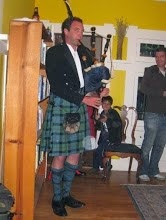
Goosebump heaven - Dr Angus MacDonald playing Scottish Highland Bagpipe on "a' sireadh spors" CD - unique expression - how to 'one' w this?
*
... becoming one while practicing, with awareness, with Pibroch's (Piobairreachd) pulse - classical Scottish Highland Bagpipe music - is enjoyable & draws on relaxationresponse.org/steps.
*
1atexasgoosehunting.com/canada-geese-flying.jpg
mountainspringscabins.com/uploaded_images/Snow-Geese0695rs-789561.jpg
sugarmtnfarm.com/blog/uploaded_images2008/GeeseFlyingMigrating3624.jpg
(http://scott-macleod.blogspot.com/2010/02/wild-goose-flying-writing-world.html - February 12, 2010)
*
worlduniversity.wikia.com/wiki/Courses is a wiki (editable web pages) for the long term & it already could substitute for much of what's taught & learned in classrooms everywhere
*
Goosebump heaven - Dr Angus MacDonald playing Scottish Highland Bagpipe on "a' sireadh spors" CD - unique expression - how to 'one' w this?
*
... becoming one while practicing, with awareness, with Pibroch's (Piobairreachd) pulse - classical Scottish Highland Bagpipe music - is enjoyable & draws on relaxationresponse.org/steps.
*
1atexasgoosehunting.com/canada-geese-flying.jpg
mountainspringscabins.com/uploaded_images/Snow-Geese0695rs-789561.jpg
sugarmtnfarm.com/blog/uploaded_images2008/GeeseFlyingMigrating3624.jpg
(http://scott-macleod.blogspot.com/2010/02/wild-goose-flying-writing-world.html - February 12, 2010)
Aloe Vera: Free health care in virtual worlds, World University and School's Teaching Hospital, OLPC-like worldwide broadband
I advocate for free health care in virtual worlds through World University & School, for one. ... Here's the nascent World University and School Teaching Hospital: worlduniversity.wikia.com/wiki/Courses#Medical_School_and_Hospital.
*
And WUaS would like to facilitate OLPC-like broadband worldwide - see World University & School's mission here: worlduniversity.wikia.com/wiki/World_University_Foundation.
(http://scott-macleod.blogspot.com/2010/02/aloe-vera-free-health-care-in-virtual.html - February 12, 2010)
*
And WUaS would like to facilitate OLPC-like broadband worldwide - see World University & School's mission here: worlduniversity.wikia.com/wiki/World_University_Foundation.
(http://scott-macleod.blogspot.com/2010/02/aloe-vera-free-health-care-in-virtual.html - February 12, 2010)
Thursday, February 11, 2010
Blue Springs' Manatee: "Love Lounge" as Valentine's Day theater, Music of the Harbin warm pool, Notetaking as Anthropological Rifs
"Love Lounge" was the Valentine's Day theater satire in Harbin's Stonefront Lodge last night. It was a sophisticated, Harbin drama, with residents as actors. It was both hot, clever, and well-worded, and portrayed multiple time periods (e.g. the 1930s, 1960s, 1970s, etc.) vis-a-vis love. Versions may appear on online video, which I'll post, if I find them. One Harbin resident - BuddhaJames 007 - made a recording. This play was great. The Stonefront Lodge living room was packed with mostly Harbin residents, who sat mostly on the floor like the hippies that many are, with Ish (Harbin's founder) right at the front of the pack, lying on his back with his knees bent comfortably, (one old hippie among many?). "She's gorgeous," he said, as he was leaving to head home.
Here's what one person in Facebook, who, dressed in a white suit with red hat, and played "Cupid," said about the show:
"Just had a blast at the harbin love lounge show. I got to play a sleazy cupid/pimpy dude in an awesome show. April Dawn, holy holy smokes! and a thousand other beautiful gems. Thank you Ed, for visions and hard work. Oh and thank you for the money for the beer and wine for the after sausage party that was kajilion laughs. Priceless..."
Love lounge valentine's day as harbin troopbonding - cupid shooting his arrows was an effective stage device - communitas
I think Ish likes drama, and it might even work at Harbin in the same way that it worked in the ancient Greek world, for understanding, and sophisticated ways of getting at common experience.
*
What is the music of the Harbin warm pool? - and for a bodymind, interactively, which might then produce a musical sequence of tones?
With the Harbin warm pool's constant, magnificent, body-warm temperature, is it a kind of om? (Is saying 'aum' a practice which can bring constancy to the practicer, like a drone, to his/her bodymind in response to the cacaphony of social and idea-life?). Let's experiment interactively with the music of the warm pool to see what comes up, perhaps by singing in the pools, and making music, if only silently in our own bodyminds ... {and with neural hats for studies?} - and then creating music at home, on our own.
It's the interactive element - feel the water, and experience the pools, then process this in your own bodymind, and then make music - that's fascinating. This idea engages the possibility that bodyminds are like computers - input/output devices with self-generated musical software.
*
Each note I take (on my organizer, discretely at Harbin while there) can be a kind of anthropological rif (or motif) - which I later improvise on, and blog about, - raising fascinating questions of memory, objectivity, subjectivity, representation and writing.
*
The Harbin pools are a little like a Berkeley sit-in, or a hippie gathering, but without guitar. And there are flowers are all around, in the Harbin pools.
*
There's a kind of connectedness among hippies where everyone is in on-the-know - where everyone is hip to what's happening (for example, the in-the-knowness could be about anything, for example, this Harbin ethnography, or something else obscure), - and in the Harbin dressing room of all places, for example.
How does 'hipness' this work? {I think it has to do with 'counterculture' - and cultural inferences}.
*
Calistoga, a town which you can pass through at the north end of the Napa Valley in getting to Harbin, is very Western, in 2010, and even touristic, as a kind of context with which to contrast Harbin, (which is more for guests, visitors and residents, than tourists).
*
I'm relating here, in this blog, a very pools-centric interpretation of Harbin. There are so many possible interpretations of Harbin which would be fascinating to write, read and learn about - perhaps in wiki form, too - but mine is emerging as pools-centric.
*
Omega brain - freedom in all ways at Harbin - sing
*
Migrating Manatees:
sit-on-topkayaking.com/Images/Nature/Manatee/infobsaggkws.jpg
neilbartowphotography.files.wordpress.com/2008/04/blue-springs-manatees.jpg
(http://scott-macleod.blogspot.com/2010/02/blue-springs-manatee-love-lounge-as.html - February 11, 2010)
Wednesday, February 10, 2010
Fern Forest: Just a box with warm water in it, Hole in the ground in the 1960s, Harbin's 1st book of history
It's just a box with warm water in it ... the Harbin warm pool ...
Actually, Harbin has many boxes with water in them - the warm water just streams up from under the earth - but what happens around them in conjunction with the 'culture' which has emerged there since the 1960s is way cool, in my experience.
The waters there are remarkable in bringing people into the present.
*
As I overheard someone say today, you can pretty much get away with anything at Harbin.
Harbin has always been a pretty permissive place, at least since the 1960s.
*
In the Blue Room Cafe today at Harbin, I heard an interesting story about the 1960s, before anyone who is now at Harbin, lived here.
This was when a lot of folks were coming up from the Haight Ashbury and San Francisco, to visit Harbin during a pretty open time there at the height of the 60s. {Folks and freaks were publishing very cool handsheets and newsprint then; I'll have to find these around - in the San Francisco Public Library, at San Francisco State and in the Bancroft Libraries at UC Berkeley, for example}.
Don Mattrick (sp?) had heard that the cops were coming up to bust some people for having LSD at Harbin. So he hid in a hole in the ground for 3 days, with the acid, and the cops eventually went away, finding nothing. Satsang Toke was one of the folks who helped with this ... seems like it might have been an interesting time at Harbin in the 1960s.
*
The Harbin history by Ellen Klages called, "Harbin Hot Springs: Healing Waters, Sacred Waters" (1991, 1993) mentions how in the summer of 1968, the Frontiers of Science started something at Harbin ...
*
My Harbin ethnography will engage different aspects of Harbin history ...
(http://scott-macleod.blogspot.com/2010/02/fern-forest-just-box-with-warm-water-in.html - February 10, 2010)
Tuesday, February 9, 2010
Mountain Rainbow: Creating 7000-ish language (all) forests & sustainable cities, Omelette-making with raga playing, Languages both 'real' & human-made
Creating 7000-ish language (all) forests & sustainable cities of World University & School wikis together ... open free teaching & learning in all ways worlduniversity.wikia.com/wiki/World_University
*
Omelette-making, soon, with raga playing - ravi shankar - with loving bliss elicitation awareness in bodymind .... happens a little :)
*
Languages - both 'real' and human-made at WUaS at worlduniversity.wikia.com/wiki/Languages - toward a universal translator - loving bliss neurophysiology as one of these?
What's the language of loving bliss?
(http://scott-macleod.blogspot.com/2010/02/mountain-rainbow-creating-7000-ish.html - February 9, 2010)
*
Omelette-making, soon, with raga playing - ravi shankar - with loving bliss elicitation awareness in bodymind .... happens a little :)
*
Languages - both 'real' and human-made at WUaS at worlduniversity.wikia.com/wiki/Languages - toward a universal translator - loving bliss neurophysiology as one of these?
What's the language of loving bliss?
(http://scott-macleod.blogspot.com/2010/02/mountain-rainbow-creating-7000-ish.html - February 9, 2010)
Monday, February 8, 2010
Canyon Flowers: Matching Monies for Contributions to World University and School, Please Contribute
World University & School's Board of Directors / Clerks has offered matching funds for CONTRIBUTORS to World University & School - worlduniversity.wikia.com/wiki/World_University_Foundation.
Please contribute to World University & School for these matching contributions.
Mail your check to
World University & School
POB 442
Canyon, CA 94516
Thank you!
(http://scott-macleod.blogspot.com/2010/02/canyon-flowers-matching-monies-for.html - February 8, 2010)
Please contribute to World University & School for these matching contributions.
Mail your check to
World University & School
POB 442
Canyon, CA 94516
Thank you!
(http://scott-macleod.blogspot.com/2010/02/canyon-flowers-matching-monies-for.html - February 8, 2010)
Subscribe to:
Posts (Atom)

 Posts


