Wednesday, October 23, 2013

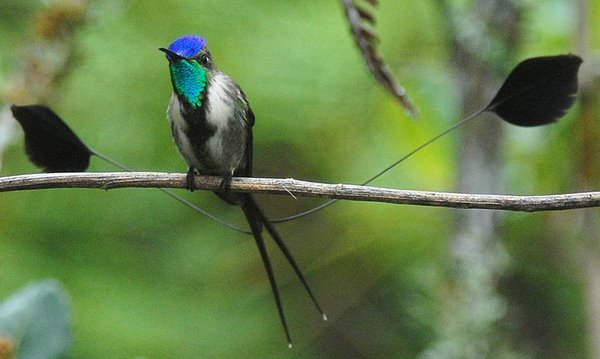
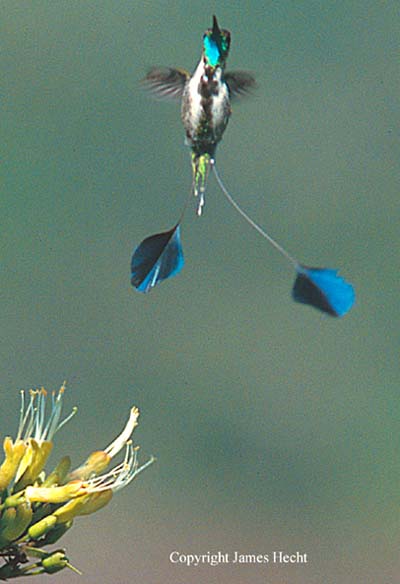
Marvelous Spatuletail: 'Hum 101' - WUaS's first year, required, undergraduate course, to teach critical thinking, 'Clayton Christensen Institute for Disruptive Innovation' and WUaS's possible points of articulation and shared innovations, International Baccalaureate, Art, child's play, and fundraising


'Hum 101' - WUaS's first year, required, undergraduate course, - to teach critical thinking, philosophy and the culture of the ancient, Greek world, the Conference Method itself, and also reading a text, conversing about ideas, as well as writing papers with an argument, for example - all of which will inform much of WUaS's undergraduate and graduate courses


Dear Zenon,

Thanks for an edifying and engaging talk and conversation about Plato's Hippias - "Dunamis in Plato's Hippias Minor" - yesterday at Stanford -
http://philosophy.stanford.edu/community/events/view/1855/.

Here's the Humanities' wiki, subject page, with its links at World University and School -  http://worlduniversity.wikia.com/wiki/Humanities#World_University_and_School_Links. At the top of this page you'll find some related courses from MIT OCW, Yale OYC, plus other great universities.

And here's a recent, Reed College Humanities' 110 fall syllabus - http://academic.reed.edu/humanities/hum110/syllabus/2012-13/fall.html - which is a model for WUaS's planned, first year, required, undergraduate course, to teach critical thinking, philosophy and the culture of the ancient world, the Conference Method itself, -
http://worlduniversity.wikia.com/wiki/Conference_Method_of_Teaching_and_Learning - and also reading a text, conversing, as well as writing papers with an argument, for example - all of which will inform much of WUaS's undergraduate and graduate courses. WUaS is planning this for intellectually engaged, and potentially overachieving students, who may study 32 courses for their free, accredited, undergraduate (bachelor's) degree. (See, for example, "What Hum 110 Is All About" -
http://www.reed.edu/reed_magazine/march2011/articles/features/hum/what_hum_110_is_all_about.html). WUaS may call this online course, with lectures and talking in a Google + Hangout 'Hum 101,' vis-a-vis the information technology revolution.

Would you like to talk further to explore taking the lead in developing this online course for the autumn of 2014, for WUaS's first matriculating class?

Sincerely,
Scott


*

'Clayton Christensen Institute for Disruptive Innovation,' and WUaS's possible points of articulation and shared innovations, International Baccalaureate


Hi Gem,

Greetings from the East Bay hills of the SF Bay Area.

I'm developing online, startup World University and School, which is like Wikipedia with MIT OpenCourseWare, with a high school component, - which I see could be part of the Clayton Christensen Institute for Disruptive Innovation's focus, - and am writing to see if we might chat further at some point about some possible points of articulation and shared innovations.

In addition to online, MIT OCW-centric, accredited, university degrees on the one hand, -
http://worlduniversity.wikia.com/wiki/Admissions_at_World_University_and_School#World_University_and_School_Links - WUaS would also like to offer online, International Baccalaureate diplomas, beginning first in English perhaps in 2015 - http://worlduniversity.wikia.com/wiki/WUaS_International_Baccalaureate_Diploma_and_Programme. WUaS has received the 'green light' from BPPE (state of California), for which WUaS is currently filling out the forms, as well as WASC senior (which accredits both Stanford and UC Berkeley +), both important, first, accrediting organizations. (I've communicated by email with Clayton Christensen a little in the past, and also know John Palfrey a little). On the other hand, WUaS is planning wiki schools in all 7,105 languages, for people-to-people teaching and learning, - and Wikipedia is in 285 languages, by way of comparison. Would you be up for meeting to talk about this over a cup of coffee sometime in SF?

Best regards,
Scott


*

Art, child's play, and fundraising


Great, Paul, and Universitians! :)

Now where are WUaS's fundraising, writing navigators for our Friendly University spaceship, I ask myself, since I haven't had much success with fundraising in some years now.  And while John O'Connor at San Francisco Friends' Meeting collaborated fruitfully with me in writing one grant proposal, which we didn't get, WUaS would like to compensate people for such work, and we still don't have the resources for this. ... WUaS has had this chicken and egg problem for years, both financially, as well as track-record wise.

As you may know, WUaS has received the 'green light' from BPPE (state of California), for which WUaS is currently filling out the forms, as well as WASC senior (which accredits both Stanford and UC Berkeley +), both important, first, accrediting organizations.

Who on this sporadic World University and School email list would like to collaborate in writing future, fundraising grant proposals, with employment or remuneration possibilities, if successful!

Thanks for your very helpful and insightful Jump Start Growth email newsletters, Paul.

Friendly regards,
Scott


...

Tuesday, October 22, 2013

Senegal Bushbaby: Timely and topical Harvard Berkman talk on Nollywood and film in Nigeria ... "The New Nollywood" - http://cyber.law.harvard.edu/events/luncheon/2013/10/nollywood ... which I added to World University and School's 'Nigeria,' wiki, subject page ... http://worlduniversity.wikia.com/wiki/Nigeria ... eventually planned for all 521 languages there


Timely and topical Harvard Berkman talk on Nollywood and film in Nigeria ... "The New Nollywood" - http://cyber.law.harvard.edu/events/luncheon/2013/10/nollywood ... which I added to World University and School's 'Nigeria,' wiki, subject page ... http://worlduniversity.wikia.com/wiki/Nigeria ... eventually planned for all 521 languages there, with MIT OCW-centric, Creative Commons' licensed,  degrees possibly in larger languages, and in English beginning with the first matriculating class in 2014, including  the Hausa, Igbo, and Yoruba languages, and here are WUaS's wiki film subjects - http://worlduniversity.wikia.com/wiki/Film#World_University_and_School_Links - in English.


...


Monday, October 21, 2013

California condor: What's anthropological agency? I heard a fascinating, Anthropology talk yesterday at Stanford, which suggested that food in Bengal, India, was an actant, or had agency, What's an agent anthropologically?, What's agency philosophically? What's agency for robotics? When can we say that a robot has achieved various degrees of autonomous causation? What's agency for digital bots such as avatars in virtual worlds?


What's anthropological agency?

I heard a fascinating Anthropology talk yesterday at Stanford, which suggested that food in Bengal, India, was an actant, or had agency.

... vis-a-vis mediation and in terms of being a generator of relationships ...


"Food as Mediation"
Manpreet K. Janeja


https://www.stanford.edu/dept/anthropology/cgi-bin/web/?q=node/1531


*

What's agency philosophically?


Wikipedia -

agency.

http://en.wikipedia.org/wiki/Agency_(philosophy)


Oxford Companion to Philosophy -


agent.

A person (or other being) who is the subject when there is action. A long history attaches to thinking ...

http://www.oxfordreference.com/view/10.1093/acref/9780199264797.001.0001/acref-9780199264797-e-46


agent causation.

A direct causal relation between agents and actions that is irreducible to causation by events and states. Advocates of agent ...


http://www.oxfordreference.com/view/10.1093/acref/9780199264797.001.0001/acref-9780199264797-e-47


agent-relative moralities.

Typical agent-relative moral principles forbid us from committing one murder even if by not doing so we permit five to ...

http://www.oxfordreference.com/view/10.1093/acref/9780199264797.001.0001/acref-9780199264797-e-48


Stanford Encyclopedia of Philosophy

Action -

http://plato.stanford.edu/entries/action/


Shared agency -

http://plato.stanford.edu/entries/shared-agency/


*


What's agency for robotics? When can we say that a robot has achieved various degrees of autonomous causation?

'Intelligent Robotics and Autonomous Agents' series at the MIT Press
http://mitpress.mit.edu/books/series/intelligent-robotics-and-autonomous-agents-series


"When Is a Robot a Moral Agent?"
by John Sullins

http://www.academia.edu/150599/When_Is_a_Robot_a_Moral_Agent


*

What's agency for digital bots such as avatars in virtual worlds?

see these previous blog posts -

http://scott-macleod.blogspot.com/search/label/avatar%20agency


...

Sunday, October 20, 2013

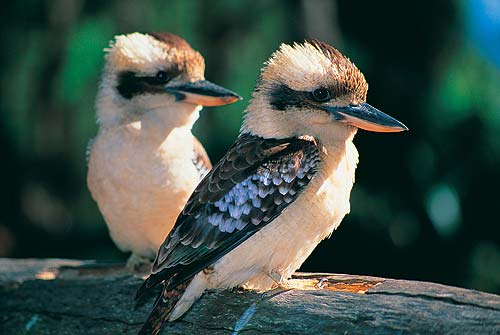
Laughing Kookaburra: "Stanford University Roundtable: Are You Happy Now?" video, Far-reaching and germane conversation about happiness from knowledgeable and Stanford perspectives


I found this Stanford Roundtable on Friday, 10/18, very far-reaching and germane, and glad it's posted publicly ...


'2013 Stanford University Roundtable: Are You Happy Now?'
(begins at the 13 minute mark)


http://www.youtube.com/watch?v=Oheja4D6wDk

but I wonder how the panelists would respond to some aspects of happiness I didn't hear them talk about, such as great happiness, and great, great happiness, for example ...

(I attended this roundtable at Stanford in person, and listened to it a second time online).


The panelists are -

Katie Couric (moderator)
Jennifer Aaker
Firdaus Dhabhar
Ian H. Gotlib
David Kelley
Sonja Lyubomirsky, (PhD, ’94)

(http://www.stanford.edu/roundtable/panelists/)


The panelists define happiness for them, from around 18 minutes:


"harmony"


"feeling good"


"life is good ...
experience of positive emotions ...
def "want to continue doing what you're doing"


"being present ...
having fun ...
a calling"


"loving ...
believing that your loved ...
finding meaning in what you're doing"


around 25 minutes ...
meditation
physiology of happiness vis-a-vis stress

good stress ...


Creativity around 37 minutes


DSM 4 and DSM 5 around 45 minutes


Evidence for problems and social networking sites around 52 minutes


Children and parental happiness around 57 minutes


Child-centrism around 59 minutes, as unique culturally to the west and the U.S.


Katie Couric also mentions kinetic euphoria, in passing


Takeaways (around 1:14:00) -

"Support system ...
Life is meaningful ...
Sleep"

"Control in our lives ...
Personal growth ...
Relationships - connecting with others"

"see what's happening in real time ...
cognitive therapies for changing your thoughts, that are still the most effective ...
power of positive thinking ...
changing your thinking is the bedrock"

"How you're spending your time ...
are you giving to others"


"authenticity and genuineness ... internal resonance creates possibilities ...
everybody has tough times - recognize this - and then humbly accept help from others"


"generosity is really important ...
positive thinking ... is critical to happiness ... when we're optimistic"


"developing deep meaningful relationships with people"


(Katie Couric is very happy as a persona, herself)


*

Here are quite a few World University and School Happiness subjects - 


*

Here's what I didn't hear them talk about, or what they may have left out, or not been in their scientific discourse, even ... (partly because some of them were juxtaposing happiness with clinical depression)


bliss (as word, experience and brain chemistry)

loving bliss (as word, experience and bodymind chemistry)

MDMA - 'ecstasy' as reference experience

specific interventions that people can do to become happey

enjoyment vis-a-vis 'flow' experiences vis-a-vis Csikszentmihalyi ...

music, and as intervention ... making music, and playing musical recordings, that make you happy

self-generating happiness or bliss, via music or a memory

omega 3 fatty acids ...

engaging humor explicitly to generate happiness

meditation as attuning with one's own biology?

agency - which might be expressed in this sentence, for example, "I choose to experience, or cause in myself, the following qualities of happiness at this time and in this place, and with this brain chemistry"

creating, or changing, milieus or contexts (cultures) for flourishing, such as visiting Harbin Hot Springs, or going to a Grateful Dead show, or creating a virtual world - (the panelists mention eudaimonia, but not as flourishing vis-a-vis happiness, but rather as meaning) ...

while they talk about physiology early on, they don't explore or examine the neurophysiology of bliss

performativity of happiness to create or generate happiness

the role of evolutionary biology vis-a-vis happiness, and possibilities brain chemistry-wise

sexual intercourse, and great happiness, and great, great happiness

What is great happiness vis-a-vis happiness, and great, great happiness?

Seems like this might be loving bliss ...


*

Dolphin: Profile of World University and School, Project Happiness, The 'Happiness,' wiki, subject page at WUaS, PRESS RELEASE for WUaS, 'Three, main, I.T. foci at World University & School, Music School, Universal Translator, Virtual Harbin Hot Springs/Earth as 'classroom''

http://scott-macleod.blogspot.com/2013/02/dolphin-profile-of-world-university-and.html


*

Glad they co-created such interesting ideas about happiness via conversation


*

Could one call this a Stanford view of happiness (Stanford may have addressed some of these questions over the past few decades, and this would be interesting to look at, as well)?


The Laughing Kookaburra

Kookaburra laughing in my backyard, near Geelong, Australia


...

Saturday, October 19, 2013

Wilson's Bird-of-Paradise - Cicinnurus respublica: To sing and make music joyously online together at WUaS, Chanticleer~Wade In The Water (Spiritual), Joseph Jennings, Singing Harmony Links, Virtual Choir - World University Music School (planned as wiki for all languages and all instruments)


Hi Michel,

One main idea at World University and School's Music School is to sing and make music joyously online together.

It would be great if former Chanticleer (S.F.) Musical Director Joseph Jennings, in North or South Carolina now, could become an online Chorus Director at WUaS eventually, e.g. in a Google + Hangout :)

Here are some related Singing links to what we talk about yesterday -


Here's "Chanticleer~Wade In The Water (Spiritual)" ...

http://www.youtube.com/watch?v=t7FmBB3UUH0


ChoralNet Interviews Joseph Jennings -

http://www.youtube.com/watch?v=vXbI3VZTsL4


Singing Harmony - World University and School Links - http://worlduniversity.wikia.com/wiki/Singing_Harmony#World_University_and_School_Links

Virtual Choir -
http://worlduniversity.wikia.com/wiki/Virtual_Choir

World University Music School (planned as wiki for all languages and all instruments) -
http://worlduniversity.wikia.com/wiki/World_University_Music_School

Looking forward to potentially singing online together :)

Best regards,
Scott


*

... would love for WUaS to develop information technologies and applications where we could all sing live with Joseph Jennings online, for example, and the computer programs would give us helpful singing feedback (in a Susan Anders' singing instruction vein), lead to our own recordings, and we could sing the amazingly beautiful songs which Chanticleer sings, and in beautiful ways.


... 

Friday, October 18, 2013

Spoon-billed sandpiper: Fieldwork ideas, in Indonesia and Harbin, Language-learning vis-a-vis learning about culture


Hi Jess,

China! ... sounds like a great traveling opportunity and trip ... curious how you're documenting your Yogyakarta fieldwork as well ... For my ongoing Harbin Hot Springs' fieldwork, I continue to take notes for my 2nd book and virtual world ... And revising my 400 page 1st Harbin manscript also involves incorporating ongoing fieldwork ... and fieldwork, reconceived (pool play?), at Harbin, is fun because it's partly about the waters and even a kind of meditation. :)

Happy travels,
Scott


Hi Scott,
Fieldwork is turning into a much more "traditional" anthropological approach than I had originally anticipated. I'm spending more time in "deep hanging out" than paying attention to what's happening online, mostly because up to now I've been trying to learn Indonesian and Javanese, and because I've been trying to finish a basic household survey before I can get into online details. The other factor is that online use here seems to focus on Facebook, so when I do explore  what's happening online, it's usually quite limited (though still fascinating because I get to see everyday how a facebook status, including my own, affects or plays into daily social interactions. A reminder that my research is about an urban community that calls itself a "cyber village" because of a grassroots community initiative that has provided cheap cable internet access to many families, though not all). So now in the next stage, after I get back from China, will be to really hunker down and try to figure out what exactly is going on when people are engaging with different media, including facebook, SMS, chatting, newspapers, radio, etc. Apart from "Netnography", which combines traditional and online ethnography, I'm not quite sure how to approach this systematically, and what would be most interesting, so we'll see as the months progress. I'm thinking of submitting a post to the Air-L listserv to see what other people might suggest. Can you tell me more about your own work?

Jess


Hi Jess,

I wonder if looking at Wellman's pre-"Networked" (and pre-FB in general) work, particularly in the 1990s, might be useful field note conversation material, as well as broad question-generating material - since I think there was a suburb of Toronto with a similar "Cyber-village" designation and plan, which he has continued to study now over decades.  Besides 'Netnography' resources, what are key, initial, anthropological books or papers for you?

For me, it seems like learning the Indonesian and Javanese languages will give fascinating ethnographic insight into the Indonesian 'mind' 'culture' and language, which the Indonesian internet and your "Cyber village" study would dovetail with, but I need to focus consistently for years with classes, too, to learn a language. (I started translating Rilke poetry and a yoga book into German a few years after returning from a year in Munich, while meeting weekly with an elderly German woman outside of Philadelphia, where she got companionship and I was able to speak with her about what I translated, all of which solidified my German, and was a kind of win-win situation for both of us, and gave me further insight into German culture, as well). But you may well choose a different approach. It also seems like a culture stays with an anthropologist over a life time, - and will in Canada with you, as you teach it - so language expertise would be opening and fascinating in these senses too. What Indonesian poetry or poets do you enjoy?  Any internet poets emerging? (I know of a woman in Chennai, India, who has facilitated a Yahoo group (soul flash) of almost daily poetry; she also lived in the SF Bay Area in Santa Cruz years ago, ... both India and Santa Cruz come through her poetry and others who post on this list for example).

For my first Harbin book, I've come into conversation with Boellstorff's "Coming of Age in Second Life: An Anthropologist Explores the Virtually Human" (Princeton 2008), and written, with punctilious citations, significantly, an ethnography of actual Harbin, which fits his virtual ethnography  of SL well, and then also interpreted aspects of how a virtual Harbin might find form, having planned to build a virtual Harbin in Second Life, after the first virtual Harbin in OpenSim (and my first, different Harbin manuscript were stolen in June 2009). Boellstorff's SL book has been a remarkable fit for me, who needs structure in writing, and Harbin is alternative/hippy/countercultural enough, and 1960s-informed enough, to make it kind of virtual as an actual place, in some ways. And his second edited "Ethnography and Virtual Worlds: A Handbook of Method" (Princeton 2012?) looks like it could inform my second actual / virtual Harbin book which will involve the building of a virtual Harbin for ethnographic comparison ("The Making of Virtual Harbin Hot Springs as Ethnographic Field Site in Second Life and Open Simulator" - https://www.youtube.com/watch?v=3nhvcHw54GE), perhaps in digital googles like the Oculus Rift, or one's even that WUaS makes in REI Glacier Glasses. Field notes for my first book involved regularly logging things in a journal that interested me when I spent a year there in 2008, as well as when I was a Harbin resident for about 5 months in 2005, having conceived of this project well before this. 'Informants' I find fascinating have been important. I enjoy the mind-turning-ness of Harbin and ethnographically. You can find the first 3 1/2 draft chapters here - http://scott-macleod.blogspot.com/search/label/Harbin%20Book%20Section. I see Harbin as a long time research site, and it's also very enjoyable to visit, partly because of the waters and related culture.

Apart from FB, I wonder about the Indonesian folks who put in the internet networks in your city, and what they think about the foreignness of the information coming into Indonesia. I wonder about translation issues - how little or much from English or other languages gets translated into Indonesian and Javanese and vice versa - and what new ideas are adopted and then reformulated in Indonesian terms, - perhaps in terms of identity - and what Indonesians do on the web to change, for example, American culture. What questions along these lines are you asking?

Posting your own observations regularly to your G+ profile, FB, a blog and other social networking sites could provide useful notes and conversation, that could then become dissertation idea building blocks.

I know T.D. (on WUaS's board, and who is exploring translating MIT OCW into Indonesian on behalf of WUaS), whose English is good, and who's an academic teaching at the University of Jakarta, might be able to put you in touch with Indonesian academics or essayists writing about the web there, and in Indonesian or Javanese. I also know Tom Boellstorff a little, and could possibly put you in touch with him, if that would interest you; I'd think Tom, as a professor actively writing about digital questions and Indonesia, but separately :) and more actively teaching cyber-ethnography, would be of possibly great help, but he has a lot of irons in the fire. (Just came across this interview of him in Indonesian - http://archive.org/details/EthnographyTheVirtualWorld). Jenna Burrell's references in her book per her Harvard talk - http://cyber.law.harvard.edu/interactive/events/luncheons/2013/02/burrell - might also be good starting places, in addition to Wellman's, although this is probably all familiar literature to you. I know I let the field itself focus me, - and not the academic literature which can get overwhelming in scope, (except for one book - CoAiSL), but could be worth synthesizing nevertheless, depending on your inclinations - and for me the Harbin as field site, is significantly informed by its waters, its clothing-optional pool area, and the legacy of the 1960s and '70s that continues to inform Harbin in unfolding ways. How this Harbin will find form in a virtual Harbin will become novel ethnography. (And I'm drawn to the novel and innovation ethnographically, even beyond the anthropological travel aspects of living in an unfamiliar, fascinating culture).

Time to revise further my book here. Happy China traveling :)

Scott


...


Thursday, October 17, 2013

Point Lobos, underwater, ecological abundance: Looks like ObamaCare in California will cost $1 per month, for those under a certain income level, after tax subsidies ... great and incredible, added some resources on ObamaCare and California to the 'Medicine,' wiki, subject page at WUaS, and which will also dovetail with World University and School's online Medical School


Hi V,


As a FYI, it looks like, for under a certain income level, the best value 'Bronze 60' plan with ObamaCare in California will cost $1 per month, for a highest rated Kaiser Permanente plan worth $399 per month, after subsidies, which you can take 'up front.'

Click on Shop and Compare here at Covered Care CA - https://www.coveredca.com/ - and let me know how you read this. This is what I found - https://www.coveredca.com/shopandcompare/#healthplans&ui-state=dialog.

Sounds like a good news.

Nice to see you today,
Scott


I just called Covered Care California, 1 888 975 1142 - and indeed, health insurance will cost $1 / month for under a certain income level (I was insured out-of-state prior to this, for health insurance I couldn't and didn't use for years), and people can take the tax credits up front. You can enroll on phone or online by November 15th (and through mid-year 2014), and coverage would begin January 1st. With the Bronze 60 plan, which is less expensive overall than the Silver Plus plan (but more expensive for copay visits - and I don't see a doctor very much), one can see a physician once a year for free for preventive care visits.

Cheers, :)
Scott


*

I've added some resources on ObamaCare and California to the 'Medicine,' wiki, subject page at WUaS.

http://worlduniversity.wikia.com/wiki/Medicine


and which will also dovetail with World University and School's online Medical School, even financially -

http://worlduniversity.wikia.com/wiki/World_University_Medical_School#World_University_and_School_Links -

planned for many, many countries and languages, as well.


...


Wednesday, October 16, 2013

Grizzly: What is a wiki, and vis-a-vis World University and School?, "Information Technology and the Network Society" course


What is a wiki, and vis-a-vis World University and School? Wikis are editable web pages - click 'edit this page' on one, - and change something, to see how it works. In knowledge-oriented wikis (like Wikipedia and WUaS), this means that we can all share ideas, or teach to each other. It's a dramatic change in terms of knowledge-generation, historically even. Wikipedia is now in 285 languages, and we all co-wrote it, and WUaS plans to be in 7,105 languages and 242 countries, as inter-lingual wikis, as one wing in our planning, for open, people-to-people teaching and learning. On the other wing, WUaS plans to offer free, online, Creative Commons' licensed, MIT OCW-centric degrees, - http://ocw.mit.edu/courses/translated-courses/ - and in many languages, - and MIT OCW is already translated into 8 languages.

Here's the 'Wiki,' subject page, for sharing ideas and open teaching and learning about wiki itself, as an example - http://worlduniversity.wikia.com/wiki/Wiki. Click 'edit this page' to try editing or to add something.

See you Thursday online in our "Information Technology and the Network Society" course, - http://worlduniversityandschool.blogspot.com/2013/09/information-technology-and-network.html - where we'll partly consider Rainie and Wellman's Chapter 4 - "The Mobile Revolution" - in the first hour, on Harvard's virtual island, as well as further developments in the Information Technology revolution, in the second hour, in Google group video Hangouts, where I'll share more with everyone than last week's conference method responses to your ideas in the group text chat, leaving time for conversation toward the end of the class.


*

Another post about WUaS applications and applying to World  University and School disappeared completely from my blog today. I had posted it twice - both yesterday by accident and this morning at 8:05am. It's good that this blog is being read, but who are the watchers?


...

Tuesday, October 15, 2013

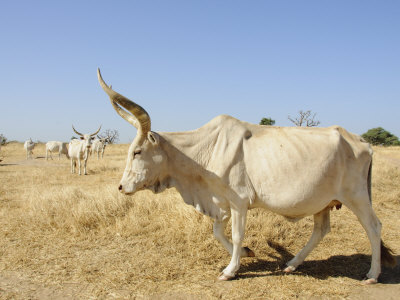
Senegalese cattle: Email correspondance, Music, Dance, Electric car to reverse global warming, Good, WUaS, annual business meeting this past Saturday, "Age of Innocence" by Edith Wharton, Nice combination of book and film ... might be a great approach for a whole MIT OCW-centric course at online WUaS, Wharton Business School at Penn founded by Quaker, Founding Quaker-informed WUaS, - and planned in all languages and countries


Hi M,

Just playing and practicing the piano here ... lyrical Scottish Country Dance tunes and Bach ... piping practice later. :)

Scott


Hi Scott,

Found your message on the 'phone when I got home this evening from book group.  Normally we meet on Saturday but this time it was Sunday.  All's well here.  More warm weather.

M


Hi M,

What did you all read for book group?

Time to roll out the Nissan Leaf electric car worldwide and reverse global warming.

Will give a lesson to R later. His first gig with me playing harmonies is on Nov 2.

At Stanford Anthropology now at a brown bag lunch talk to learn how Stanford Anthro students apply for and get monies for research from the department ... very relevant eventually for WUaS.

Good WUaS annual business meeting this past Saturday where we confirmed the Chief Academic Officer, J (in Spain which is great for accrediting eventually in Europe), and G said he would be Chief Operating Officer, both needed roles for the BPPE forms, and also minuted for the BPPE forms that L (CFO) and I (CEO) are owners of WUaS.... big steps all ... check out the minutes which you received.


Scott


S,

We read "The Age of Innocence" (1920) by Edith Wharton for Saturday's discussion; also saw one of the movies based on her novel.  The movie and the discussion were superb.

M


S,

Nice combination of book and film ... might be a great approach for a whole MIT OCW-centric course at online WUaS (don't know of one already here, for example - http://ocw.mit.edu/courses/literature/21l-501-the-american-novel-stranger-and-stranger-spring-2013/Syllabus/ - with no films mentioned).

The founder of the Wharton Business School at Penn was a Quaker. It's also the oldest business school in the US, I think. Any idea whether Edith Wharton was in this family?  She won the Pulitzer Prize for literature in 1921 for this book, "The Age of Innocence," her 12th, I think, and was nominated for the Nobel prize for literature in 1927, 1928 and 1930.

While I'm no Leland Stanford, I'm glad to be founding another (hopefully great) Quaker-informed University (World University and School), and planned in all languages and countries.

Love,
Scott


- Scott MacLeod - Founder & President
- http://scottmacleod.com/worlduniversityandschool.html
- World University and School - like Wikipedia with MIT OpenCourseWare (not endorsed by MIT OCW) - incorporated as a nonprofit effective April 2010.


...


Monday, October 14, 2013

Eastern Pennsylvania woodland forests: Quaker business practices inform WUaS monthly business meetings, and planned for all languages and countries, See this Forbes' Magazine article on "Doing Business The Quaker Way," (See also - Beyond Majority Rule: Voteless Decisions in the Religious Society of Friends (1996 (1983) 2nd ed.)), Both are here at the Quakers' wiki, subject page at WUaS as references, While WUaS is secular and nontheist and friendly - and WUaS is also MIT OCW, STEM-centric - WUaS plans to organize its Language-country universities' management-wise into their own monthly business meetings


Quaker business practices inform WUaS monthly business meetings, and planned for all languages and countries.


See this Forbes' Magazine article on

"Doing Business The Quaker Way" -
http://www.forbes.com/2009/10/09/quaker-business-meetings-leadership-society-friends.html


(See also - Sheeran, Michael. 1996 (1983). Beyond Majority Rule: Voteless Decisions in the Religious Society of Friends. (2nd ed.). Philadelphia, PA: Philadelphia Yearly Meeting.)

Both are here at the Quakers' wiki subject page at WUaS as references -

http://worlduniversity.wikia.com/wiki/Quakers_-_Religious_Society_of_Friends


*

While World University and School is both secular and nontheist and friendly - which WUaS's monthly business meeting has explicitly talked about and addressed, and WUaS is also MIT OCW, STEM centric - WUaS plans to organize itself management-wise - for wiki language pages articulated with wiki country pages - into their own monthly business meetings, with parallels to Quaker monthly meetings and yearly meetings, and possibly quarterly meetings, to distribute Friendly-informed decision-making, budgeting, etc., to individual business meetings.  


See these recent WUaS blog posts about languages and countries and California's BPPE ...


- REQUEST FOR COMMENT about WUaS's Organizational and Management Structure for BPPE forms, Arabic, English, Spanish, French, Russian, Mandarin, Wiki, Wikipedia

http://worlduniversityandschool.blogspot.com/2013/10/request-for-comment-about-wuass.html


- Octopi and chromatophores: RFC - REQUEST FOR COMMENT about WUaS Organizational and Management Structure for BPPE forms, Arabic, English, Spanish, French, Russian, Mandarin, Wiki, Like Wikipedia with MIT OCW (not endorsed by MIT)

http://scott-macleod.blogspot.com/2013/10/octopi-and-chromatophores-rfc-request.html


...