Tuesday, February 24, 2009
Hippie Kids: Kids' and Music Sections
I added kids' and music sections to World University and School - http://worlduniversity.wikia.com/wiki/World_University - today. I think people will engage it when it's helpful to them, and that will happen by aggregating a lot of material which is already on the web. Check out MIT's Open Course Ware, - http://ocw.mit.edu/OcwWeb/web/home/home/index.htm - in the meantime. Someone asked me recently for a course on autobiography, and here's a course: http://ocw.mit.edu/OcwWeb/Writing-and-Humanistic-Studies/21W-730-3Spring2001/CourseHome .


Monday, February 23, 2009
Starfish: The Rains are Here, Contact Improv Freedom, World University
The rains are here in northern California, and everything is wet. It feels like we're raining our way away from drought.
*
People at the contact improv jam in Fairfax are pretty free, and having a lot of fun jamming intimately.
**
World University and School is developing, with the following sections currently: 'courses,' 'subjects,' 'languages,' 'nation states,' 'you at world university,' 'educational software,' and 'hardware resource possibilities.'
*
People at the contact improv jam in Fairfax are pretty free, and having a lot of fun jamming intimately.
**
World University and School is developing, with the following sections currently: 'courses,' 'subjects,' 'languages,' 'nation states,' 'you at world university,' 'educational software,' and 'hardware resource possibilities.'
Sunday, February 22, 2009
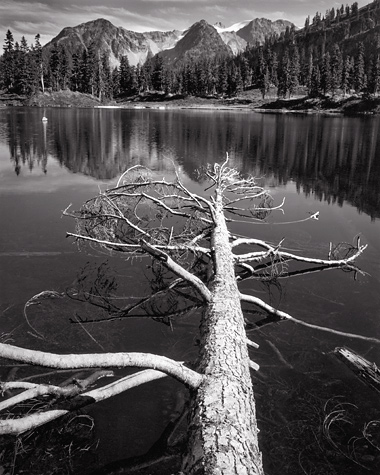
Fallen Tree: A Tree Fell Across the Harbin Road
A tree fell across the Harbin road today in a storm, cutting off electricity, and bringing people together in new ways. And the warm waters kept flowing out of the earth, as people went in and out of pools, in the dark and the rain.
*
...
Saturday, February 21, 2009
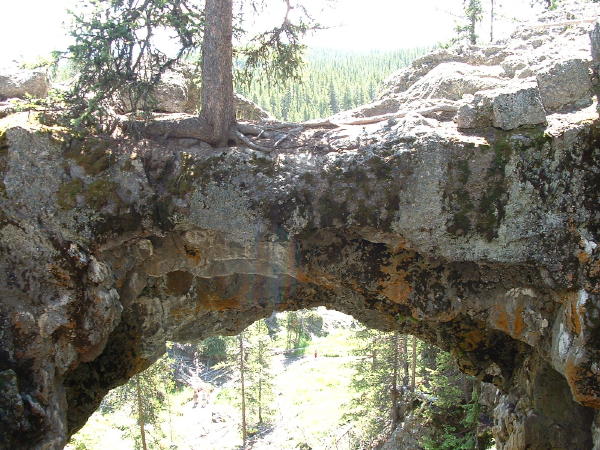
Natural Bridges: Day at Harbin, Relaxation Response, "Thinking by Cases"
I arrived at Harbin last night around 10 pm, giving a friend a ride from the SF Bay area. A cold was coming on, so I decided not to head to the pools, but instead to find a platform to sleep out under the night sky on. I used two sleeping bags, a thermarest and a ground cloth, with no tent, and sleep very well outside at Harbin, almost always.
In the morning, with dew on my top sleeping bag, having slept out across the road from Mainside, and not too far from the new restroom, I put my sleeping bags in the my vehicle, because the sky had clouded over, and it seemed like it might rain, and headed to the pools. I enjoy walking along the village path for about 1/3 of mile, and coming into the pool area, after being away for only a few days was, again, lovely. The dressing room was still being cleaned, and the weather was good, so I put my bags on a bench under the grape arbor, and near the new L-shaped cold pool - like we most people do when the weather is good - took off my clothes, took a shower, and went into the warm pool.
There were two women and one man there, all naked, at a little after 6:30 in the morning. Everything eases when you enter the pool. I often elicit the relaxation response in the morning when I first enter the warm pool, sitting in padmasana. I started exploring the relaxation response like this in the warm pool a year or two ago, I think - maybe longer - and I find this salutary and great. The warm water is so easing, and is slightly buoyant, so that relaxing this and relaxing this, happens freely ....
went to the heart shaped pool, saw a friend,
went to breakfast in the restaurant
talked with people I knew and new friends, especially about open source technologies and freeware
went upstairs through the library, and had an espresso, talked with missy, about the benefits of flax seed oil - omega-3s
read anthropology "Thinking by cases, or: how to put social sciences back the right way up" about case studies ... which was in my browser window on my computer
http://www.espacestemps.net/document1395.html
Singlove stopped by with a computer part in the Blue Room, so I went to help him install it at his place ...
He dropped me off, and I went into town to work on the internet, where I edited some of these blog entries ...
Now I'm heading back to town (around 1:45 pm, Middletown, California, on February 21, 2009)...
And loving bliss, naturally, when and as we want it ....:) How?
In the morning, with dew on my top sleeping bag, having slept out across the road from Mainside, and not too far from the new restroom, I put my sleeping bags in the my vehicle, because the sky had clouded over, and it seemed like it might rain, and headed to the pools. I enjoy walking along the village path for about 1/3 of mile, and coming into the pool area, after being away for only a few days was, again, lovely. The dressing room was still being cleaned, and the weather was good, so I put my bags on a bench under the grape arbor, and near the new L-shaped cold pool - like we most people do when the weather is good - took off my clothes, took a shower, and went into the warm pool.
There were two women and one man there, all naked, at a little after 6:30 in the morning. Everything eases when you enter the pool. I often elicit the relaxation response in the morning when I first enter the warm pool, sitting in padmasana. I started exploring the relaxation response like this in the warm pool a year or two ago, I think - maybe longer - and I find this salutary and great. The warm water is so easing, and is slightly buoyant, so that relaxing this and relaxing this, happens freely ....
went to the heart shaped pool, saw a friend,
went to breakfast in the restaurant
talked with people I knew and new friends, especially about open source technologies and freeware
went upstairs through the library, and had an espresso, talked with missy, about the benefits of flax seed oil - omega-3s
read anthropology "Thinking by cases, or: how to put social sciences back the right way up" about case studies ... which was in my browser window on my computer
http://www.espacestemps.net/document1395.html
Singlove stopped by with a computer part in the Blue Room, so I went to help him install it at his place ...
He dropped me off, and I went into town to work on the internet, where I edited some of these blog entries ...
Now I'm heading back to town (around 1:45 pm, Middletown, California, on February 21, 2009)...
And loving bliss, naturally, when and as we want it ....:) How?
Friday, February 20, 2009
Naked Gardeners: Hippie Trail, Multimedia Wiki-projects, Wildness and Freedom
I just communicated with Rory MacLean, author of "Magic Bus: On the Hippie Trail from Istanbul to India" (2009), who wants to create an online map so that lots of folks who went along the hippie trail can post multimedia and connect it to this map.
So he started a hippie trail Facebook page, where people can post multimedia: https://www.facebook.com/groups/52146563316/ (but I'm not sure how much Rory is involved with this page anymore).
And here's his book:
amazon.com/Magic-Bus-Hippie-Trail-Istanbul/dp/0978843193
The hippie trail as map to which one can then link photographs, videos, art, and other media, is a fascinating project, and anthropologically as well. But like World University and School, and ethno-wiki-virtual-world-graphy, Wikis and such projects probably all need head gardeners, or pilots, to tend them into flourishing, or navigate them safely on their journeys, as well as a bunch of folks to 'garden' and 'sail' together, ~ to be gathering at these sites again and again. From this creative production, the hippie trail, for example, will probably carry on, now via cyberspace and information technology.
So it looks like Rory will be a main driver of one hippie trail multimedia bus, and I'll continue to be a head gardener of World University and School.
All of these projects would work well with a Wiki (editable web pages, like Wikipedia), such as MediaWiki - mediawiki.org/wiki/
(Simply to create a map and add photos to it, you can make an image map using html [hyper text markup language], the basic 'language' of web pages, that people's browser can then read. Here's the basic html code for an image map: https://html.com. Can someone mention easier ways on the web, and add them to the comment section on this blog entry?)
For many multimedia projects ahead, you probably need at least one gigabyte of RAM (random access memory - computer (electric) memory), and 2 gigs are better. But the photo web sites Picasa (which is Google) and Flickr, with their respective maps, may also be sensible, easy, and good starting technologies for this kind of project, too.
When we develop exactly what we're looking for ~ a simple map which allows us to easily link multimedia to ~ let's add the steps to https://wiki.worlduniversityandschool.org/wiki/Ethnography.
* * *
... with an invitation to add resources to Google Street View, eg the Harbin Hot Springs' gate here
~ http://tinyurl.com/p62rpcg ~ https://twitter.com/HarbinBook ~ http://bit.ly/HarbinBook ~

http://img.dailymail.co.uk/i/pix/2008/05_04/NakedGardenEPA_800x765.jpg

http://en.ce.cn/entertainment/fashion/trend/200706/06/W020070606553451707862.jpg
Into the radical beauty of the Harbin pools ~~~ :)
.
Thursday, February 19, 2009
Cliffs: To All Who Teach and Learn ~ Newly Added Languages & Countries in World University and School
To all who teach and learn, worlduniversity.wikia.com
~ A Wiki (editable web pages) for sharing knowledge and innovation, with newly added languages, countries, subjects, and 'You at World University' pages.
*
Heading to a contact improv jam ...
~ A Wiki (editable web pages) for sharing knowledge and innovation, with newly added languages, countries, subjects, and 'You at World University' pages.
*
Heading to a contact improv jam ...
Wednesday, February 18, 2009
Marsh Cattails: Creating Software which Discovers and Invents: Ethno-wiki-virtual-world-graphy
How to create software which discovers and invents, especially analytically, and which explicitly displays the relationships (as pathways, apart from words' connotations and denotations?) between conceptual elements that make up these discoveries and inventions?
I wonder how ethno-wiki-virtual-world-graphy might shape virtual spaces in which human discourse, in type-chat, voice, and avatar-gesture (in the contemporary), might lead to new discoveries and inventions, both linguistically, and in what people shape in these virtual worlds, and be used to characterize concurrently in Wikis.
Here's an example of how this might work with virtual Haight-Ashbury - webnographers.org/index.php?title=Ethno-wiki-virtual-world-graphy - a kind of hippy-wiki-virtual-world-graphy.
I wonder how ethno-wiki-virtual-world-graphy might shape virtual spaces in which human discourse, in type-chat, voice, and avatar-gesture (in the contemporary), might lead to new discoveries and inventions, both linguistically, and in what people shape in these virtual worlds, and be used to characterize concurrently in Wikis.
Here's an example of how this might work with virtual Haight-Ashbury - webnographers.org/index.php?title=Ethno-wiki-virtual-world-graphy - a kind of hippy-wiki-virtual-world-graphy.
Wild Cotton: Radical Nonviolence, Loving Bliss, Internet & Off the Grid
Dreaming Bear at Harbin mentioned radical nonviolence in a poem the other evening in the Harbin Temple.
Radical nonviolence is a practice which has been around for a long time. Mahatma Gandhi represents one fascinating, relatively recent example of what it can do. The Society of Friends {Quakers} have engaged this discourse over centuries, too. And radical nonviolence emerged again dramatically in the 1960s on a widespread basis, and secularly, poetically, spiritually, and irreverently. Dr. Martin Luther King, Jr., and civil rights' marches in the U.S. south are two remarkable examples. Is Obama's presidency in this tradition of practices? Where might this lead?
I wonder if one example of exploring radical nonviolence might be eliciting loving bliss, naturally. Here are some practices ~ scottmacleod.com/LovingBlissPractices.htm
~ for beginning an exploration.
*
Harbin has provided access to the Internet slowly. Visitors can get limited ($1.00 for 7 minutes), dial-up speed internet access in the Blue Room cafe in Stonefront Lodge. I think this partly reflects Harbin's view that it's a hot springs' retreat center, and visitors come as a kind of retreat, as well as a kind of hippy vision of living off the grid. It is possible to go into town (Middletown, California) and get access, too.
But I think places around the world in the future without the internet will also be very fascinating anthropologically, because they won't have been as influenced by new media as people with internet. And Harbin continues to be unique in this sense, in the context of the 'wired' world.
Radical nonviolence is a practice which has been around for a long time. Mahatma Gandhi represents one fascinating, relatively recent example of what it can do. The Society of Friends {Quakers} have engaged this discourse over centuries, too. And radical nonviolence emerged again dramatically in the 1960s on a widespread basis, and secularly, poetically, spiritually, and irreverently. Dr. Martin Luther King, Jr., and civil rights' marches in the U.S. south are two remarkable examples. Is Obama's presidency in this tradition of practices? Where might this lead?
I wonder if one example of exploring radical nonviolence might be eliciting loving bliss, naturally. Here are some practices ~ scottmacleod.com/LovingBlissPractices.htm
~ for beginning an exploration.
*
Harbin has provided access to the Internet slowly. Visitors can get limited ($1.00 for 7 minutes), dial-up speed internet access in the Blue Room cafe in Stonefront Lodge. I think this partly reflects Harbin's view that it's a hot springs' retreat center, and visitors come as a kind of retreat, as well as a kind of hippy vision of living off the grid. It is possible to go into town (Middletown, California) and get access, too.
But I think places around the world in the future without the internet will also be very fascinating anthropologically, because they won't have been as influenced by new media as people with internet. And Harbin continues to be unique in this sense, in the context of the 'wired' world.
Tuesday, February 17, 2009
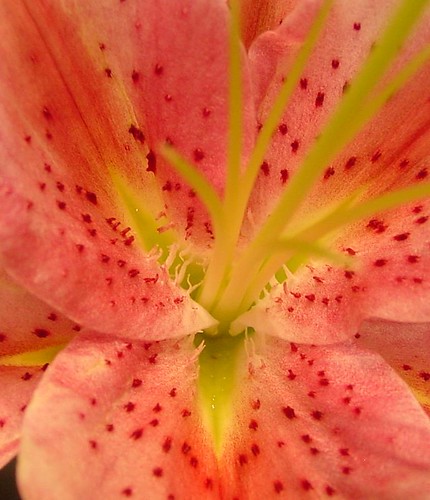
Ocher Rose Yellow Beauty: "What's new in your world," Harbin Language, Harbin as 'Happening'
In the rich fabric of life which emerged starting in the 1960s ~ 'counterculture' ~ "What's new in your world?" was one alternative expression of "Hi, how are you?" While I haven't heard this recently, until a friend greeted me this way this morning in the Harbin dressing room, it seems a little 'old-fashioned' these days, even in its asking about newness about your experience in your life.
But I'm curious to articulate 'lexicons' of Harbin language since around 1972, with lexicons of hippie language.
Here are a few hippie lexicons I found in a brief search on the web:
http://www.4starbiz.com/missdeal/lingo.html
http://www.mc.cc.md.us/Departments/hpolscrv/lingo.html
*
Harbin Hot Springs ~ anthropology ~ identity ~ language {Saussure: > semiology of parole?} ~ culture {counterculture - 'oneness'} ~ something new {cultural innovation ~ experimentation} ~ ethnography ~ virtual ethnography ~ is one trajectory I'm continuing to explore vis-a-vis Harbin.
**
Hippie hot pool retreat centers in every state in the U.S. (at least two in each state, to start?), and in every country around the world, in a loose network and in very beautiful locations, clothing-optional with the camping and youth hostel-like kitchen possibilities, an hour or two away from urban areas? Yes ... How could Harbin facilitate this? How could the internet help facilitate this? Ishvara would like to expand.
***
The 'happening' aspect of hippies, where gatherings just spontaneously emerged, at Harbin, for example, and which can almost 'magically' lead to encounters that can be transformative, ~ politically, socially, creatively, therapeutically, spiritually, opening-wise, etc., is less 'happening' these days. {Although the web and social networking sites make possible the formation of groups immediately, in a way that probably draws on the 1960s and 1970s, and politically-mindedly, too}. But gatherings like these were fleeting 'back in the day,' both at Harbin and especially during the 1960s and in the early 1970s. Now Harbin has workshops ~ harbin.org/workshops.htm, which are also gatherings, but slightly more planned. The Harbin pools, however, are still fluid, and create unique, ongoing gathering, twenty-four hours a day, every day of the year.
But Harbin is also 'happening,' as a gathering, in an ongoing way. It has taken form (as a 'hippie' organization) and lasted, and become an one-of-a-kind hippie commune. It's also kind of a hippie 'church' {two, actually ~ Heart Consciousness Church, and New Age Church of Being}, although you wouldn't know it while there {Harbin is pretty alternative vis-a-vis any familiar kinds of 'religion'}, in my experience. Yet, those things which go on in churches - community, intimacy, meaning-generation, marriages and funerals, beliefs - all occur at Harbin, in Harbin's own unique way, and influenced by counterculture.
****
In recent days at Harbin, over the past month, I went with Heartsong to see her place, and help her set up her computer. Heartsong and I have talked a lot recently. She's fascinating in the variety of things she knows - ecology, science, math, physics, science fiction, New Age, meditation traditions, and how she uses her knowledge as malleable codes to facilitate understanding ~ she speaks a lot of 'metaphorical' languages, and understands much ~ and to bond as friends. She befriends and connects, and has a fascinating mind ...
I also saw the films, the Reduced Shakespeare Cos.' "The Complete Works of William Shakespeare (Abridged)," "Mama Mia," and "The Visitor," and went to dances with great music played by DJ Firefly, as well as spent a lot of time in the pools. (Harbin shows about 2 films every day and 4 on the weekend, in addition to a Satsang {translated as something like 'talks about truth'} film on the weekends), in a nice, warm theater with cushions. The flow of life makes sense at Harbin, ~ influenced a lot by going in and out of the pools, and life in this valley. Harbin is.
But I'm curious to articulate 'lexicons' of Harbin language since around 1972, with lexicons of hippie language.
Here are a few hippie lexicons I found in a brief search on the web:
http://www.4starbiz.com/missdeal/lingo.html
http://www.mc.cc.md.us/Departments/hpolscrv/lingo.html
*
Harbin Hot Springs ~ anthropology ~ identity ~ language {Saussure: > semiology of parole?} ~ culture {counterculture - 'oneness'} ~ something new {cultural innovation ~ experimentation} ~ ethnography ~ virtual ethnography ~ is one trajectory I'm continuing to explore vis-a-vis Harbin.
**
Hippie hot pool retreat centers in every state in the U.S. (at least two in each state, to start?), and in every country around the world, in a loose network and in very beautiful locations, clothing-optional with the camping and youth hostel-like kitchen possibilities, an hour or two away from urban areas? Yes ... How could Harbin facilitate this? How could the internet help facilitate this? Ishvara would like to expand.
***
The 'happening' aspect of hippies, where gatherings just spontaneously emerged, at Harbin, for example, and which can almost 'magically' lead to encounters that can be transformative, ~ politically, socially, creatively, therapeutically, spiritually, opening-wise, etc., is less 'happening' these days. {Although the web and social networking sites make possible the formation of groups immediately, in a way that probably draws on the 1960s and 1970s, and politically-mindedly, too}. But gatherings like these were fleeting 'back in the day,' both at Harbin and especially during the 1960s and in the early 1970s. Now Harbin has workshops ~ harbin.org/workshops.htm, which are also gatherings, but slightly more planned. The Harbin pools, however, are still fluid, and create unique, ongoing gathering, twenty-four hours a day, every day of the year.
But Harbin is also 'happening,' as a gathering, in an ongoing way. It has taken form (as a 'hippie' organization) and lasted, and become an one-of-a-kind hippie commune. It's also kind of a hippie 'church' {two, actually ~ Heart Consciousness Church, and New Age Church of Being}, although you wouldn't know it while there {Harbin is pretty alternative vis-a-vis any familiar kinds of 'religion'}, in my experience. Yet, those things which go on in churches - community, intimacy, meaning-generation, marriages and funerals, beliefs - all occur at Harbin, in Harbin's own unique way, and influenced by counterculture.
****
In recent days at Harbin, over the past month, I went with Heartsong to see her place, and help her set up her computer. Heartsong and I have talked a lot recently. She's fascinating in the variety of things she knows - ecology, science, math, physics, science fiction, New Age, meditation traditions, and how she uses her knowledge as malleable codes to facilitate understanding ~ she speaks a lot of 'metaphorical' languages, and understands much ~ and to bond as friends. She befriends and connects, and has a fascinating mind ...
I also saw the films, the Reduced Shakespeare Cos.' "The Complete Works of William Shakespeare (Abridged)," "Mama Mia," and "The Visitor," and went to dances with great music played by DJ Firefly, as well as spent a lot of time in the pools. (Harbin shows about 2 films every day and 4 on the weekend, in addition to a Satsang {translated as something like 'talks about truth'} film on the weekends), in a nice, warm theater with cushions. The flow of life makes sense at Harbin, ~ influenced a lot by going in and out of the pools, and life in this valley. Harbin is.
Monday, February 16, 2009
Water Underground: Woman Under Umbrella in the Pool, Fig Tree Buds, Rain, Men, Women and Watsu
A woman with dreadlocks brought a black umbrella into the warm pool today under which to soak. I was amused, having never seen this before at Harbin Hot Springs. She kept her dreads dry while soaking at one side of the pool. {Most people are naked in the Harbin pools}. Then she went to the front corner of the pool, away from the stairs, and the umbrella rested comfortably in the corner on the two sides of the pool, and she soaked underneath, as if under the roof of a little house. :)
*
The fig tree over the warm pool which lost its leaves in November is showing green, pointy buds now.
**
Harbin is verdant and there are a lot of people there in the middle of winter. The winter rains have finally come, but it isn't that cold, - just wet, gray and dreary. And the pools are warm. It seems the California sunbelt has had about 11 months of dryness, with around 21 days of rain (some very light), only. The plants have adapted over generations, but the very little rain this past year raises significant fire risks for the summer.
***
Watsu {water shiatsu} has emerged at Harbin as a kind of nurturing, healing and softening practice, ~ as a way for people to connect and reconnect. Harbin continues to seem to me to originate from the freedom-seeking movements of the 1960s and early 1970s, where, to generalize grossly, men grew their hair long, and many women seemed to aspire to become kinds of earth mothers. Counterculture seemed to explore, as an ideal, the changing of male gender roles, especially, but also has seemed to continue, on the whole, to perpetuate 'familiar' gender roles, although there was and has been wide-spread experimentation and exploration of life possibilities vis-a-vis gender since. (And ...)
But men and women at Harbin seem to become more masculine and more feminine, in fascinating ways, accentuated by Harbin's clothing-optionalness, where some sexuality is 'in the air,' - from the pretty calm space which the pool area and Harbin (and the 'relaxation response,' I think) give rise to. Harbin's openness and milieu can give rise to deep, freedom-oriented energies in people, in novel ways. And even though Harbin seems to me still somewhat 'traditional' in its countercultural, masculine and feminine roles, Watsu, as practice, and as an unique, social constellation, which began at Harbin about 27 years ago, harmonizes and softens everything, especially ways of being together in the pools, and especially between men and women. And people dance together in the water ... :)
Watsu {water shiatsu} emerged partly by people playing around in the warm pool, mostly naked. Men would float women, women would float women, men would float men, and women would float men, and from that Watsu developed into a form, with its own school, and with a variety of developments since. So, while gender roles can be familiar at Harbin, Watsu brings people together, harmonizes them, and is also a way many Harbin residents also make their living. And creates, as a dance between people, a kind of ease and oneness, in the moment.
Oh, Harbin ...
Watsu is such a beautiful practice, ~ made possible and given form by the hot water flowing from deep underground filling into the Harbin pools, and by a bunch of hippies over the past 40 years exploring movement and being together.
*
The fig tree over the warm pool which lost its leaves in November is showing green, pointy buds now.
**
Harbin is verdant and there are a lot of people there in the middle of winter. The winter rains have finally come, but it isn't that cold, - just wet, gray and dreary. And the pools are warm. It seems the California sunbelt has had about 11 months of dryness, with around 21 days of rain (some very light), only. The plants have adapted over generations, but the very little rain this past year raises significant fire risks for the summer.
***
Watsu {water shiatsu} has emerged at Harbin as a kind of nurturing, healing and softening practice, ~ as a way for people to connect and reconnect. Harbin continues to seem to me to originate from the freedom-seeking movements of the 1960s and early 1970s, where, to generalize grossly, men grew their hair long, and many women seemed to aspire to become kinds of earth mothers. Counterculture seemed to explore, as an ideal, the changing of male gender roles, especially, but also has seemed to continue, on the whole, to perpetuate 'familiar' gender roles, although there was and has been wide-spread experimentation and exploration of life possibilities vis-a-vis gender since. (And ...)
But men and women at Harbin seem to become more masculine and more feminine, in fascinating ways, accentuated by Harbin's clothing-optionalness, where some sexuality is 'in the air,' - from the pretty calm space which the pool area and Harbin (and the 'relaxation response,' I think) give rise to. Harbin's openness and milieu can give rise to deep, freedom-oriented energies in people, in novel ways. And even though Harbin seems to me still somewhat 'traditional' in its countercultural, masculine and feminine roles, Watsu, as practice, and as an unique, social constellation, which began at Harbin about 27 years ago, harmonizes and softens everything, especially ways of being together in the pools, and especially between men and women. And people dance together in the water ... :)
Watsu {water shiatsu} emerged partly by people playing around in the warm pool, mostly naked. Men would float women, women would float women, men would float men, and women would float men, and from that Watsu developed into a form, with its own school, and with a variety of developments since. So, while gender roles can be familiar at Harbin, Watsu brings people together, harmonizes them, and is also a way many Harbin residents also make their living. And creates, as a dance between people, a kind of ease and oneness, in the moment.
Oh, Harbin ...
Watsu is such a beautiful practice, ~ made possible and given form by the hot water flowing from deep underground filling into the Harbin pools, and by a bunch of hippies over the past 40 years exploring movement and being together.
Subscribe to:
Posts (Atom)

 Posts
Posts