I’ve visited Harbin Hot Springs – http://harbin.org - for over 15 years. During a five-month stay (January – June 2005), I became acquainted with Harbin’s residents and the community (a place that emerged out of counterculture) from the ‘inside.’
Other experiences that have prepared me in significant ways for this field of study include my research and teaching about Society and Information Technology, with a particular focus on the research of long-time Berkeley Professor Manuel Castells on the Network Society, as well as my academic interest in the Internet and virtual worlds.
Furthermore, at the University of Edinburgh (2004), I examined related virtual-real questions about emerging, nascent, online ‘place’ in my virtual St. Kilda project, developing methodologies and analytical approaches that I will use in this study.
I’ve been teaching and taking classes in Second Life on Berkman Island (Harvard) for 2 years (Fall 2006 – present). Second Life is a 3-D virtual world, an emerging society, where avatars (interactive figures representing computer users) can communicate, as well as build any object imaginable; Second Life also has an economy with a currency.
Anthropologists have historically studied in a geographically bounded field (Gupta and Ferguson). Examining Harbin Hot Springs on-the-ground and in a 3-D virtual world, as “field sites,” produces methodological questions relevant to the field, such as 1) How can one study both field sites ethnographically? 2) How can one represent them and compare them? 3) How can one theorize anthropology, based on this type of field research?
I’m interested in the people who participate in Harbin, in order to document Harbin for the future, as an anthropologically-constructed and -studied interactive 3-D virtual field site. To start, I propose to model Harbin in Second Life as accurately as possible, and then begin to study the life that develops there through avatar conversation/interaction. Not only are analyses of processes of ethnographic representation significant here, but also articulating and distinguishing on-the-ground processes vis-à-vis virtual ones.
Two other broad, related areas of anthropology interest me. I’d like to consider Harbin in the context of Darwin’s evolutionary theory vis-à-vis sociocultural anthropology. I’d also like to examine, perhaps metaphorically, culture as ‘code,’ including the significance of language and music, using 3-D modeling and the resulting avatar interaction as a starting point.
Studying Harbin as an ethnographic field site provides multiple avenues for exploration. Harbin has developed its own unique lifestyle. As a curious, hippie commune, it is also a liminal place (Turner), where fascinating forms of communitas take place, especially in the hot springs’ area. Harbin, which is legally both a church and a business, has 150+ residents who have lived there for at least a year.
Harbin has also given rise to a number of unique cultural forms and developments. Watsu (water shiatsu), bodywork (massage), and clothing options (where nudity is accepted, but not enforced) are all common practices at Harbin. From a medical anthropological standpoint, people can often find relief for a variety of medical conditions in the Harbin pools, otherwise not possible. While Harbin is the main site for its Watsu School, instructors travel around the world to teach Watsu as well. Harbin thus has given rise to unique educational and therapeutic practices, along with its own fabric of hot springs’ culture. Conducting fieldwork at Harbin gives new meanings to the ethnographic method and practice of immersion.
Harbin is owned and run by NACOB (New Age Church of Being) & HCC (Heart Consciousness Church), whose mission is to promote heart consciousness, a form of monism. Heart Consciousness Church also trains people to be ministers. Emerging out of the 1960s and 1970s, Harbin’s spirituality is informed by its embrace of New Age ‘religion.’ As such, Harbin Hot Springs is an embodiment of the common thread uniting the Human Potential Movement, the Holistic, Natural Movement, and Universal Spirituality (harbin.org/hccnacob.htm). As a culture and a spiritual community, Harbin boasts a fabric of life that can be very affirming; it is a fascinating place to think about its New Age practices. To visit Harbin, one person in the party must be a member of Heart Consciousness Church, although in general, however, HCC plays an unobtrusive role at Harbin, which in some ways is as free and open a place as humans can envision.
Since the social significance of virtuality and information technology is a developing anthropological field, I’d like to work with faculty on an ethnography of Harbin Hot Springs in the context of anthropological theory, to valorize information technology and virtual worlds as co-constituting what humans do, and as a new field.
Showing posts with label Gupta and Ferguson. Show all posts
Showing posts with label Gupta and Ferguson. Show all posts
Saturday, August 16, 2008


Wednesday, August 13, 2008
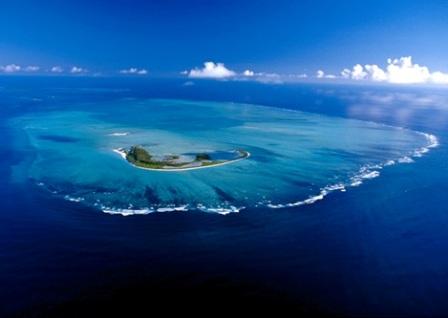
Island: Virtual Harbin, Ethnography, Virtual Worlds
Harbin as virtual field site
Virtual Harbin
In this part of the ethnography I'm working on, I’d like to represent Harbin Hot Springs anthropologically as both an on-the-ground and a virtual, global field site. In doing so, I'll ask in what ways can we examine a multi-sited field that emerges from this real-virtual comparative and contrasting approach?
The “Field Site” in a virtual context vis-a-vis 'place'
As a virtual “field site,” will a virtual Harbin become a ‘destination’ unto itself? What would this mean in the context of a networked virtual universe (earth plus solar system), as well as for the Harbin experience? (I've done a related project about St. Kilda (2004), the island archipelago off the west coast of Scotland), as a nascent, virtual field site.
What are the implications of these new forms of communication for Harbin in terms of an anthropological conception of “the field,” in a globalizing world, but especially as a virtual field site itself? {This field site as a form of ethnographic representation could provide an ongoing and dynamic interpretation and representation of Harbin today that lasts thousands of years}.
Anthropologists have historically traveled to and done fieldwork in "the field," which has traditionally been geographically bounded.
In my view, Harbin Hot Springs is a traditionally “bounded” field site in some historical senses, while its residents and visitors are, by and large, open to counterculture. [Travel to and from Harbin by both residents and guests has shaped Harbin’s ethos in multiple ways over the past 40 years.]
Making a virtual Harbin as field site in a 3-d virtual world for ethnographic study is not 'bounded' in familiar anthropologically virtual ways.
Examining Harbin on the ground and online as a “field site” shapes interesting methodological questions in relation to the conception of “the field.”
First, Harbin as a real and virtual "field" is multi-sited, spanning national boundaries, and accessible by anyone with Internet access and enough memory.
Secondly, if one looks at virtual Harbin as a destination in itself, embedded and represented in a form of time-space compression and accessed by clicking a mouse, using a virtual world search engine or entering a SLURL (Second Life Uniform Resource Locator or World Wide Web address), the "cyberspace" of online Harbin Hot Springs, can be potentially viewed as another "field" with another set of methodological challenges, shaped by changing information technologies. In anthropological terms, the field in these cases becomes shaped by a variety of histories and living traditions, the processes of anthropological representation, i.e. the development of virtual Harbin, a specific concept of Harbin’s milieu, and the ways in which Harbin is represented on the Internet in the context of developing multimedia technologies for visitors, tourists and end users.
In George Marcus’ `Ethnography in/of the world system: the emergence of multi-sited ethnography,' the author's examination of recent methodological trends in anthropology shows the way in which anthropological approaches are beginning to examine complex objects and become multi-sited within the context of a world system and late capitalism. Marcus shows how ethnography is moving from a single-sited approach to cross-cut dichotomies of global and local, of "lifeworld" and system. Drawing on an extensive review of anthropological literature, he identifies the way multi-sited ethnography is now located within new interdisciplinary spheres including media studies and science and technology studies. One of Marcus' arguments is that "any ethnography of a cultural formation in the world system is also an ethnography of the system, and therefore cannot be understood only in terms of the conventional single-site mise en scène of ethnographic research, assuming indeed it is the cultural formation, produced in several different locales, rather than the conditions of a particular set of subjects that is the object of study." (Marcus, 1995, 99) For Marcus, "Multi-sited research is designed around chains, paths, threads, conjunctions, or juxtapositions of locations in which the ethnographer establishes some form of literal, physical presence, with an explicit, posited logic of association or connection among sites that in fact defines the argument of the ethnography." (Marcus, 1995, 105) By identifying field sites within the context of a world system, Marcus provides a methodological orientation in which to contextualize the idea of "the field" vis-à-vis a comparison and contrasting of real and virtual Harbin.
From an anthropological perspective, real and virtual Harbin Hot Springs, as a field site, extend an understanding of virtuality multi-sitedness across multiply national boundaries, specifically incorporating multiply historical and living traditions, for both on the ground and digital Harbin. In the aggregate, both Harbins also implicitly become the field for a very wide variety of agents which not only include the various local and regional producers and consumers of online and on the ground Harbin from their respective countries and language groups, but also a new series of questions relating to the ethnographic production of a virtual Harbin. The concept of co-constituting the Harbin experience, which in this case defines a cultural formation based on an interpretation of the countercultural and hippie-mindedness origins of Harbin, explicitly attempts to identify outstanding shared characteristics which transcend national boundaries, thus constructing a unique anthropological, global Harbin "fieldsite."
Real and virtual Harbin as bounded, island-like sites, arguably sharing a transnational, common expression are now produced and represented through interpretation, representations, and digitally mediated forms of communication on the Internet. In `Discourse and practice: "the field" as site, method and location in anthropology,' Gupta and Ferguson relocate the field in terms of social, cultural, and political locations, de-centering it from its constitutive (Stocking), ‘local,’ on the ground, anthropological origins. In the context of the Internet and cyberspace, online UNESCO world heritage sites, as a worldwide-accessible, digital field site, contribute to such an anthropological repositioning of the field by not only providing information about on-the-ground world heritage sites to a worldwide audience, but also by providing access to online representations of world heritage embodied in new information technologies, which are arguably sites themselves and which offer new ways of mediating communication. Social communication and communities involved in these new technologies and online UNESCO world heritage sites shape nascent ways of online interaction and meaning. Ethnographically, ‘cyberspace’ as a field site spurs questions about the ways in which visitors, tourists, end users, developers and producers interact, both globally and locally, using these new technologies in the context of a world system, especially vis-à-vis the new practices and discourse Information Technology engenders. Opportunities for new kinds of fieldwork, both online, and on the ground, are thus presented, which rewrite the ways in which the “Harbin Experience” is understood as well as how Harbin guests and residents, as well as producers, tourists, visitors, and end users utilize these representations and digital means of communication.
In a globalizing world, the implications of these new forms of digital communication for Harbin in terms of an anthropological conception of “the field” contribute to the reshaping and extension of on-the-ground Harbin in manifold ways. Real Harbin, as a “field site” and the ideas and experiences that have emerged there constitute a potential anthropological ‘field,’ as do the ways in which it is represented on the Internet for the actors and avatars that visit. New modes of digital communication also reformulate linkages, contours and associations articulating new forms of both on the ground and online “field sites.” Sites like real and virtual Harbin begin to shape a Harbin “field” as discourse in the context of a world system, thus contributing to an ongoing relocation of the anthropological concept of the “field.”
Subscribe to:
Posts (Atom)

 Posts
Posts