Wikipedia now has 272 languages. I'd like to invite World University & School into the same sphere of web thought as Wikipedia, but specifically with 8000 languages - all know human languages, most widely construed, for translation, research and archival reasons.
*
About Wikipedia, in brief:
"On 15 January 2001 Wikipedia contained the words ‘Hello World!' posted by its founder Jimmy Wales. Nine years on, the site has grown rapidly to contain over 14,000,000 articles in more than 272 languages and to become one the Web’s top ten most visited sites. One of the world’s largest collaborative and reference sites, mobilising more than 85,000 active contributors, it attracts around 65 million visitors on a montly basis."
http://ow.ly/XS5E
A wealth of knowledge in 272 languages: More so, an experiment in engaging with lifelong and open learning - Interviewing Jimmy Wales on Wikipedia and its role in the world of OERs
Mon, 18/01/2010 - 03:05 | by giotaalevizou
On 15 January 2001 Wikipedia contained the words ‘Hello World!' posted by its founder Jimmy Wales. Nine years on, the site has grown rapidly to contain over 14,000,000 articles in more than 272 languages and to become one the Web’s top ten most visited sites. One of the world’s largest collaborative and reference sites, mobilising more than 85,000 active contributors, it attracts around 65 million visitors on a montly basis.
As a reference site, Wikipedia’s status is far from consensual. Some are skeptical of its credibility and authority, potentially compromised by its open publishing model, user anonymity and lack of centralized editorial control (e.g. Duguid, 2006; Keen, 2007). Others celebrate its potential for the very same reasons – anyone can contribute – and they note the provision of novel modes of expertise and peer review as guarantees of credibility (e.g. Benkler, 2006; Jenkins, 2006; 2007, Rosenzweig, 2006). Addressing controversies, the Wikipedia community recognizes its weaknesses and provides useful guidelines for information literacy. More importantly, several strategies exist to improve not only the content quality of the reference material, but also expanding the mission of the Wikimedia Foundation with additional content through the cohort of its topical (Wikinews), education projects (Wikibooks, Wikiversity) and supportive media archives (Wikimedia commons, Wikiquote, Wikisource, Wiktionary).
@TylerT Created for the WikiMedia Foundation strategic planning process
The position of Wikipedia and the cohort of Wikimedia projects within the Open Education Resource movement is central; a testament of this is the inclusion of Wikipedia in Hewlett Foundation’s OER Overview and in Wikieducator’s OER Handbook. And while numerous initiatives exist to mobilize partnerships with cultural institutions, content holders (e.g. Wikipedia Loves Art), and disciplinary experts (see Neuroscience Wikipedia Initiative), cross content fertilization with other OERs (for example with Fotopedia, Encyclopedia of Life, Wikieducator) is also at the core of the project.
One of first most tantalizing aspects of the Wikipedia effect for me – a long standing researcher of the worlds of reference, new media and education systems –firstly focused on collective intelligence and on the transparent mediation of the turmoil surrounding in the social production of knowledge; I soon realized that Wikipedia ‘s value rests too in mediating openness and free resources; crucially, the openness in the process of learning how to aggregate, remix, prod-use and freely distribute resources.
I have met Jimmy Wales at several events and conferences promoting Wikipedia or speaking about the politics and ethics of openness or the nature of self-organizing knowledge and learning communities. Apart from Wale’s longstanding positions within Wikipedia and the Wikimedia foundation, his role within the Open Education movement is widely documented, not least for his involvement in meetings that produced The Cape Town Open Education Declaration; His view like others, involves a vision of open education linking teaching with learning and the collaborative cultures of the Internet. It includes creating and sharing materials used in teaching as well as new approaches to learning where people create and shape knowledge together: “everyone has something to teach and everyone has something to learn” he’s been cited saying before.
What follows below is part of a conversation on Olnet and open education we had a while ago in London.
G.: What do you think is the position of Wikipedia in education, as an OER?
J.: It plays two major roles, and there are other roles of course… First, a supplement to traditional learning materials, pretty much the same way as any traditional encyclopaedia would be. Now you are taking a course and you need some background information, or an overview or summary and get that from us. And the other, and perhaps more interesting, is a role that was partially fulfilled in the past by the traditional encyclopaedia, which is for informal learning. But now, this has exploded beyond anything we might have imagined. In no small part because Wikipedia has such a comprehensive coverage of topics of general interest that aren’t necessarily high culture. So, people can go to Wikipedia and start to learn about the history of [wondering] say, 1960s rock and roll music. And there’s massive amount of information, more than you would find in the old encyclopaedia. Also there’s more scope for contemporary pop culture … all kinds of things people are interested in. And are interested in engaging with in a serious way, but aren’t traditionally considered ‘proper’ topics. But also all the proper topics are there, science history, current affairs. But informal learning, is one the major changes, I think, that the internet has brought us …it’s a completely new type of tool for the lifelong learning process.
G.: How would you describe the position of Wikipedia and the Wikimedia Foundation within the OER movement?
J.: Because Wikipedia itself has such a huge body of information that’s under a free license, I think we are in a very good position for people to reuse our work in more formal and more structured educational resources. If you look up Wikipedia, yes it has lots of information, but there are really times that you want accomplishment and achievement either for a certification that a university might give or just for my own personal desire. And it might be useful to be able to say ‘oh I successfully passed a basic knowledge course, so I feel comfortable that I know about ….say the ‘History of 1960s Rock and Roll’… I can dig around on Wikipedia for ever right? But maybe I want an expert to organize it, say in the form of a quiz at the end of each article, asking ‘did you get the main points out of it? ‘ That could be constructed quite easily from using Wikipedia content in a layer on top of it.
So, that’s one aspect. There are things that aren’t very useful in an OER context. For example one of my interest is …. I was studying German and now I am studying Spanish … and I have looked around…and really Wikipedia is not very useful for a foreign language learner. If I am studying German and I want to read German Wikipedia, it’s too hard for me… In Wikibooks there’s some German textbooks, but last time I looked it was quite limited and boring and a long way from being useful. What really works for education, for language learning, it’s not a textbook, it’s an interactive environment and so we are a long way from that.
We are part of the OER community by default because of what we are. We have the wikibooks projects, which if fine, but we are trying to write textbooks using the same software to write that we use to write Wikipedia… And the software itself has certain default assumptions that are designed around the workflow for producing an encyclopaedia and it doesn’t support some of the other kinds of things you would want for an educational environment. It’s not an ideal system for this purpose.
G.: Yeah to work around tools that would support the representation of learning activities and design
J.: Exactly. We haven’t had the resources to be able to do that….nor has it been our main focus….We can wish we had more resources, but that’s the way it is.
G.: There’s another thing about Wikipedia and the Wikimedia foundation. They have been exemplifying how they can mobilize synergies between ordinary people generating content and cultural institutions, like museums, or other public domain content holders. Do you think that the OER community can work more on mobilizing such synergies?
J.: I think it should. More people can get involved and there is a need to mobilize more people. At the same time in our free licensing world, we don’t need to have too much replication of effort. Once Wikipedia finds a way to get good quality, freely licensed images of historic artwork, no-one else needs to go out and do it again, because it’s all there in Wikimedia commons and it’s all set already. So you can take it and use and we are happy about that … But I do think that one of the great successes of Wikipedia is that it is a community and a lot of things happen because of these large communities out there supporting each other and coming out with ideas and executing them without a lot of top down control. And the more we can generate a sense of an OER community of people just working together, there’re a lot of possibilities that don’t involve formal institutional collaboration, but lots of individuals doing interesting things and seeking out other individuals doing interesting things, without really making it formal and institutional.
G.: Wikipedia has been a test-bed for experimentation for autodidacts and self-learners who begin by reading and then they feel the urge to start contributing. What do you think are the components that make participation engaging in that sense?
J.: What I hear from people, anecdotally without any serious study of it, and by the general sense that I get… Most people enjoy the process for two reasons. One they engage with the knowledge of the subject matter they are interested in…I met this woman, she’s very active in Wikipedia, she’s a biology PhD, and she’s studies snails, she’s involved in the wikiproject snails, they are writing all about snails, and so she’s really in to this subject matter. And she’s very engaged with that and she enjoys the information that she’s working with, because that’s her life’s work…the other reasons are more social: people are in it in full, because they get to meet other interesting people and interact with them, they make friends, they make enemies … That’s what keeps people interested.
And of course, sometimes, there’s an element of social validation … You do something and someone thanks you for it, and you realize that you have been recognized, by people who you like, as doing good work and that feels good. So those kinds of things and also the third thing is the ideological or political motivation you might say where people very passionately believe in the vision of a free encyclopaedia for everyone in every language. And that vision – I don’t think it sustains the every day-to-day work – but it’s a piece of what you feel good about at the end of the day. And it helps you go through some boring moments. Doing some boring chores, that are not in themselves fun, but you feel like OK, ‘look, in the bigger world, I am doing something that I really believe in and if I have to sit here for three hours doing a tedious task, I can through it because it’s not about just having fun, it’s about doing something big and important in the world that I can be part of’.
G.: Several educators invite their students to come to the site and contribute as a part of a learning exercise. Some claim that they test creativity, negotiation skills and critical literacy skills, Do you think experiments like these could be an additional model for OERs?
J.: Yes I do. I think within the Wikipedia world, many of these types of projects are done with undergraduates. It works well if they are given enough background and enough guidance …. Sometimes it’s worked very poorly….if someone says ‘tonight your task is to go and edit Wikipedia’ and they have no idea of what to do and they come and sort of misbehave and get in trouble, that’s not a very helpful experience for anyone. But with OERs, what’s very interesting, is the value for people you are in – this is where I see it come become very effective – people who are entering a graduate level teachers, professional teachers, not just pure academics, people who’ve gotten their undergrad degree and now are pursuing a teaching graduate degree to become more professional…So they have classroom experience with the relevant age-level of kids. And now in their studies they are beginning to think in a bigger way about the construction of learning resources … What better way to think about that, rather than to engage in it? …. So you can imagine a class project or a series of class projects where your task is to perhaps edit a sixth grade math test and think about the design of it and engage and doing it. And other people in the next semester can build what’s already there … or another class in another place can do it.
Because one thing that I think is necessary for OERs that’s a little bit different from an encyclopaedia, is some pedagogical expertise. Everyone understands what an encyclopaedia article is as an adult. What people don’t always have a good intuition about, is what is needed to teach say chemistry for a university chemistry class…That takes more expertise and more experience. And this is where I think for OERs to become successful is to have explicit learning designs.
And one of the interesting things and great opportunities here, is that currently with traditional resources, the cycle feedback and improvement is quite week and quite slow. At the end of the semester …if you really hated the textbook you might write an email and complain. …. There’s not a lot of feedback loop and the number of people improving it is very small…But imagine a big group of 50-100 people who are teaching 1st year level undergrad chemistry all working from the same OER and all being engaged in a serious dialogue through the semesters and improving it in real time and being able to discuss it and say ‘look, this particular chapter - we found that – students perform very poorly either because the tests/activities were not structured well or the chapter was not good …what’s wrong, what are the people missing, how can we improve it? 'And by speeding that feedback we might get better materials out very quickly.
G.: So you think that dialogical and social networking tools should be embedded with specific OERs, within particular subjects, or teaching communities?
J.: I think so, and in part because …. I think with an encyclopaedia article, everybody that comes to it is sort of within an experimental subject … they read it and whether they are not satisfied or not, they have the chance to respond immediately. Whereas with a more structured learning environment you really need to engage people more. Because without that kind of direct feedback I think it’s very slow to realize that a mistake has been made.
G.: There's a general consensus that more explicit learning and interactivity need to be embedded in OERs , but the idea of engaging teachers using particular OERs or particular subjects within an OER to talk to each other and share ideas proves challenging in implementation
J.: it’s one thing to say, oh I have been using this and I am going to go and leave feedback on a message board and no-one is there….there’s a lot of barriers or it’s very cumbersome …. as opposed to feel emotionally involved … ‘I am part of this’ and getting people to get to use this and leave some feedback, it may not lead to very much to something like ‘I am actually empowered, I have the necessary skills to be able to actually engage, contribute something … or actually rewrite a paragraph and it will be adopted ….I think that’s a challenge … not an insurmountable challenge, but there are some limitations right now….
G.: What do you think are the key issues that will affect the impact of OERs
J.: I think broadly, it’s going to be a lot easier at the university level, rather than for younger students….simply because professors have a lot more latitude in selecting materials to use and it’s less bureaucratic world …. One of the problems we have in generating a large volunteer movement in creating textbooks and other learning materials for children, is that volunteers work in part on the premise that’s it’s going to be used … I write something on WP somebody is going to read it …if I write in Wikibooks or for CK-12 a text for 6th graders, I am not sure how many people are going to use, if they are going to find it … it’s not approved by whatever standards bodies …. That’s a huge hurdle for generating a large body of volunteers… But at university level you don’t have that problem. I mean, particularly we do more outreach to professors if get those chemistry professors to volunteer, they know it’s going to be used because they are going to be ones using it.
G.: Maybe targeting professors and teachers in specialized conferences and mailing lists, communication outlets that they use for their particular discipline and maybe also run training programmes
J.: Yeah, one of the interesting and challenging things are how do you find those audiences in a place where we can connect to them in a reasonable cost and put them together … sort of create the spark …. There’s also different types of educational conferences, workshops. One of the major of the opportunities is transforming education in the developing world by making materials available freely for people to re-use and adapt in their own contexts. So there’s an opportunity if it’s proven to be lower cost, superior motive production that a lot of funding may come from state governments … for any government really. For the State of California for example, the incentive is to see at economic model of open source software and see, because they already pay for these ridiculous prices for textbooks. And even if the schools aren’t supplying these, the burden is not students, through grants and loans…if we can show that the cost is lower and superior or equivalent quality.
ow.ly/XS5E
(http://scott-macleod.blogspot.com/2010/01/lonicera-sempervirens-wikipedia-now-has.html - January 18, 2010)
Monday, January 18, 2010


Sunday, January 17, 2010
Nicobar Pigeon: Free, open, fascinating 'Society & Information Technology' Course Conversation, starting Sat. Jan 31 from 11:10a
Free, open, fascinating 'Society & Information Technology' Course Conversation in Second Life starting Sat. Jan 31 - on Saturdays from 11:10a-1p Pacific Time in Second life - WorldUniversity.Wikia.Com/wiki/World_University ... We'll integrate the cool, WEBNOGRAPHERS.ORG wiki findings, with conversations about how the Information Technology Revolution developed, - with Aphilo Aarde (Scott MacLeod's avatar). Let's explore the Information Technology Revolution together ...
Caloenas nicobarica (Linnaeus, 1758)
eol.org/pages/1047263
Nicobar pigeon
(http://scott-macleod.blogspot.com/2010/01/nicobar-pigeon-free-open-fascinating.html - January 17, 2009)
Caloenas nicobarica (Linnaeus, 1758)
eol.org/pages/1047263
Nicobar pigeon
(http://scott-macleod.blogspot.com/2010/01/nicobar-pigeon-free-open-fascinating.html - January 17, 2009)
House Sparrows Together: While much knowledge is ABOUT & HOW & WHY, Added OPEN COBALT-another Open VIRTUAL WORLD, Opera is a trip, 1000 mg flax oil
While much knowledge is ABOUT nature, the material world or ideas, & HOW and WHY these work - possibly boring for some because not self referential - they can lead to symbolically rich, great FLOW! experiences - vis-a-vis problem solving, programming, thinking and writing, for example, for our bodyminds as 'computers,' metaphorically.
How to generate FUN with this & as well as LEARNING more generally vis-a-vis worlduniversity.wikia.com/wiki/Subjects ...
*
added OPEN COBALT, another, open source VIRTUAL WORLD - on your hard drive (in contrast to on a proprietary computer server) - to http://worlduniversity.wikia.com/wiki/Educational_Software - an OPEN WIKI
*
Far out: Dirty F@#*ing Hippies Were Right!
(Thanks to AB via MG) ...
Come jam at World University
*
Opera is a trip as you get into it - profoundly so, yet touching on much sad, human stuff - What's the happiest, trippy, extraordinary repertoire sung beautifully which you know of? Invitation to post them {and specific recordings} below :)
*
Wants to make the open WorldUniversity.Wikia.Com - like Wikipedia & MIT OCW the Stanford/Harbin plus of the web - teach, learn, add :)
*
Good stuff:
1000 mg of flax seed oil 3-4 times a day is harmonizing & brightening in my experience, lessening caloric intake makes me thinner, & warm pools:) music ... and great friends ... are sweetening, as well ...
*
World University & School is eventually for One Laptop per Child countries, like Haiti, especially. Check out the open, free World Univ & Sch - worlduniversity.wikia.com/wiki/World_University.
It's like Wikipedia with MIT Open Course Ware. It's a remarkable
teaching and learning opportunity, potentially in all languages, nation
states, subjects and at all levels, and eventually with degrees. Regards, Scott
(http://scott-macleod.blogspot.com/2010/01/house-sparrows-together-while-much.html - January 17, 2010)
Song Thrush with Young: To gain fluency at a musical instrument, Like language, Milieu
To gain fluency at a musical instrument (a technology, here), like language (the brain is a technology where language expression have been selected for evolutionarily, as I see it), musical milieus/cultures are important, where lots of people are playing instruments (practicing a lot) as mutual models and musical conversation partners ... Musical code is especially salutary to mutually generate and co-generate music as language ...
*
Shall we explore this in virtual worlds such as Second Life and Open Cobalt as part of http://worlduniversity.wikia.com/wiki/Music ... Let's ...
*
And for loving bliss elicitation?
scottmacleod.com/GuidelinesPracticingLovingBlissvavMusicalInstrument.htm
(http://scott-macleod.blogspot.com/2010/01/song-thrush-with-young-to-gain-fluency.html - January 17, 2010)
*
Shall we explore this in virtual worlds such as Second Life and Open Cobalt as part of http://worlduniversity.wikia.com/wiki/Music ... Let's ...
*
And for loving bliss elicitation?
scottmacleod.com/GuidelinesPracticingLovingBlissvavMusicalInstrument.htm
(http://scott-macleod.blogspot.com/2010/01/song-thrush-with-young-to-gain-fluency.html - January 17, 2010)
Friday, January 15, 2010
Scarlet Tanager: American Friends' Service Committee's Haiti work, AFSC
Here's American Friends' Service Committee's Haiti work - afsc.org/miami/ht/d/ContentDetails/i/4529 &
Here's a way to give to afsc.org
*
Piranga olivacea (Gmelin, 1789)
eol.org/pages/1178181
Scarlet Tanager
(http://scott-macleod.blogspot.com/2010/01/scarlet-tanager-american-friends.html - January 15, 2010)
Here's a way to give to afsc.org
*
Piranga olivacea (Gmelin, 1789)
eol.org/pages/1178181
Scarlet Tanager
(http://scott-macleod.blogspot.com/2010/01/scarlet-tanager-american-friends.html - January 15, 2010)
Thursday, January 14, 2010
Inland Waterway: Seeking supportive high school? Free High School Diplomas / GED Prep, Global Univ & Sch
Hi Friends & SF Bay Area Quakers,
I just added to the World University & School wiki the new section 'Free High School Diplomas' - worlduniversity.wikia.com/wiki/Courses#Free_High_School_Diplomas - with an invitation to all of you to post to this wiki (editable web pages) the free, great, online high school courses and diplomas that you know about, - which will grow in number. Here's some which I've already posted: worlduniversity.wikia.com/wiki/Courses#High_School_Course_Material_.28Free.29. At World University and School, you can teach, learn, and add content and links. It's like Wikipedia, with an academic course focus, yet open to all teaching and learning.
There is a free Ph.D. in Education for 25 at Harvard for the next two years already listed at World University and School - worlduniversity.wikia.com/wiki/Courses#Free_Degree_Programs. Please let students who may be applying to graduate programs in 'Education,' or a related field, know.
And there are also the beginnings of free and open textbooks at WUaS: worlduniversity.wikia.com/wiki/Library_Resources#Online_Textbooks, and so much more, including great, FREE educational software: worlduniversity.wikia.com/wiki/Educational_Software.
I'm also beginning to hold free and open office hours on Saturdays from 11:10 a - 1 p PT on Harvard's Second Life Island - slurl.com/secondlife/Berkman/113/47/25 (you can get a free Second Life avatar from this page which takes about 10 minutes), and I'll probably teach an open, free "Society and Information Technology" course here beginning in late January. Please come visit in-world in Second Life these Saturdays. And come visit in-world in late January, and learn about how the information technology revolution is occurring. It's fascinating, and I hope World University & School will further it. And come in-world just to chat and visit. Second Life is interesting, as can teaching and learning be.
{There's also an unprogrammed, Quaker Silent Meeting from 10-11 on Saturdays in Second Life on Sea Turtle Island here: slurl.com/secondlife/Sea%20Turtle%20Island/197/17/27 with more related information here: scottmacleod.com/LovingBlissFriends.htm}. In other words, you can attend Meeting from home, with, for example, ten or twenty other avatars.
World University and School is an 'edit this page' school & university (and like Wikipedia with MIT Open Course Ware) and it will flourish further as many people engage it. (For example, Wikipedia has around 14 millions articles in 240 languages, and started around 2002, and all of us made it, - and it's great!).
Check back for free high school course work and diplomas over time, as well as everything to do with free teaching and learning. {WUaS, as a wiki, is potentially very versatile}. For example, there's a budding music school - worlduniversity.wikia.com/wiki/Music. There's already a lot! of teaching and learning material at WUaS which you'll find if you glance through it, and we can continue to create it richly. And I hope WUaS will grow into all languages, nation states, subjects and levels.
Please spread the word about WUaS, and please add, free great content - with your web camera and by linking. And please let me know if you'd like to help - this is a 'we make it' wiki - or simply add to the wiki, by clicking 'edit this page.'
With friendly greetings,
Scott
http://scottmacleod.com
http://worlduniversity.wikia.com/wiki/World_University
(http://scott-macleod.blogspot.com/2010/01/seeking-supportive-high-school-free.html - January 15, 2010)
Wednesday, January 13, 2010
Sapien: Anthropology has long focused on questions of identity, Now, Human primate identities
Anthropology has long focused on questions of identity, in one form or another, at least since its origins as an academic 'discipline,' say, in 1843 (with the Royal Anthropological Institute - en.wikipedia.org/wiki/Royal_Anthropological_Institute).
What it hasn't focused on - with its concern for identities and peoples who have been disadvantaged vis-a-vis colonialism, industrialization and globalization, for example - is human primate identities. I'd like to bring this concept into the academic discipline of anthropology, gingerly, yet clearly.
To consider modern human groups and 'subcultures' as human primate identities, first and foremost, living in 2010, for example, is something anthropologists haven't considered very much, in what I've read. No one has begun to draw parallels, for example, between human primate identities and common chimps vis-a-vis Bonobo chimps (as well as the two species of Orangutans and Gorillas, and all the other 365-ish higher primate species), vis-a-vis questions of family, violence, group organization, agency and structure questions, sexuality, subjectivity, etc. {I'm a primate - Homo Sapien - who is also a sociocultural anthropologist}. While there are numerous, potential, methodological problems with this, I think many sociocultural anthropologists have read little or none of the primatalogical literature. Contemporary sociocultural anthropologists rarely focus their field research on Homo sapiens, with primate comparison in mind. Yet ethnographic and primatological field sites, and research methods, are very similar.
An emphasis on the contemporary, and sociocultural anthropological field work vis-a-vis Homo sapiens, explicitly, say, in relation to counterculture or hippies, for example, would bear much fruit.
https://en.wikipedia.org/wiki/Human
(http://scott-macleod.blogspot.com/2010/01/anthropology-has-long-focused-on.html - January 13, 2010)
Texas Wildflowers: "Nontheist Friends {atheist Quakers?}" subject at World University & School, An Open Wiki School, Teach Out About What You Want
Hi Nontheist Friends,
I recently added a "Nontheist Friends (atheist Quakers?)" subject at World University & School, an open wiki school, where we can all teach to and learn from each other -
worlduniversity.wikia.com/wiki/Nontheist_Friends_%28atheist_Quakers%3F%29.
I'm in favor of free speech, especially in the context of questions of atheism, Quakers (including especially as a 'religious' body; on an open internet, free speech can feel a lot safer), and idea sharing.
I hope friends will 'teach out about ...' in the sense of teaching creatively (out-spokenly) about atheism and Friends. World University and School is like Wikipedia (with MIT Open Course Ware) where we all can teach to our web cameras. I'm re-posting below an email in the (longest of 3) 'God as Metaphor' thread,' as another response to this thread, too: scott-macleod.blogspot.com/2010/01/walking-elephant-concerning-subject-god.html, where I include the new suggestion to perhaps invite long-time Bonobos researcher Sue Savage-Rumbaugh (see her great TED Talk) to translate from the bonobo Kanzi who knows language, so we nontheist Friends
might learn from a seemingly very pacific species, through conversation.
I invite you teach and learn at WUaS about any subject, especially 'nontheist Friends.'
There's great free software at WUaS to which we can add more as we find it, which you might enjoy: worlduniversity.wikia.com/wiki/Educational_Software.
And there are a lot of courses here, as well: worlduniversity.wikia.com/wiki/Courses.
With friendly greetings,
Scott
scottmacleod.com
worlduniversity.wikia.com/wiki/World_University
scott-macleod.blogspot.com/2010/01/walking-elephant-concerning-subject-god.html
To Nontheist Friends {atheist Quakers} {from a recent posting on the nontheist Friends' Google Group},
Concerning the subject: "God as Metaphor":
I'm curious about developments nontheist friends might make on Ganesh, Krishna, the Tao and related implications for the 'natural,' philosophically, and including sexuality, vis-a-vis the curious idea of God/Goddess, perhaps minimizing this idea nontheistically, especially in this new year.
With a fascination with evolution by natural selection and symbolic processes, I'm also a little stymied by the return of the three letter word (God, or what it signifies/connotes, for some) so frequently to Homo sapiens' mouths, at least in a portion of the world (viz. Huston Smith's 'The Religions of Man'). I wonder if this tendency emerges somehow in ancestral environments in relation to some kind of abstracted alpha male experience/thinking as human primates, - in common chimps, and the two species of gorillas, but not, in my reading of the primatological literature, in the two species of orangutans (which, I understand, are solitary in the wild), or in Bonobo chimps, which are peaceful (and with which Bonobo I think it would be fascinating for nontheist friends to engage in conversation for learning, using language, - let's ask Sue Savage-Rumbaugh to translate: youtube.com/watch?v=a8nDJaH-fVE). I'm inclined to engage
the three letter word (God) a lot less than even nontheist friends are doing in this email thread, and to engage in diversity and tolerance of nontheistically friendly ways of thinking about the fabric of life, including the relaxation response, poetry, music, and evolutionarily informed ways of thinking about meaning of life, peace, nonviolence, community and the experience of connectedness, and even making a living.
Ganesh, that happy elephant guy in India and Hinduism, Krishna, that flute-playing incarnation of the divine, the Tao which is about nonaction, and is ineffable and inexpressible, {but which you know when flow is happening} and evolution, with 8-100 million species and a lot of genetic reproduction over 3.5 billion years are fascinating to me, and about which nontheist friends might also share interesting
ideas, vis-a-vis metaphor.
With friendly greetings,
Scott
http://scottmacleod.com
http://worlduniversity.wikia.com
(http://scott-macleod.blogspot.com/2010/01/texas-wildflowers-nontheist-friends.html - January 13, 2010)
Tuesday, January 12, 2010
Bonobo Mother & Offspring: Correspondence with a Hippy, Yoga Teacher, V, New Year's Greetings
Dear V,
Thanks. I'm exploring practices for eliciting the neurophysiology of 'bliss' (like MDMA ecstasy, naturally) ... interesting exploration {scottmacleod.com/LovingBlissPractices.htm} - am looking for the 'cello bow stroke sounds' or musical scores of this bodymind chemistry, naturally. Music is one avenue, and there are many ... but bliss doesn't always come freely, easily and readily. (Evolution and modernity orient us in many directions, I think).
Words, too, may be uninspired lies ... internet is just another form of communication. But great, online resources for yoga will help many. I prefer person-to-person communication with people I love in beautiful places ... but have to create this ... No kids here yet, and I'm looking for a beautiful friend for this. Need to raise significant monies for World University and School, and am continuing to work on my Harbin ethnography (after a theft in June) and writing poetry on my blog ... Lots of contact improv here in the SF Bay Area these days. So, into the warm pool at Harbin frequently without very much cuddling ... it's very beautiful there, and nice to come and go from Canyon, near Berkeley, 2.5 hours away from Harbin. May start teaching yoga in the Canyon school soon, in the redwoods near where I live. And your explorations? Happy travels.
Love,
Scott
dear Scott,
I wish you also a happy and "blissful" New Year.
I wish you well with your idea of an open university , but I have just refused an on-line
yoga conference , for the same reason that I can not teach yoga to a virtual student.
When I sit in front of a camera , the reason to connect with reality is gone and I am left with an uninspired lie.
I am sure that there will be lots of more mental subjects that would do just fine.
Lots of love ,
V.
On Sat, Jan 9, 2010 at 3:09 AM, wrote:
Greetings from the San Francisco Bay Area and Pennsylvania. Happy Solstice, Happy Holidays, Season's Greetings and Happy New Year! How are you? I’d love to hear your news.
I'm glad to let you know about about the open, free World University & School which I'm developing. One FREE Harvard Ph.D. in Education, for 25 students, is already linked to WUaS: worlduniversity.wikia.com/wiki/Courses#Free_Degree_Programs. If you know people applying now to grad school, this is an opportunity. They would have to apply by the new year, though.
World University and School is a global, virtual, open, free-to-students, multilingual university and school, which is potentially degree- and credit-granting, after some years, but will list free degrees as we add them. WUaS is using an open Wikipedia {with MIT Open Course Ware} model, where we all can teach to our web cameras. It also focuses on great universities' open, free, online content. It's for the developing world {One Laptop Per Child countries to begin with} and everyone. Its web address is worlduniversity.wikia.com/wiki/World_University. World University and School is potentially in all languages, all nation states, all subjects, and at all levels. Teach, add or take a class at World University & School. I blog about World University & School here: scott-macleod.blogspot.com/search/label/global%20university and post about it here: facebook.com/macleod. WUaS is in the process of applying for tax exempt (501 c 3) status. Spread the word.
While the possibility that many people will contribute an amazingly wide variety of web camera teachings (which people are already doing a lot on the web, - e.g. youtube.com/edu), as well as interactively in virtual worlds like Second Life, is exciting - creatively and academically - I'm particularly interested in how we might all make learning & teaching enjoyable and fun.
Please let me know if you're interested in engaging World University & School; you can simply click 'edit this page' button at WUaS, for one. For comparison's sake, Wikipedia is now in around 240 languages, with 14 million articles, and it started around 2002.
I continue to write my ethnography of Harbin Hot Springs, with a virtual world aspect - harbin.org - a hot springs' retreat center 2 hours northeast of the San Francisco Bay Area, with roots in the 1960s and early 70s.
I'm living in a beautiful place called Canyon in the San Francisco Bay Area, - in a forest, east of Berkeley.
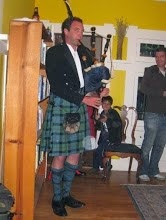
I'm continuing to play my bagpipe regularly {and taking lessons}, and for events like weddings: scottmacleod.com/piping.htm.
Merry Christmas and Happy New Year. Come participate in World University & School.
Warm greetings,
Scott
scottmacleod.com
Here's my holiday letter from last year: scott-macleod.blogspot.com/2009/01/happy-new-year.html, where, on my blog, you'll also find poetry I've been writing - click on the 'poetry' or 'Canyon' labels, as well as more ideas about 'global university.'
(http://scott-macleod.blogspot.com/2009/12/yellow-balsam-root-holiday-letter-2009.html - December 21, 2009)
(http://scott-macleod.blogspot.com/2010/01/bonobo-mom-and-child-correspondence.html - January 12, 2010)
Thanks. I'm exploring practices for eliciting the neurophysiology of 'bliss' (like MDMA ecstasy, naturally) ... interesting exploration {scottmacleod.com/LovingBlissPractices.htm} - am looking for the 'cello bow stroke sounds' or musical scores of this bodymind chemistry, naturally. Music is one avenue, and there are many ... but bliss doesn't always come freely, easily and readily. (Evolution and modernity orient us in many directions, I think).
Words, too, may be uninspired lies ... internet is just another form of communication. But great, online resources for yoga will help many. I prefer person-to-person communication with people I love in beautiful places ... but have to create this ... No kids here yet, and I'm looking for a beautiful friend for this. Need to raise significant monies for World University and School, and am continuing to work on my Harbin ethnography (after a theft in June) and writing poetry on my blog ... Lots of contact improv here in the SF Bay Area these days. So, into the warm pool at Harbin frequently without very much cuddling ... it's very beautiful there, and nice to come and go from Canyon, near Berkeley, 2.5 hours away from Harbin. May start teaching yoga in the Canyon school soon, in the redwoods near where I live. And your explorations? Happy travels.
Love,
Scott
dear Scott,
I wish you also a happy and "blissful" New Year.
I wish you well with your idea of an open university , but I have just refused an on-line
yoga conference , for the same reason that I can not teach yoga to a virtual student.
When I sit in front of a camera , the reason to connect with reality is gone and I am left with an uninspired lie.
I am sure that there will be lots of more mental subjects that would do just fine.
Lots of love ,
V.
On Sat, Jan 9, 2010 at 3:09 AM,
Greetings from the San Francisco Bay Area and Pennsylvania. Happy Solstice, Happy Holidays, Season's Greetings and Happy New Year! How are you? I’d love to hear your news.
I'm glad to let you know about about the open, free World University & School which I'm developing. One FREE Harvard Ph.D. in Education, for 25 students, is already linked to WUaS: worlduniversity.wikia.com/wiki/Courses#Free_Degree_Programs. If you know people applying now to grad school, this is an opportunity. They would have to apply by the new year, though.
World University and School is a global, virtual, open, free-to-students, multilingual university and school, which is potentially degree- and credit-granting, after some years, but will list free degrees as we add them. WUaS is using an open Wikipedia {with MIT Open Course Ware} model, where we all can teach to our web cameras. It also focuses on great universities' open, free, online content. It's for the developing world {One Laptop Per Child countries to begin with} and everyone. Its web address is worlduniversity.wikia.com/wiki/World_University. World University and School is potentially in all languages, all nation states, all subjects, and at all levels. Teach, add or take a class at World University & School. I blog about World University & School here: scott-macleod.blogspot.com/search/label/global%20university and post about it here: facebook.com/macleod. WUaS is in the process of applying for tax exempt (501 c 3) status. Spread the word.
While the possibility that many people will contribute an amazingly wide variety of web camera teachings (which people are already doing a lot on the web, - e.g. youtube.com/edu), as well as interactively in virtual worlds like Second Life, is exciting - creatively and academically - I'm particularly interested in how we might all make learning & teaching enjoyable and fun.
Please let me know if you're interested in engaging World University & School; you can simply click 'edit this page' button at WUaS, for one. For comparison's sake, Wikipedia is now in around 240 languages, with 14 million articles, and it started around 2002.
I continue to write my ethnography of Harbin Hot Springs, with a virtual world aspect - harbin.org - a hot springs' retreat center 2 hours northeast of the San Francisco Bay Area, with roots in the 1960s and early 70s.
I'm living in a beautiful place called Canyon in the San Francisco Bay Area, - in a forest, east of Berkeley.
I'm continuing to play my bagpipe regularly {and taking lessons}, and for events like weddings: scottmacleod.com/piping.htm.
Merry Christmas and Happy New Year. Come participate in World University & School.
Warm greetings,
Scott
scottmacleod.com
Here's my holiday letter from last year: scott-macleod.blogspot.com/2009/01/happy-new-year.html, where, on my blog, you'll also find poetry I've been writing - click on the 'poetry' or 'Canyon' labels, as well as more ideas about 'global university.'
(http://scott-macleod.blogspot.com/2009/12/yellow-balsam-root-holiday-letter-2009.html - December 21, 2009)
(http://scott-macleod.blogspot.com/2010/01/bonobo-mom-and-child-correspondence.html - January 12, 2010)
Brassavola: Funnest way to lose weight?, Dancing?, Harbin
Isn't a best (funnest) way to lose weight to dance your booty off. Eat less (but good low fat) food. Calories in and out is the equation.
4 hrs of hot and sweaty dancing 3 nights a week?
to music which rocks you ...
harbin.org dances on Tuesdays & Thursdays eves are great ...
*
Teach and learn this, and other fun ways, at World University & School?
*
The orchid my friend gave me is beginning to flower - globe like 5 sepals attached at (both) ends & Brassavola - little stars - MMmmm
*
Moving clouds over redwood trees in the morning gray - intermingling, effervescent - thumb trio piano - good morning
*
into the Harbin pools soon
cospa.main.jp/orchids/BrassavolaNodosa.jpg
(http://scott-macleod.blogspot.com/2010/01/brassavola-funnest-way-to-lose-weight.html - January 12, 2010)
Subscribe to:
Posts (Atom)

 Posts


