Universal translator ... has long been a dream/idea explored in science fiction ...
*
loving bliss neurophysiology ... what's this 'language'? Is it translatable so that people can understand it?
*
and implications of universal translator for World University & School vis-a-vis making it real ...
*
Can World University & School make the language of loving bliss 'real'?
*
Corydalis conorhiza
(http://scott-macleod.blogspot.com/2010/01/fumewort-family-universal-translator-of.html - January 24, 2010)
Sunday, January 24, 2010


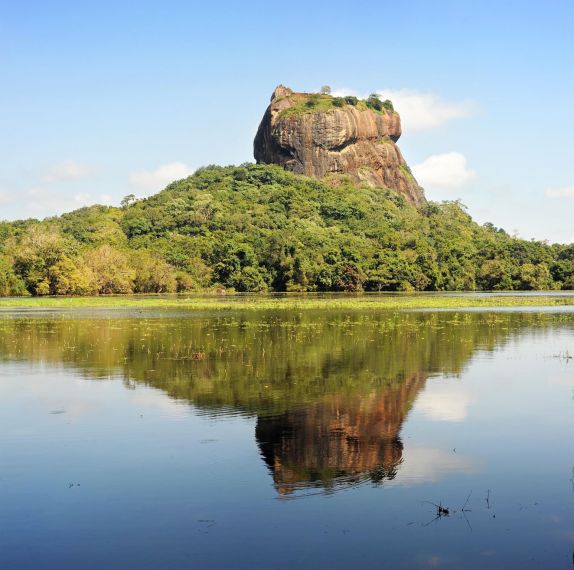
Sri Lanka Rock: Actual / Virtual Harbin Ethnography's Works Cited - Bibliography - References (Updatable)
Actual / Virtual Harbin Ethnography's Works Cited - Bibliography - References (Updatable)
Works Cited
Apple Inc. 2007. Apple Dictionary v.2.0.3 (51.5). Cupertino, CA: Apple Computer.
Basso, Keith. 1995. Wisdom Sits in Places: Landscape and Language Among the Western Apache. New Mexico: University of New Mexico Press.
Bateson, Gregory. 1958. Naven. Stanford, CA: Stanford University Press.
Baudrillard, Jean (Nicola Dufresne, Trans.). 1983. Simulations. New York, NY: Semiotext(e).
Boellstorff, Tom. 2008. Coming of Age in Second Life: An Anthropologist Explores the Virtually Human. Princeton, NJ: Princeton University Press.
Castells, Manuel. 2001. Internet Galaxy: Reflections on the Internet, Business, and Society. New York, NY: Oxford University Press.
Castells, Manuel. 2000. The Rise of the Network Society. Oxford, England: Blackwell.
Castronova, Edward. 2005. Synthetic Worlds: The Business and Culture of Online Games. Chicago, IL: The University of Chicago Press.
Castronova, Edward. 2010. Terra Nova Blog. [http://terranova.blogs.com/terra_nova/2010/06/everythings-virtual-now-what.html Everything's Virtual. Now what]. July 18. Terranova.blogs.com.
Cerwonka, Allaine, and Liisa Malkki. 2007. Improvising Theory: Process and Temporality in Ethnographic Fieldwork. Chicago, IL: University of Chicago Press.
Clifford, James and George Marcus (eds.). 1986. Writing Culture: The Poetics and Politics of Ethnography. Berkeley, CA: University of California Press.
Clifford, James. 1988. The Predicament of Culture: Twentieth-Century Ethnography, Literature, and Art. Cambridge, MA: Harvard University Press.
Conger, Chloe. 2001. Ideals in action: a study of conflict and integration at Harbin Hot Springs, CA. http://www.stanford.edu/dept/anthroCASA/pdf/newsletterV2.pdf - https://web.archive.org/web/20070125003710/http://www.stanford.edu/dept/anthroCASA/pdf/newsletterV2.pdf - (from a Stanford undergraduate Honors' Thesis). Vol. 2, Number 1. Stanford, CA: CASA (Cultural and Social Anthropology) Newsletter.
Conger, Chloe. 2000?. Ideals in action: a study of conflict and integration at Harbin Hot Springs, CA. Stanford, CA: Stanford Undergraduate Honors' Thesis.
Csikszentmihaly, Mihalyi. 1991. Flow: the Psychology of Optimal Experience. New York, NY: Harper.
Davidson, Richard J. 2004. [http://psyphz.psych.wisc.edu/web/pubs/2004/Well-being_affective_style.pdf Well-being and affective style: neural substrates and biobehavioural correlates]. 359, 1395–1411. Phil. Trans. Royal Society London.
Davidson, Richard J., Jon Kabat-Zinn, Jessica Schumacher, Melissa Rosenkranz, Daniel Muller, Saki F. Santorelli, Ferris Urbanowski, Anne Harrington, Katherine Bonus, and John F. Sheridan. 2003. Alterations in Brain and Immune Function Produced by Mindfulness Meditation. 65:564-570. Psychosomatic Medicine.
Deacon, Terrence W. 1997. The Symbolic Species: The Co-evolution of Language and the Brain. New York, NY: W.W. Norton and Company.
Deleuze, Gilles.
Dull, Harold, with the Water Family. 2008 (2004, 1997, 1993). Watsu: Freeing the Body in Water and with Tantsu on Land. 4th edition. Middletown, CA: Watsu Publishing.
Escobar, Arturo. 1994. Welcome to Cyberia: Notes on the Anthropology of Cyberculture. 35, 3 (June):211-223. Current Anthropology.
Fischer, Michael M.J. 2003. Emergent Forms of Life and the Anthropological Voice. Durham, NC: Duke University Press.
Foucault, Michel. 2005 (1982). The Hermeneutics of the Subject: Lectures at the College de France 1981―1982. Picador.
Geertz, Clifford. 1973a. “The Impact of the Concept of Culture on the Concept of Man.” In his The Interpretation of Cultures, 33-54?. New York: Basic Books.
Geertz, Clifford. 1973b. “Deep Play: Notes on the Balinese Cockfight.” In The Interpretation of Cultures, 448. New York, NY: Basic Books.
Geertz, Clifford. 1973c. “Thick Description: Toward an Interpretive Theory of Culture.” In his “The Interpretation of Cultures, 33-54?. New York, NY: Basic Books.
Geertz, Clifford. 1983. “From the Native's Point of View”” On the Nature of Anthropological Understanding. In his Local Knowledge: Further Essays in Interpretive Anthropology, 55-72. New York: Basic Books.
Gupta, Akhil and James Ferguson. 1997. “Discipline and Practice: 'The Field' as Site, Method, and Location in Anthropology.” In Anthropological Locations: Boundaries and Grounds of a a Field Science, eds. Akhil Gupta and James Ferguson, 1-46. Berkeley, CA: University of California Press.
Hacking, Ian. 1999. The Social Construction of What?. Cambridge, MA: Harvard University Press.
Haney, C., Banks, W. C., & Zimbardo, P. G. 1973a. Interpersonal dynamics in a simulated prison. International Journal of Criminology and Penology, 1, 69–97.
Haney, C., Banks, W. C., & Zimbardo, P. G. 1973b. Study of prisoners and guards in a simulated prison. Naval Research Reviews, 9, 1–17. Washington, DC: Office of Naval Research.
Harbin Hot Springs. 1981-2010. Harbin Quarterly. Middletown, CA: Harbin Publications.
Harbin Hot Springs. 1981-2010. The Harbinger - Harbin Weekly Publication. Middletown, CA: Harbin Publications.
Harbin Dance. 2010. http://www.facebook.com/?ref=logo#!/profile.php?id=100000293584013
Harbin Hot Springs. 2010. http://www.facebook.com/?ref=logo#!/harbinhotsprings
Harbin Hot Springs' email list. 2010.
Harbin Hot Springs :) . 2010. http://www.facebook.com/?ref=logo#!/group.php?gid=5609024455
Harbin Hot Springs Fan Club. 2010. http://www.facebook.com/?ref=logo#!/group.php?gid=11839765786
Harbin Hot Springs Ride Board. 2010. http://groups.yahoo.com/group/harbinrideboard/
Harbin Hot Springs Web Site. 2010. Harbin Hot Springs' Web Site. http://harbin.org . Middletown, CA: harbin.org.
Harbin Hot Springers – Tribe.net. 2010. http://harbinhotsprings.tribe.net/
School of Shiatsu and Massage @ Harbin. 2010. http://schoolofshiatsuandmassage.tribe.net/
School of Shiatsu and Massage email list (at Harbin)
The Watsu Institute - The School of Shiatsu and Massage (at Harbin Hot Springs) - http://www.learnwatsu.com - Bodywork Career Institute LLC (BCI).
Hall, Barbara. 1999?. Ethnographic Methods: How to Do Ethnographic Research - A Simplified Guide. (http://www.sas.upenn.edu/anthro/CPIA/methods.html). Accessed December 15, 2007. Philadelphia, PA: University of Pennsylvania.
Harvey, David. 1989. The Condition of Postmodernity: An Enquiry into the Origins of Cultural Change. Cambridge, UK: Basil Blackwell.
Harvey, David. 1993. “From Space to Place and Back Again: Reflections on the Condition of Postmodernity.” In Mapping the Futures: Local Cultures, Global Change, eds. Jon Bird, Barry Curtis, Tim Putnam, George Robertson, and Lisa Tickner, 3-29. London: Routledge.
Himanen, Pekka, Linus Torvalds (prologue), Manuel Castells (epilogue). 2001. The Hacker Ethic and the Spirit of the Information Age. New York, NY: Random House.
Honderich, Ted (ed.). 2005. The Oxford Companion to Philosophy. (New Edition). Oxford, Britain: Oxford University Press.
Human Awareness Institute (HAI). 2010. Human Awareness Institute – Love, Intimacy and Sexuality Workshops. http://www.hai.org/. CA: Human Awareness Institute.
Ishvara. 1996. Living the Future. (Harbin pamphlet). Middletown, CA: Harbin Publishing.
Ishvara. 2002. Oneness in Living: Kundalini Yoga, the Spiritual Path, and the Intentional Community. Berkeley, CA: North Atlantic Books.
Junker, Andrew. 2007. Brainfingers Cyberlink Headset. http://brainfingers.com . Yellow Springs, OH: Brainfingers.com
Klages, Ellen. 1993 (1991). Harbin Hot Springs: Healing Waters, Sacred Land. Middletown, CA: Harbin Springs Publishing.
Koopman, Colin, Mary Murrell and Tom Schilling. 2007. A Diagnostic of Emerging Openness Equipment. Available at SSRN: http://ssrn.com/abstract=1069067
Lacan, Jacques. (Malcolm).
Le Guin, Ursula K. 1985. Always Coming Home. (Music of the Kesh by Todd Barton, on audio cassette in some editions). Berkeley, CA: University of California Press.
MacCannell, Dean. 1999. The Tourist: A New Theory of the Leisure Class. Berkeley, CA: University of California Press.
MacLean, Rory. 2009. The Magic Bus: On the Hippie Trail from Istanbul to India. London, UK: Penguin/IG Publishing.
MacLeod, Scott Gordon K. 2006. "Digital Spatial Representations: New Communication Processes and 'Middle Eastern' UNESCO World Heritage Sites Online" in 'Tourism in the Middle East: Continuity, Change and Transformation.' Rami Farouk Daher (ed.). Sheffield, UK: Channel View Publications.
MacLeod, Scott Gordon K. 2001. Gazing at the Box: Tourism in the Context of the Internet and Globalization (Internetity). (http://scottmacleod.com/papers.htm). http://scottmacleod.com/anth250v.htm
MacLeod, Scott Gordon K. 2003. James Clifford's "The Predicament of Culture. February 3. (http://scottmacleod.com/papers.htm). http://scottmacleod.com/2003Feb03PolyphonyClifford.htm
MacLeod, Scott Gordon K. 2001. Harbin Journal.
MacLeod, Scott Gordon K. 2008. Harbin Field Notes 2007-2008.
MacLeod, Scott Gordon K. 2009. Harbin Field Notes 2009.
MacLeod, Scott Gordon K. 2010. Harbin Field Notes 2010.
MacLeod, Scott Gordon K. 2008. Ishvara (Bob Hartley) - Harbin Hot Springs' Founder – Interview. April 8. Harbin Hot Springs, CA: Personal Interview.
MacLeod, Scott Gordon K. 2009. The Making of Virtual Harbin Hot Springs as Ethnographic Field Site in Second Life and Open Simulator. http://blip.tv/file/2053061. (14 mins.) http://scottmacleod.com/papers.htm.
McGinn, Colin. 1982. The Character of Mind: An Introduction to the Philosophy of Mind. New York, NY: Oxford University Press.
Malinowski, Bronislaw. 1922. Argonauts of the Western Pacific. New York, NY: E.P. Dutton and Co.
Malinowski, Bronislaw. 1927. Sex and Repression in Savage Society. London, UK: Routledge and Kegan Paul.
Malinowski, Bronislaw. 1935. Coral Gardens and their Magic. London, UK: Allen and Unwin.
Malinowski, Bronislaw. 1945. The New Tasks of Modern Anthropology. In his The Dynamics of Cultural Change, 1-13. Westport, CT: Greenwood Press.
Marcus, George, and Michael J. Fischer. 1986. Anthropology as Cultural Critique. 2nd ed. Chicago, IL: University of Chicago Press.
Massumi. 2002.
Money, John. 1988. Gay, Straight and In-Between: The Sexology of Erotic Orientation. New York, NY: Oxford University Press.
Niman, Michael I. 1997. People of the Rainbow: A Nomadic Utopia. Knoxville, TN: University of Tennessee Press.
Ondrejka, Cory R. 2004. Escaping the Guilded Cage: User Created Content and Building the Metaverse. http://papers.ssrn.com/sol3/papers.cfm?abstract_id=538362
Packer, Randall and Jordan, Ken (eds.) 2001. Multimedia: from Wagner to Virtual Reality. New York: W.W. Norton.
Plato. 1991. The Republic: The Complete and Unabridged Jowett Translation. New York: Vintage Books.
Poster, Mark. 1988. Jean Baudrillard: Selected Writings. Stanford, CA: Stanford University Press.
Rabinow, Paul. 2003. Anthropos Today: Reflections on Modern Equipment. Princeton, NJ: Princeton University Press.
Rorty, Richard. 1989. Contingency, irony and solidarity. New York, NY: Cambridge University Press.
de Saussure, Ferdinand (Roy Harris, translator). 1983. Course in General Linguistics. Chicago, IL: Open Court Press.
Schmandt-Besserat, Denise. 2007. When Writing Met Art: From Symbol to Story. Austin, TX: The University of Texas Press.
Slagter HA, Lutz A, Greischar LL, Francis AD, Nieuwenhuis S, et al. 2007. Mental Training Affects Distribution of Limited Brain Resources. 5(6): e138. doi:10.1371/journal.pbio.0050138 PLoS Biol.
Tan Le. 2010. Tan Le: A headset that reads your brainwaves. http://www.ted.com/talks/tan_le_a_headset_that_reads_your_brainwaves.html . (11 mins.) Monterey, CA: TED Talk.
Turkle, Sherry. 1995. Life on the Screen: Identity in the Age of the Internet. New York, NY: Simon and Schuster.
Turner, Victor Witter. 1982. From Ritual to Theatre: The Human Seriousness of Play. New York: Performing Arts Journal Publications.
Tylor, Edward Burnett. 1871. Primitive Culture, Volume 1: The Origins of Culture. New York, NY: Harper and Row.
Wagner, Roy. 2001. Anthropology. An Anthropology of the Subject: Holographic Worldview in New Guinea and its Meaning and Significance for the World of Anthropology. Berkeley, CA: University of California Press.
Wyne, Sajjad. 1997. The Big Bang and the Harbin Experience. Middletown, CA: Harbin Springs Publishing.
(http://scott-macleod.blogspot.com/2010/10/sri-lanka-rock-actual-virtual-harbin.html - January 24, 2010)
Saturday, January 23, 2010
Wilderness Creation: Interested in shaping, teaching in & learning at a World Univ & Sch, Med Sch (MCAT) & GED Test Preparation, Homeless & WUaS? Yes
Interested in shaping, teaching in and learning at a World University & School? Let me know.
Come into Second Life at 11:10a PT on Saturdays, for example, to talk about it - worlduniversity.wikia.com/wiki/World_University.
*
added Medical School Test Preparation (MCAT) for Free to worlduniversity.wikia.com/wiki/Courses#Test_Preparation - the open, free, wiki school we create.
*
Added GED Preparation for Free to worlduniversity.wikia.com/wiki/Courses#Free_High_School_Diplomas - the open, free, wiki school we create.
*
Homeless and World University & School? Yes ... especially with free Google Voice numbers that Google is offering to Homeless people ...
(http://scott-macleod.blogspot.com/2010/01/wilderness-creation-interested-in.html - January 23, 2010)
Himalayan Poppy: Office Hours TODAY 11:10a-2p PT on Harvard's Second Life Island - http://worlduniversity.wikia.com/wiki/World_University
Office Hours TODAY 11:10a-2p PT for World University & School ~ worlduniversity.wikia.com/wiki/World_University - on Harvard's Second Life Island here: slurl.com/secondlife/Berkman/113/47/25.
The open, 'Information Technology & Society' course, about how the information technology revolution is occurring, starts next Saturday, January 31, 2010 from 11:10a - 1p Pacific Time, with office hours in the following hour. Invitation to participate ~ all are welcome.
Scott
(http://scott-macleod.blogspot.com/2010/01/office-hours-today-1110a-2p-pt-on_23.html - January 23, 2010)
Friday, January 22, 2010
Mt. St. Helena Fawn Lily: Languages - 'real' and human-made at World Univ & Sch, Proposal, WUaS Language Focus & Possibilities
Let's add all 'real' languages - and make it possible to add human-made ones {e.g. Na'vi in the film "Avatar," Ursula LeGuin's "Kesh" language in "Always Coming Home," Klingon, Vulcan and other languages in Star Trek, as well as Tolkien's languages: Quenya, Sindarin and Elvenlatin, etc.} to World University & School's 'Languages' ~ worlduniversity.wikia.com/wiki/Languages.
*
Here's a recent World University & School proposal:
World University and School is a global, digital, open, free-to-students, potentially degree-granting wiki university and school, potentially in all languages, nation-states, subjects and at all levels, using a Wikipedia-with-MIT Open Course Ware model, for everyone, especially OLPC countries and the emerging world, which anyone can edit, primarily by teaching, adding, or learning. Our target users are teachers and learners world-wide, widely construed. The 'Wow' factor: This far-reaching vision for open World University enables people on-the-ground around the world to teach, shape the wiki, and learn, potentially in all languages and countries. Teaching and learning content, and courses, are almost entirely open. The main pages will include wiki 'Courses,' 'Subjects, 'Languages' (all), 'Library resources,' 'Nation-states,' 'You at World University,' free 'Educational Software,' 'Hardware resources,' and 'Research,' as well as a foundation. Academically, WUaS focuses on great universities' open, free teaching and learning content: worlduniversity.wikia.com/wiki/Courses#University_course_listings. While WUaS doesn't yet offer degrees, it currently links a free-for-25-students' Harvard University Ph.D. in Education for 2011
and 2012. WUaS plans to offer Ph.D.s, M.D.s and Bachelor degrees, etc. with matriculating classes beginning in 2014. Teaching/learning occur through video (e.g. posting to free, video-hosting sites, and in interactive virtual worlds like Second Life and Open Cobalt), and in ways to be created. By developing a wiki school in every language and nation state/territory, WUaS will facilitate a wiki conversation
between languages and countries, in terms of teaching/learning, free and open software, and also vis-a-vis free degrees. It will generate a language database to facilitate translation technologies in all possible language combinations, which will become a rich resource for brain and language research on end-users, using, for example, neural 'hats.' WUaS makes possible, in creative ways, the production, and linkage, of potentially all open source teaching/learning content, in all languages in an infinitely extensible way.
*
To focus WUaS research, I think we'll add all (7000-ish - The Ethnologue contains statistics for 7,358 languages in the 16th edition, released in 2009 - See Lewis, M. Paul (ed.), 2009. Ethnologue: Languages of the World, Sixteenth edition. Dallas, Tex.: SIL International, - and also William Bright [1986]) languages - and wiki (editable web pages) - to leave room for human-made languages (e.g. Na'vi in the film "Avatar," LeGuin's "Always Coming Home"'s language, Klingon and other languages in Star Trek, Elvish and other Tolkien languages). Then focus on Google Translator, 'amplified' by Google Wave, so that this language database, becomes a research resource. (There are probably other language databases). Then with technologies like Brainfingers - http://brainfingers.com - in reverse, and neural 'hats,' used, for example, in measuring brain activity in Buddhist meditators, we may be able to facilitate an all-language database (a universal translator) for brain/language research, in end-user's homes, even. I'll add this new 'Research' main page in the not-too-distant future.
I'd like WUaS to help facilitate bringing together Google Translate (http://translate.google.com/#), the United Nations, The Ethnologue (http://www.ethnologue.com), and Google Wave vis-a-vis World University & School's Languages - worlduniversity.wikia.com/wiki/Languages. What a lot of data!
*
Mt. St. Helena Fawn Lily
namethatplant.files.wordpress.com/2009/04/watermark_1902.jpg
Erythronium helenae

(http://scott-macleod.blogspot.com/2010/01/mt-st-helena-fawn-lily-languages-real.html - January 22, 2010)
*
Here's a recent World University & School proposal:
World University and School is a global, digital, open, free-to-students, potentially degree-granting wiki university and school, potentially in all languages, nation-states, subjects and at all levels, using a Wikipedia-with-MIT Open Course Ware model, for everyone, especially OLPC countries and the emerging world, which anyone can edit, primarily by teaching, adding, or learning. Our target users are teachers and learners world-wide, widely construed. The 'Wow' factor: This far-reaching vision for open World University enables people on-the-ground around the world to teach, shape the wiki, and learn, potentially in all languages and countries. Teaching and learning content, and courses, are almost entirely open. The main pages will include wiki 'Courses,' 'Subjects, 'Languages' (all), 'Library resources,' 'Nation-states,' 'You at World University,' free 'Educational Software,' 'Hardware resources,' and 'Research,' as well as a foundation. Academically, WUaS focuses on great universities' open, free teaching and learning content: worlduniversity.wikia.com/wiki/Courses#University_course_listings. While WUaS doesn't yet offer degrees, it currently links a free-for-25-students' Harvard University Ph.D. in Education for 2011
and 2012. WUaS plans to offer Ph.D.s, M.D.s and Bachelor degrees, etc. with matriculating classes beginning in 2014. Teaching/learning occur through video (e.g. posting to free, video-hosting sites, and in interactive virtual worlds like Second Life and Open Cobalt), and in ways to be created. By developing a wiki school in every language and nation state/territory, WUaS will facilitate a wiki conversation
between languages and countries, in terms of teaching/learning, free and open software, and also vis-a-vis free degrees. It will generate a language database to facilitate translation technologies in all possible language combinations, which will become a rich resource for brain and language research on end-users, using, for example, neural 'hats.' WUaS makes possible, in creative ways, the production, and linkage, of potentially all open source teaching/learning content, in all languages in an infinitely extensible way.
*
To focus WUaS research, I think we'll add all (7000-ish - The Ethnologue contains statistics for 7,358 languages in the 16th edition, released in 2009 - See Lewis, M. Paul (ed.), 2009. Ethnologue: Languages of the World, Sixteenth edition. Dallas, Tex.: SIL International, - and also William Bright [1986]) languages - and wiki (editable web pages) - to leave room for human-made languages (e.g. Na'vi in the film "Avatar," LeGuin's "Always Coming Home"'s language, Klingon and other languages in Star Trek, Elvish and other Tolkien languages). Then focus on Google Translator, 'amplified' by Google Wave, so that this language database, becomes a research resource. (There are probably other language databases). Then with technologies like Brainfingers - http://brainfingers.com - in reverse, and neural 'hats,' used, for example, in measuring brain activity in Buddhist meditators, we may be able to facilitate an all-language database (a universal translator) for brain/language research, in end-user's homes, even. I'll add this new 'Research' main page in the not-too-distant future.
I'd like WUaS to help facilitate bringing together Google Translate (http://translate.google.com/#), the United Nations, The Ethnologue (http://www.ethnologue.com), and Google Wave vis-a-vis World University & School's Languages - worlduniversity.wikia.com/wiki/Languages. What a lot of data!
*
Mt. St. Helena Fawn Lily
namethatplant.files.wordpress.com/2009/04/watermark_1902.jpg
Erythronium helenae
(http://scott-macleod.blogspot.com/2010/01/mt-st-helena-fawn-lily-languages-real.html - January 22, 2010)
Thursday, January 21, 2010
Welwitschia: Language Learning at World Univ & Sch, Best INTERACTIVE example, adding a "Virtual World" to Subject Template,
The best example of INTERACTIVE, free, open, high quality teaching and learning which I currently know of in Second Life is the Goethe Institute's 1 lesson a week, and 6 days-a-week conversation opportunities - worlduniversity.wikia.com/wiki/Courses#Language_Learning. Know of other free, open teaching and learning opportunities? Please add them! Invitation to teach, learn and add to World Univ & School.
*
I'm adding a "Virtual World" section to the World University & School's Subject Template to make interactive teaching & learning directly accessible:
worlduniversity.wikia.com/wiki/SUBJECT_TEMPLATE -
Add a subject which interests you to the open, free, Wikipedia-like World University & School, with a virtual world teaching and learning possibility.
esu.edu/~milewski/intro_biol_two/lab_3_seed_plts/images/Welwitschia_stem.jpg
(http://scott-macleod.blogspot.com/2010/01/welwitschia-language-learning-at-world.html - January 21, 2010)
Wednesday, January 20, 2010
California Rain: Harbin in the rain, Harbin YOGA, Harmonizing Effects of the Harbin Pools
Harbin in the rain ~
It was raining a lot at Harbin over the past few days. It's northern California winter weather - not too cold, but cold enough for people to appreciate the Harbin pools a lot, and their harmonizing and warming benefits. The relaxation response is a delight in the pools. ...
*
For as long as I've been going to Harbin (since around 1994), Harbin has always had 3 yoga classes a day (by donation). Prior to 2005, they were held in the main Stonefront Lodge building's living room, and after that in the Harbin temple. Yoga adds a lot to Harbin, bringing a salutary process which benefits the whole community in Harbin's curious 'ecology.' Yoga at Harbin mostly involves poses with some chanting and breathing, and classes can be quite full, especially in the summer months when a lot of people visit Harbin. It's Harbin's own yoga, with mostly residents teaching it and organizing it. One woman, who is still a resident at Harbin, started the yoga program.
*
Yesterday as I awoke, sleeping in my automobile near the Harbin temple, and was heading to the pools (for field research, in many senses), a friend invited me into the temple to participate in 3 people's yoga teacher training mutual practice, and conversation about this. I went. {The Harbin temple is beautiful, and warm, in winter rains}. These teachers-to-be were all presently in the Harbin Yoga Teacher Training Program. Two were friends of mine, and one was a very flexible man with long hair whom I had never met directly who often practices yoga poses in the pools. They were learning from each other. {I taught yoga for about 10 years}. It was nice to do a little yoga with everyone, but teaching and learning 'Harbin' yoga, in the context of the fluid place which is Harbin, is itself a fluid process. (Iyengar Yoga, by contrast, for example, which I know a little, but don't practice, is quite structured). In this Harbin yoga practice, I heard familiar new age thinking expressed in relation to the yoga - (e.g. Eckhart Tolle, and variations on New Age 'oneness'). I asked how people might engage yoga to elicit loving bliss at Harbin, with MDMA as a reference experience, naturally. I mentioned how music {e.g. Mozart arias from the "The Magic Flute" and contra dance} do this for me with great regularity. I also mentioned a yoga teacher I enjoyed a lot in the past, Mary Dunn, who taught in very fun and dynamic ways, that got close to eliciting great happiness for me. But I found the mutual conversation in the temple about this {harmonizing practice of} yoga less than harmonizing, so I headed to the pools.
*
Teaching and learning yoga - a very old and varied set of practices - particularly at Harbin, opens many kinds of learning opportunities.
*
In California, as well as across the United States, yoga is now a wide-spread practice emerging from the 1960s.
*
When in a class where people are teaching yoga poses, I can enjoy the class when the instructions are very clear and simple. Steps like these for the relaxation response - relaxationresponse.org/steps - work best for me, so that the body can unfold with the movement of the yoga positions on its own. I also enjoy yoga which is imaginative, freeing, easing, integrative, soft, regenerative and exploratory e.g. {scottmacleod.com/yoga.htm}. The teachers who get closest to this for me are Angela Farmer & Victor van Kooten ~ angela-victor.com.
*
In my experience, it's the neurophysiological 'soup,' which the bodymind creates in doing yoga poses and related movement, that is so harmonizing. This 'soup' can be great.
*
So when I had had enough of the yoga conversation in the temple, I headed to the pools, and they were very harmonizing and lovely, and in the rain!
*
How to cultivate harmonizing effects at home, and where and as one wants to?
The relaxation response, a bathtub, yoga poses, at times, and music are some great ways.
(http://scott-macleod.blogspot.com/2010/01/california-rain-harbin-in-rain-harbin.html - January 20, 2010)
Tuesday, January 19, 2010
Water: Drinking the Harbin water which flows into the cold pool as subjective experiment
Drinking the Harbin water which flows into the cold pool as subjective experiment
Is there lithium in the water? I'm not sure. I haven't seen a chemical breakdown of what's in the water recently. I'll see if I can find the chemicals occurring naturally in the water, again. Someone at Harbin within the last year said something about there being lithium in the water here.
I drank 20 gulps of water at around 10:45 pm on January 19, 2010, and went to bed soon after. I didn't notice any effects of the water. Again, at around 12:45 pm in the afternoon, on January 20, drank 20 gulps and again did not notice any effect.
Does it make me happy, noticeably? No.
More research is needed.
*
How to go online right now to find the appropriate rigorous (science) studies on lithium and happiness?
I just googled "lithium in water and happiness" and found this study:
Schrauzer, Gerhard N. and Edmond de Vroey. 1993. Effects of nutritional lithium supplementation on mood - (springerlink.com/content/1686787278648j51). Nov. Biological Trace Element Research/Humana Press Inc.
This study suggests unambiguously that there are positive effects on mood from lithium.
*
Last year, I heard, while traveling through Ashland, Oregon, which has water with lithium in it, that it might make people happy. I didn't try the water there.
*
I went into the office and found a sheet which lists the minerals in Harbin's waters, which didn't include lithium.
Here are the minerals in the water listed on the Harbin handout:
Mineral mg/L
Bicarbonate 63.0
Calcium 9.0
Sodium 4.3
Magnesium 6.1
Chloride 2.4
Potassium *
Hydroxide 1.0
Carbonate 1.0
Sulfate 2.2
(http://scott-macleod.blogspot.com/2010/01/water-drinking-harbin-water-which-flows.html - January 19, 2009)
Wild Banana: Anthropology - power - higher primate literature, Sad about Human 'Pan troglyditism,' Banana-Blueberry Smoothy
I wonder how richly much of anthropology's interest in questions of power over the past 5 decades would emerge vis-a-vis readings of the higher primate literature, especially common chimps, Bonobo chimps, the 2 species of orangutans and the 2 species of gorillas, among others.
*
am sad about the 'Pan troglyditism' (common chimp behavior - violence, war, aggression, as well as peaceableness) among humans but somewhat optimistic about humans ability to learn, in general - e.g. ancient Greeks, literacy, the Enlightenment, the information technology revolution - and here possibly at worlduniversity.wikia.com/wiki/World_University as well.
*
while much knowledge is ABOUT nature or ideas & HOW & WHY these work, possibly boring to some because not self referential, people shape rich FLOW experiences around these, and they also emerge ... How can world university lead to making these flourish for all, and uniquely for individuals? Teach, learn, add ... :)
*
Here's American Friends' Service Committee's Haitian work - http://afsc.org/miami/ht/d/ContentDetails/i/4529 And here's a way to give to http://afsc.org World University & School is eventually for One Laptop per Child countries, of which Haiti is one, and for everyone: http://worlduniversity.wikia.com/wiki/World_University (both with languages: worlduniversity.wikia.com/wiki/Languages - and nation states: worlduniversity.wikia.com/wiki/Nation_States, but these are still in the works) - so that people will eventually have access to teaching and learning materials, that are wiki (editable).
Scott
*
Rain falls, gray settles & little clouds drift through the valley above the redwoods ... early grateful dead plays ... book writing ... The recording 'Birth of the Dead' is playing - and little kids from the Canyon school, under umbrellas, with their teacher at the rear under a blue one, walk up the road below my little 'Gary Snyder' house - good morning movement.
*
Ripe banana-frozen blueberry smoothie with a little bit of cardamom, while keeping caloric intake down to lose weight ~
To harbin.org/dance.htm dance
(http://scott-macleod.blogspot.com/2010/01/wild-banana-anthropology-power-higher.html - January, 19, 2010)
*
am sad about the 'Pan troglyditism' (common chimp behavior - violence, war, aggression, as well as peaceableness) among humans but somewhat optimistic about humans ability to learn, in general - e.g. ancient Greeks, literacy, the Enlightenment, the information technology revolution - and here possibly at worlduniversity.wikia.com/wiki/World_University as well.
*
while much knowledge is ABOUT nature or ideas & HOW & WHY these work, possibly boring to some because not self referential, people shape rich FLOW experiences around these, and they also emerge ... How can world university lead to making these flourish for all, and uniquely for individuals? Teach, learn, add ... :)
*
Here's American Friends' Service Committee's Haitian work - http://afsc.org/miami/ht/d/ContentDetails/i/4529 And here's a way to give to http://afsc.org World University & School is eventually for One Laptop per Child countries, of which Haiti is one, and for everyone: http://worlduniversity.wikia.com/wiki/World_University (both with languages: worlduniversity.wikia.com/wiki/Languages - and nation states: worlduniversity.wikia.com/wiki/Nation_States, but these are still in the works) - so that people will eventually have access to teaching and learning materials, that are wiki (editable).
Scott
*
Rain falls, gray settles & little clouds drift through the valley above the redwoods ... early grateful dead plays ... book writing ... The recording 'Birth of the Dead' is playing - and little kids from the Canyon school, under umbrellas, with their teacher at the rear under a blue one, walk up the road below my little 'Gary Snyder' house - good morning movement.
*
Ripe banana-frozen blueberry smoothie with a little bit of cardamom, while keeping caloric intake down to lose weight ~
To harbin.org/dance.htm dance
(http://scott-macleod.blogspot.com/2010/01/wild-banana-anthropology-power-higher.html - January, 19, 2010)
Slender Loris: Title Page, Harbin Ethnography Beginnings, Book Form, Chapters
Harbin ethnography:
Naked Harbin: Harbin Hot Springs' Actual/Virtual Ethnography - Hippies, Warm Pools, Counterculture & Clothing-Optional, Virtual Harbin
Scott MacLeod
University Press
Copyright 2012 by University Press
Requests for permission to reproduce material from this work should be sent to Permissions … University Press
Published by University Press address
In the United Kingdom: address
All Rights Reserved
Library of Congress Cataloging-in-Publication Data
MacLeod, Scott, 1960-
Harbin Hot Springs' Actual/Virtual Ethnography: Hippies, Warm Pools, Counterculture & Clothing-Optional, Virtual Harbin / Scott MacLeod.
p.cm.
Includes bibliographical references and index.
ISBN
1. Ethnology-Field work. 2. Ethnology-Computer network resources. 3. Ethnology-Interactive media. 4. Internet. 5. Virtual reality. I. Title.
GN
305.7
20101217
British Library Cataloging-in-Publication Data is available
This book has been composed in Comic Sans and Arial Display
Printed on acid-free paper.
Press.university.edu
Printed in the United States of America
10 9 8 7 6 5 4 3 2 1
To Jane MacLeod, my mother, for everything, with love
Contents
List of Illustrations x
List of Art xi
Acknowledgments xii
Part I: Setting the Harbin Hot Springs' Stage
Chapter 1: The Subject and Scope of this Inquiry
Arrivals and departures – Everyday Harbin – Terms of discussion – The emergence of actual Harbin – The emergence of virtual Harbin – Harbin Residents – What this, a book, does.
Chapter 2: History
Prehistories of Harbin: From modernity to counterculture, from actual to virtual – Histories of Harbin – A personal Harbin history – Histories of Harbin research - Challenges of Developing a Virtual Harbin and Writing this Harbin ethnography - Harbin as dream, ethnographically, in actuality
Chapter 3: Method
Harbin on its own terms - Anthropology and ethnography – Participant observation – Interviews, Pool work and virtual developments – Ethics – Claims and reflexivity – Actual Harbin and virtual Harbin compared and contrasted
Part II: Harbin as Counterculture emerging from Modernity
Chapter 4: Place and Time
Visuality and Harbin – The Harbin Valley – Traveling to and from Harbin – Immersion - Presence
Chapter 5: Personhood
The self – Harbin's life course – Harbin personhood – The pools, the 1960s and clothing-optionalness as milieu – Gender and race – Agency
Chapter 6: Practices
Language – Friendship – Intimacy - Sexuality – Love – Family – Connectedness - Oneness
Chapter 7: Community
Events at Harbin – The group – Heart Consciousness Church and New Age Church of Being - Heart Consciousness and its Expressions - The Pool Area - Milieu of Openness
Chapter 8: Political Economy
A Business emerging out 1960's and early 70's counterculture – Northern California as Political Economy - Money and labor – Property – Governance – Inequality – Life in the Harbin Valley
Part III: Virtual Harbin
Chapter 9: Harbin as a Virtual World
Virtual Harbin residents – Harbin culture in virtual Harbin – Simulation – Fiction and design – Many Harbin residents in-world – Toward an anthropology of actual and virtual Harbin
Chapter 10: Virtuality and Harbin – Harbin as unfolding hippie vision apart form history
Illustrations
Figure 1.1: Harbin Gate House
Figure 1.2: Harbin 'Gate House' in-world
Figure 1
Figure 1
Figure 1
Figure 1
Figure 1
Figure 1
Figure 1
Figure 1
Figure 1
Figure 1
Figure 1
Figure 1
Figure 1
Figure 1
Figure 1
Figure 1
Figure 1
Figure 2
Figure 2
Figure 2
Figure 2
Figure 3
Figure 4
Figure 4
Figure 7
List of Art at Harbin
Acknowledgments
The Harbin pools
- Harbin Hot Springs
– for their fount of ease, and from which I find the inspiration
B.H.
-for helping me set up the first virtual Harbin in Open Simulator
Tom Boellstorff
– for this book “Coming of Age in Second Life: An Anthropologist Explores the Virtually Human” – which I found to be invaluable for structure and with which to come into conversation in this draft
- for his willingness to allow me to start to build the first, virtual Harbin Gatehouse on the American Anthropological Association's virtual Anteater Island in Second Life, before my laptop, with knapsack, was stolen in June 2009 in San Francisco, such that I didn't proceed with that building of the virtual Harbin
U.C. Berkeley Professors N.G, L.N, A.O., P.R., C.B. T.D. W.H. R.T. and friends at U.C. Berkeley
(http://scott-macleod.blogspot.com/2010/02/slender-loris-harbin-ethnography.html - January 19, 2010)
Naked Harbin:
Harbin Hot Springs' Actual/Virtual Ethnography -
Hippies, Warm Pools, Counterculture & Clothing-Optional, Virtual Harbin
Harbin Hot Springs' Actual/Virtual Ethnography -
Hippies, Warm Pools, Counterculture & Clothing-Optional, Virtual Harbin
Naked Harbin: Harbin Hot Springs' Actual/Virtual Ethnography - Hippies, Warm Pools, Counterculture & Clothing-Optional, Virtual Harbin
Scott MacLeod
University Press
Copyright 2012 by University Press
Requests for permission to reproduce material from this work should be sent to Permissions … University Press
Published by University Press address
In the United Kingdom: address
All Rights Reserved
Library of Congress Cataloging-in-Publication Data
MacLeod, Scott, 1960-
Harbin Hot Springs' Actual/Virtual Ethnography: Hippies, Warm Pools, Counterculture & Clothing-Optional, Virtual Harbin / Scott MacLeod.
p.cm.
Includes bibliographical references and index.
ISBN
1. Ethnology-Field work. 2. Ethnology-Computer network resources. 3. Ethnology-Interactive media. 4. Internet. 5. Virtual reality. I. Title.
GN
305.7
20101217
British Library Cataloging-in-Publication Data is available
This book has been composed in Comic Sans and Arial Display
Printed on acid-free paper.
Press.university.edu
Printed in the United States of America
10 9 8 7 6 5 4 3 2 1
To Jane MacLeod, my mother, for everything, with love
Contents
List of Illustrations x
List of Art xi
Acknowledgments xii
Part I: Setting the Harbin Hot Springs' Stage
Chapter 1: The Subject and Scope of this Inquiry
Arrivals and departures – Everyday Harbin – Terms of discussion – The emergence of actual Harbin – The emergence of virtual Harbin – Harbin Residents – What this, a book, does.
Chapter 2: History
Prehistories of Harbin: From modernity to counterculture, from actual to virtual – Histories of Harbin – A personal Harbin history – Histories of Harbin research - Challenges of Developing a Virtual Harbin and Writing this Harbin ethnography - Harbin as dream, ethnographically, in actuality
Chapter 3: Method
Harbin on its own terms - Anthropology and ethnography – Participant observation – Interviews, Pool work and virtual developments – Ethics – Claims and reflexivity – Actual Harbin and virtual Harbin compared and contrasted
Part II: Harbin as Counterculture emerging from Modernity
Chapter 4: Place and Time
Visuality and Harbin – The Harbin Valley – Traveling to and from Harbin – Immersion - Presence
Chapter 5: Personhood
The self – Harbin's life course – Harbin personhood – The pools, the 1960s and clothing-optionalness as milieu – Gender and race – Agency
Chapter 6: Practices
Language – Friendship – Intimacy - Sexuality – Love – Family – Connectedness - Oneness
Chapter 7: Community
Events at Harbin – The group – Heart Consciousness Church and New Age Church of Being - Heart Consciousness and its Expressions - The Pool Area - Milieu of Openness
Chapter 8: Political Economy
A Business emerging out 1960's and early 70's counterculture – Northern California as Political Economy - Money and labor – Property – Governance – Inequality – Life in the Harbin Valley
Part III: Virtual Harbin
Chapter 9: Harbin as a Virtual World
Virtual Harbin residents – Harbin culture in virtual Harbin – Simulation – Fiction and design – Many Harbin residents in-world – Toward an anthropology of actual and virtual Harbin
Chapter 10: Virtuality and Harbin – Harbin as unfolding hippie vision apart form history
Illustrations
Figure 1.1: Harbin Gate House
Figure 1.2: Harbin 'Gate House' in-world
Figure 1
Figure 1
Figure 1
Figure 1
Figure 1
Figure 1
Figure 1
Figure 1
Figure 1
Figure 1
Figure 1
Figure 1
Figure 1
Figure 1
Figure 1
Figure 1
Figure 1
Figure 2
Figure 2
Figure 2
Figure 2
Figure 3
Figure 4
Figure 4
Figure 7
List of Art at Harbin
Acknowledgments
The Harbin pools
- Harbin Hot Springs
– for their fount of ease, and from which I find the inspiration
B.H.
-for helping me set up the first virtual Harbin in Open Simulator
Tom Boellstorff
– for this book “Coming of Age in Second Life: An Anthropologist Explores the Virtually Human” – which I found to be invaluable for structure and with which to come into conversation in this draft
- for his willingness to allow me to start to build the first, virtual Harbin Gatehouse on the American Anthropological Association's virtual Anteater Island in Second Life, before my laptop, with knapsack, was stolen in June 2009 in San Francisco, such that I didn't proceed with that building of the virtual Harbin
U.C. Berkeley Professors N.G, L.N, A.O., P.R., C.B. T.D. W.H. R.T. and friends at U.C. Berkeley
(http://scott-macleod.blogspot.com/2010/02/slender-loris-harbin-ethnography.html - January 19, 2010)
Subscribe to:
Posts (Atom)

 Posts