Excited that @WorldUnivAndSch building on CC-4 #MITOCW in 7 languages, & in a #GrowWithGoogleWUaS program, just partnered, as a CSO, with the UN -https://www.unpartnerportal.
Excited that @WorldUnivAndSch building on CC-4 #MITOCW in 7 languages, & in a #GrowWithGoogleWUaS program, just partnered, as a CSO, with the UN -https://t.co/Fp1utqoymB - via the #UNPartnerPortal - https://t.co/MHe495WCLq - Where #UNAgencies and Civil Society Partners Connect
— WorldUnivandSch (@WorldUnivAndSch) November 10, 2026
https://x.com/WorldUnivAndSch/
https://x.com/WUaSPress/
https://x.com/sgkmacleod/
https://x.com/Q_YogaMacFlower/
https://x.com/HarbinBook/
Tuesday, November 10, 2026
To offer credit for free-to-students courses built on CC BY-NC-SA 4.0 licensed MIT OpenCourseWare (OCW) materials—such as 6.0001 Introduction to Computer Science and Programming in Python—World University and School (WUaS) can combine legally compliant OER distribution, rigorous instructional architecture, and state-of-the-art AI/ML-driven assessment tools.
1. License Compliance & Course Architecture
Because MIT OCW operates under a Creative Commons Attribution-NonCommercial-
Attribution & ShareAlike: WUaS must provide prominent attribution to original MIT faculty (e.g., Prof. Ana Bell, Prof. Eric Grimson, Prof. John Guttag for 6.0001) and license any adapted content under the same CC BY-NC-SA terms.
Credit Validation: MIT OCW itself does not grant university credit. WUaS acts as the degree-granting institution by designing the wrapper curriculum, proctored assessments, and official transcript evaluation to meet institutional and accreditation standards.
2. Conversational, Interactive, and AI-Driven Pedagogy
Integrating AI/ML into course delivery transforms static OCW reading and video lectures into interactive learning environments:
Socratic AI Tutors: Deploy fine-tuned, conversational LLMs trained on 6.0001 lecture transcripts, slides, and problem sets. Rather than providing direct solutions, the tutor engages in Socratic dialogue—prompting students to trace code execution, identify logic bugs, or analyze time complexity ($O(n)$ vs. $O(n^2)$).
Multi-Turn Conversational Checkpoints: Instead of relying solely on static multiple-choice quizzes, incorporate conversational oral exams conducted by AI. The system asks open-ended questions about algorithmic choices and adapts follow-up prompts based on student responses.
3. Machine Learning for Assessment & Automated Grading
Building automated pipelines for coding courses ensures instant feedback while maintaining academic integrity:
Automated Code Evaluation & Unit Testing: Integrate containerized auto-graders (e.g., PyTest in isolated Docker environments) that evaluate submitted Python code against hidden test cases for correctness, edge cases, and runtime efficiency.
ML-Powered Style & Static Analysis: Use Machine Learning static analysis tools (e.g., AST-based code parsing and LLM evaluators) to grade code readability, variable naming, docstrings, PEP 8 compliance, and algorithmic efficiency.
Dynamic Oral/Viva Defense (AI-Facilitated): To confirm original authorship, an AI agent can quiz students specifically on code they submitted (e.g., "Why did you choose a recursive approach on line 24 instead of an iterative loop?"). The student's conversational explanation is graded using NLP natural language understanding models against dynamic rubrics.
Continuous Adaptive Learning Analytics: Track student progress using predictive ML models. If a student struggles with loop constructs or recursion in 6.0001, the system automatically suggests targeted OCW supplemental exercises or alerts a human mentor.
4. Implementation Framework for Course Credit
| Component | MIT OCW Source Material | WUaS AI & Platform Layer |
| Instructional Content | Lecture videos, slides, assigned readings | AI Socratic Assistant embedded alongside video timestamps and text. |
| Problem Sets & Practice | 6.0001 Python assignments & finger exercises | Automated auto-grading sandbox providing real-time feedback and execution traces. |
| Exams & Validation | Past MIT midterm/final exams | Proctored assessments featuring AI-guided viva voce (oral defense) and ML plagiarism/similarity detection. |
| Credit Awarding | No institutional credit awarded by MIT | Verified WUaS transcript issued upon meeting mastery thresholds ($80\%+$ on validated assessments). |
- Scott GK MacLeod
Founder, President, CEO & Professor
at / of best STEAM CC licensed OCW, Wiki,
World University & School (WUaS)
- USPS US Post Office, PO Box 132, General Delivery, Canyon, CA 94516
- https://www.youtube.com/@
building on CC-4 licensed MIT OCW in 7 languages -
http://
- wuas_ceo@
https://wiki.
World University & School Innovation Research -
- http://scottmacleod.com
- https://twitter.com/
- https://x.com/Q_
- http://www.linkedin.com/in/
- https://twitter.com/
- https://scott-macleod.
- https://
Hi !Hope you are doing good? Have you tried becoming a partner of the UN via the partner portal? It might give some recognition.Also what is the progress on the MIT OCW courses of WUAS?Do you like to offer some courses via Nidahas Vidyalaya with WUAS as the certificate issuer? I have registered my domain for 10 years.Regards,Rifai
*
*


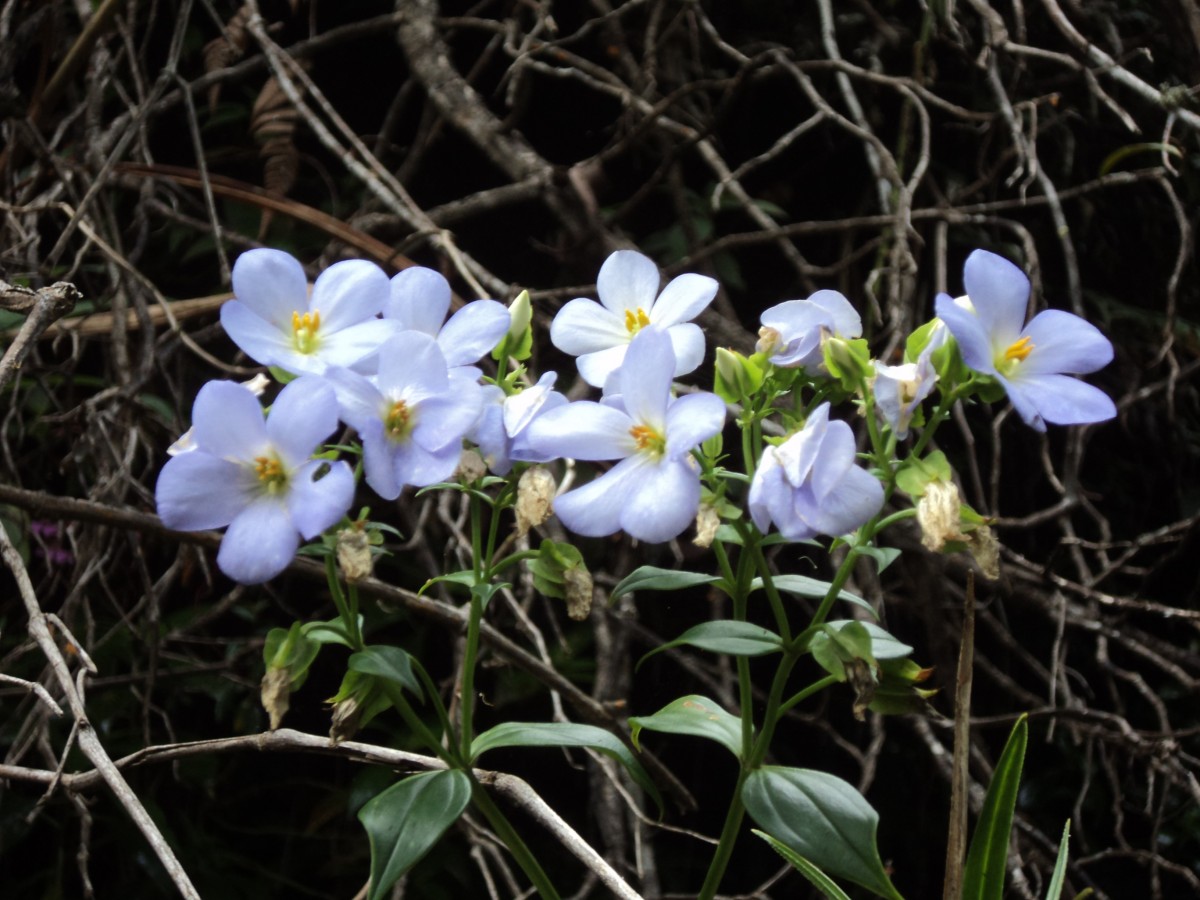
https://ceb.wikipedia.org/wiki/Exacum_pallidum
https://war.wikipedia.org/wiki/Exacum_pallidum
https://sv.wikipedia.org/wiki/Exacum_pallidum

https://en.wikipedia.org/wiki/Exacum
https://fr.wikipedia.org/wiki/Exacum
https://commons.wikimedia.org/wiki/Category:Exacum
https://species.wikimedia.org/wiki/Exacum
....



 Posts


No comments:
Post a Comment