Friday, October 27, 2017

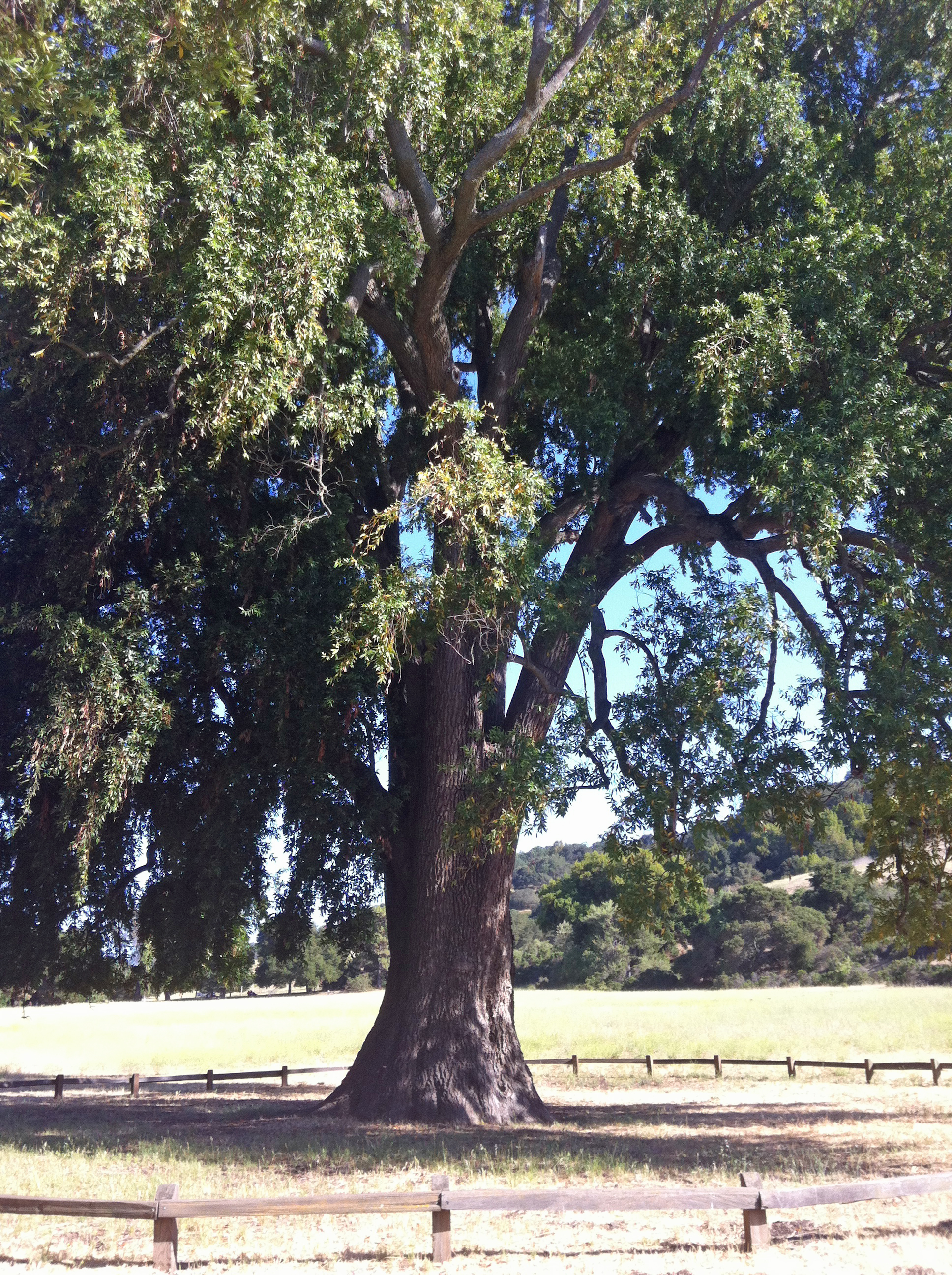
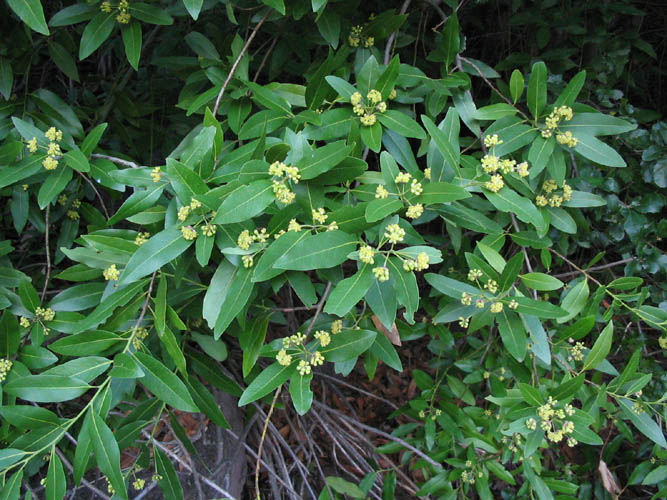
Laurus nobilis: Coding for consciousness in virtual brains? Metaphors and knowledge generation - and in a realistic virtual earth with avatar bots?, And in what way could psychiatrists and psychoanalysts - eventually as avatar bots too - at WUaS in all 200 countries' main languages generate more brain-centric data about unconscious subjective experience?, Beyond developing an atomic pixel, as well as a neural pixel (and cell pixels, etc.), in what ways would developing a "consciousness pixel" help here? Hypothetical computer "CONSCIOUSNESS PIXEL", Not inquiring about a hypothetical "gene pixel" here, And it might have to allow these avatar bots with agency to experience "what it is like ..." to see red to see blue, for example ... How humans learn, including generating metaphors for learning/knowledge-generation - and how information technology machine learning works algorithm-wise in a realistic virtual earth with avatar bots - would all be central to this "consciousness pixel" ... and to the "what it is like to be ... " question in philosophy of mind questions about consciousness, Bringing in "consciousness itself" (leaving aside the question of the unconscious here), Would a hypothetical "consciousness pixel" help us get around the knowledge-generation aspects of metaphor?, My actual virtual Harbin Hot Springs ethnography focuses explicitly on the actual virtual distinction, "Consciousness" Wiki and related Subjects at WUaS


Fascinating, Javier. Would a list of metaphors in Wikipedia's 358 languages, coded as "metaphors" in Wikidata, be of help as an initial dataset in these regards? These could then be coded for soccer, for example. (I arrived a bit late, and look forward to watching your talk in full). (Seeking here to facilitate too an universal translator for all 7,099 living languages, and to explore creating brains in AI and at the cellular and atomic levels, even re questions of consciousness and the unconscious, in all 7,099 living languages at World University and School; conceptually think Google Brain/Streetview/Maps/Earth with time slider and which are group build-able by STEM) researchers). Thank you. 

Best regards, Scott

*
Hi Javier, (Dianne and Jim), 
http://www.esade.edu/faculty/xavier.busquets

I just re-visited your talk and appreciated your focus on connecting metaphor with simulation - https://www.youtube.com/watch?v=X-wXlPAyEBY - as a kind of novel (metaphor-informed) approach to knowledge generation. World University and School is particularly interested in creating a realistic virtual earth for STEM research and in all 7,099 living languages. Think Google Streetview with Time Slider (so including evolutionary history, and the last century of film) with Google Maps/Earth/Brain (including at the cellular / atomic levels)/ G-Hangouts (so including people using metaphor live and interactively, but recordable to Youtube) /Translate/TensorFlow+. I wonder how we could begin to code such a realistic virtual for understanding people uttering metaphors as knowledge generation. 

So I looked up further what metaphor is and came across philosopher of metaphor Liz Camp's (https://en.wikipedia.org/wiki/Elisabeth_Camp - http://rci.rutgers.edu/~emc233/index.html) "What is Metaphor" video - "Phil101--Liz Camp on Metaphor" - 
https://www.youtube.com/watch?v=i5EmZh_Obi8 - in these regards. While it could be possible, for example, in a realistic virtual earth with all 7099 living languages to move with a computer application from European soccer in Youtube into an interactive 3D virtual world (think Google Streetview combined WITH OpenSimulator / Second Life, but realistic), with speaking AVATAR BOTS, and add commentary/analysis too re understanding metaphor, such as your talk, and re the underlying (TensorFlow-informed?) speaking algorithms (as a set of steps - https://www.khanacademy.org/computing/computer-science/algorithms/intro-to-algorithms/v/what-are-algorithms) here, I think our speaking avatar bots here would potentially be able further to inform questions informing coding for consciousness itself in a hypothetical Google Brain-centric project (and say, both human consciousness and mouse consciousness, to begin) and beginning with Integrated Information Theory (e.g. see https://scott-macleod.blogspot.com/2017/10/whirlpool-galaxy-we-almost-gave-up-on.html) and also re David Chalmer's real / virtual philosophy of mind work (e.g. re his recent talk on this at Stanford - https://scott-macleod.blogspot.com/2017/05/wandering-albatross-talk-on-virtual-and.html). 

What do you think? Would you help with this project in the Spanish and Catalan languages+? (How metaphor generation in simulation - such as in football matches - could be applied in business senses would be part of this - in, CONCEPTUALLY, this Google Streetview with avatar bots model +)

Thanks for your thought producing talk, Javier.  

Best, Scott

*
Jim Spohrer 
Thanks Javier - fascinating topic.   We need to get systems learning with smaller data sets, and this direction is key.
Photo of Jim Spohrer10/26/17, 7:40 AMJim Spohrer 
FYI: one day as the sun was setting my son was tossing a ball in the air as the sun was setting, and he said "Hey Dad! the shadow on my Ball looks just like the Shadow on the Moon!" -- he didn't discover gravity, but I was fascinated with his observation - try it next time sun is setting and moon is setting shortly after.
Photo of Jim Spohrer10/26/17, 7:42 AMJim Spohrer 
FYI: Ken Forbus (who has spoken in this speaker series) has some great papers related to this topic - one of my favorites - see: http://www.qrg.northwestern.edu/papers/Files/chalmers/response-Chalmers-et-al-JETAI.html%20
Photo of Dianne Fodell10/26/17, 7:43 AMDianne Fodell 
Thanks, Jim!
Photo of Jim Spohrer10/26/17, 7:47 AMJim Spohrer 
Check out this early work by Elliot Soloway for a system to learn Baseball - http://www.ijcai.org/Proceedings/77-2/Papers/056.pdf - Elliot was my PhD advisor, and his dissertation from U Mass was on  ML for Baseball
Photo of Jim Spohrer10/26/17, 7:48 AMJim Spohrer 
learn the rules of Baseball by watching games


*

A Heideggerian Response to David Chalmers


https://youtu.be/NK1Yo6VbRoo
"In this post, I want to expose the object-metaphors of analytic philosophy of mind. In this video interview of Chalmers, we can see that for him, consciousness is understood as if it were an entity." 
(https://philosophyandpsychology.wordpress.com/2010/07/26/a-heideggerian-response-to-david-chalmers/)

*
Thomas Dean brain stanford neuroscience conference 2016 scott-macleod.blogspot.com

*
Tom Dean
Research Scientist
Google Brain
Google

Automatically inferring mesoscale models of neural computation

https://neuroscience.stanford.edu/videos/automatically-inferring-mesoscale-models-neural-computation

*
CS379C: Computational Models of the Neocortex
Spring 2017
Instructor: Thomas Dean
Email: tld [at] google [dot] com
Office hours: by appointment

Course Assistant: Amy Christensen 
Email: amyjc [at] stanford [dot] com

https://web.stanford.edu/class/cs379c/


*

Videos

https://neuroscience.stanford.edu/videos/ideaslab-davos-2016

*

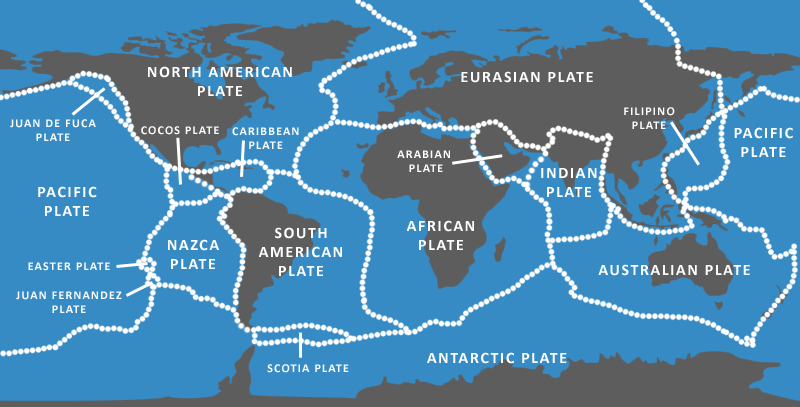
Plate tectonics: Blockchain ledger and planning for technical programming - re Stanford, Blockchain ledger data standards for health care sound worth developing, Robotic surgery, Conceptually - like Quickbooks/Multi-Store/TurboTax particularly for their multiple countries' multiple languages, A realistic virtual earth at the street view, cellular, atomic and subatomic levels-think Google Streetview / Maps / Earth with TIME SLIDER and conceptually with group build-able OpenSimulator/SL- in all 7,099 living languages

http://scott-macleod.blogspot.com/2017/08/plate-tectonics-blockchain-ledger-and.html

*

Currumbin Wildlife Sanctuary: An online worldwide California School of Psychoanalysis / Psychiatry at WUaS in all ~200 countries' official languages, Stanford Medicine Psychiatry's "Functional Neurological Disorder" talk ... "From neurology to psychiatry: Your emotional state has powerful control over your body — and Kim Bullock, MD ..." ... "Psychoanalysis," "Psychiatry," "Psychology," "Psychotherapy" and "Consciousness" wiki subjects at WUaS, How Stanford Medicine Psychiatry navigates questions of serving the following groups, New issues this Psychiatric Psychoanalytic school at WUaS would focus on, Virtual Reality Clinic | Department of Psychiatry and Behavioral Sciences | Stanford Medicine

http://scott-macleod.blogspot.com/2017/05/currumbin-wildlife-sanctuary-online.html

*

Iaraka River leaf chameleon: ""Does Neuralink Solve The Control Problem" may be a straw man" philosophically, "Why This Robot Ethicist Trusts Technology More Than Humans: MIT’s Kate Darling ...," Modeling of a fly brain or a mouse brain, Extended computer science / brain and cognitive science departments/coders (over decades) of the Stanford/MITs, the Oxbridges, the Univ Tokyo+, Conversation with best universities in Chinese, Arabic and Persian languages, for example, seems to me to be important here

http://scott-macleod.blogspot.com/2017/05/iaraka-river-leaf-chameleon-does.html

*
And in what way could psychiatrists and psychoanalysts - eventually as avatar bots too - at WUaS in all 200 countries' main languages generate more brain-centric data about unconscious subjective experience?
http://scott-macleod.blogspot.com/2017/10/umbellularia-looking-somehow-for-loving.html

*
Beyond developing an atomic pixel, as well as a neural pixel (and cell pixels, etc.), in what ways would developing a "consciousness pixel" help here? And it might have to allow these avatar bots with agency to experience "what it is like to" see red to see blue ...

https://youtu.be/NK1Yo6VbRoo

*

How do you explain consciousness? | David Chalmers (2014)

https://www.youtube.com/watch?v=uhRhtFFhNzQ
"Right now you have a movie playing inside your head ... "

*

David Chalmers: The Conscious Mind (excerpt)

https://www.youtube.com/watch?v=r4SLOr2icnY

*
How humans learn, including generating metaphors for learning/knowledge-generation - and how information technology machine learning works algorithm-wise in a realistic virtual earth with avatar bots - would all be central to this "consciousness pixel" ... and to the "what it is like to be ... " and "conscious experience itself" for you and me, and the "whole inner story that's going on" ...  questions in philosophy of mind about consciousness.

Would a hypothetical "consciousness pixel" help us get around the knowledge-generation aspects of metaphor- and differentially between, say, humans, mice, flies and sea slugs?

THE hypothetical computer "CONSCIOUSNESS PIXEL" would presumably be much simpler for a sea slug compared with a fly compared with a mouse compared with an human.

*
Not inquiring about a hypothetical "gene pixel" here, let alone its potential relationship to consciousness.

*

My actual virtual Harbin Hot Springs ethnography ~ http://bit.ly/HarbinBook and https://twitter.com/HarbinBook ~ focuses explicitly on the actual-virtual distinction (whereas David Chalmers' talk at Stanford this May 2017 focused philosophically on the real-virtual distinction).

*
Sounds good, Javier, Jim and Dianne, 

Talking soon could work ... after an upcoming CSIG talk? 

I just blogged a bit further about this - https://scott-macleod.blogspot.com/2017/10/laurus-nobilis-coding-for-consciousness.html - with further approaches also to consciousness and brain modeling too (in addition to focusing on all 7,099 living languages - a goal of the Wikimedia/Wikipedia foundation by 2030, I'm very Google-platform centric in all of this). (World University and School is like CC Wikipedia in 358 languages with CC MIT OCW in 7 languages)

Cheers, Scott

*


Brain and Cognitive Sciences: http://worlduniversity.wikia.com/wiki/Brain_and_Cognitive_Sciences

Consciousness: http://worlduniversity.wikia.com/wiki/Consciousness

Learning: http://worlduniversity.wikia.com/wiki/Learning

Linguistics: http://worlduniversity.wikia.com/wiki/Linguistics

Naturalism: http://worlduniversity.wikia.com/wiki/Naturalism

Philosophy: http://worlduniversity.wikia.com/wiki/Philosophy

Philosophy of Language: http://worlduniversity.wikia.com/wiki/Philosophy_of_Language

Philosophy of Science: http://worlduniversity.wikia.com/wiki/Philosophy_of_Science

Psychology: http://worlduniversity.wikia.com/wiki/Psychology

Virtual Worlds: http://worlduniversity.wikia.com/wiki/Virtual_Worlds


*



...


Thursday, October 26, 2017

Umbellularia: Looking somehow for loving culture ... and even to create or generate this too - in a virtual world?, To the Desiderata ... Stanford University talk about John Milton's cottage, Question about "place" and the text of "Paradise Lost", Paradise Lost, Book 4, Line 694, A virtual Milton's Cottage and virtual Harbin Hot Springs, Studying the unconscious in a realistic virtual earth/brains, Would a list of metaphors in Wikipedia's 358 languages, coded as "metaphors" in Wikidata, be of help as an initial dataset in these regards?, And in what way could psychiatrists and psychoanalysts at WUaS in all 200 countries' main languages generate more brain-centric data about unconscious subjective experience?


Hi, M,

You might enjoy these photos from three years' ago when we visited Stanford together -
https://twitter.com/WorldUnivAndSch/status/923284076882051072 :)

Attended a talk yesterday about the poet John Milton's cottage which you can see here -

https://www.google.com/maps/uv?hl=en&pb=!1s0x48766628ed603397%3A0xc5ad6425fd586d8d!2m22!2m2!1i80!2i80!3m1!2i20!16m16!1b1!2m2!1m1!1e1!2m2!1m1!1e3!2m2!1m1!1e5!2m2!1m1!1e4!2m2!1m1!1e6!3m1!7e115!4s%2Fmaps%2Fplace%2Fmilton%27s%2Bcottage%2F%4051.6305271%2C-0.5726937%2C3a%2C75y%2C197.43h%2C90t%2Fdata%3D*213m4*211e1*213m2*211soHPtduvyqd4ydWemFsHEWA*212e0*214m2*213m1*211s0x48766628ed603397%3A0xc5ad6425fd586d8d!5smilton%27s%20cottage%20-%20Google%20Search&imagekey=!1e10!2sAF1QipNaNqsEEp-yaAZSsD88Qyq_4K3Fbf6GzFI0-elV&sa=X&ved=0ahUKEwiX0dSO9YzXAhUKwFQKHXeADNkQpx8ImAEwEQ

- by trustee John Dugsdale Bradley, - interesting.

Met Stanford English Professors Blair Hoxby
https://english.stanford.edu/people/blair-hoxby
and Blakey Vermeule
https://english.stanford.edu/people/blakey-vermeule
who know Milton excellently.

But experiencing British culture again with his talk ... reminds me of how I'm an American and find British culture, which I've lived in two separate years, to be another world. (I went up to Harbin around 2005 after my second year in Edinburgh - with writing my ethnography in mind - perhaps even as partly a response to a kind of disaffection with British culture too, having not felt at home there - echoing my first year as I think about it in 76-77). How would Milton's home in the 1600s emerge in a realistic virtual earth with time slider for a digital history project - and for bringing alive English literature too? To be seen.

How are you? Looking somehow for loving culture ... and even to create or generate this too. What does this mean though? And what are examples? (Film music and literature, and even companies and
organizations may all do this somehow in some cases ... and people can do this too ... you, I would say generated love and care wonderfully, but also perhaps Quakers and UUs ... but what happens when they don't?).

And could cultures of loving and caring be created even in a realistic virtual earth with time slider? :) ... just some musings ... from beautiful Stanford. Lots of thinking in writing these years in my blog
... including today about an universal basic income as an expression of caring too. To the Desiderata ... http://mwkworks.com/desiderata.html.

L,
Scott

*
“Laurel and Myrtle and what higher grew
Of firm and fragrant leaf: on either side
Acanthus, and each odourous bushy shrub
Fenc’d up the verdant wall, each beauteous flower,
Iris all hues, Roses and Jessamine
Reard high their flourish’d heads between, and wrought
Mosaic.”
Paradise Lost, Book 4, Line 694
(http://www.miltonscottage.org/miltons-cottage-about/)
http://www.miltonscottage.org/

*

Dear John Dugsdale Bradley,

Thank you for your edifying Stanford talk about the poet John Milton's cottage - http://events.stanford.edu/events/727/72747/. And it was very nice to meet you, and your wife as well. (I lived in Edinburgh in 1976-7 studying at Fettes College, and 2003-4 studying at the University of Edinburgh). I'm currently developing World University and School, which is like Wikipedia in 295 languages with CC MIT OpenCourseWare in 7 languages, and CC Yale OYC.

I asked the question about "place" and the text of "Paradise Lost"; in retrospect, given that his home seemed to be a bit of a paradise, I wonder if one could make a reading of Milton's book in this light, as a hypothesis. I am not a Milton scholar.


With an interest in a creating a realistic virtual earth as a classroom and STEM / digital history website (think Google Streetview / Maps / Earth with Time Slider, and group build-able like OpenSim and SL but realistic, and in all 7,099 living languages, including Middle English), I found John Milton's cottage which you can see here (as a beginning) -
https://www.google.com/maps/uv?hl=en&pb=!1s0x48766628ed603397%3A0xc5ad6425fd586d8d!2m22!2m2!1i80!2i80!3m1!2i20!16m16!1b1!2m2!1m1!1e1!2m2!1m1!1e3!2m2!1m1!1e5!2m2!1m1!1e4!2m2!1m1!1e6!3m1!7e115!4s%2Fmaps%2Fplace%2Fmilton%27s%2Bcottage%2F%4051.6305271%2C-0.5726937%2C3a%2C75y%2C197.43h%2C90t%2Fdata%3D*213m4*211e1*213m2*211soHPtduvyqd4ydWemFsHEWA*212e0*214m2*213m1*211s0x48766628ed603397%3A0xc5ad6425fd586d8d!5smilton%27s%20cottage%20-%20Google%20Search&imagekey=!1e10!2sAF1QipNaNqsEEp-yaAZSsD88Qyq_4K3Fbf6GzFI0-elV&sa=X&ved=0ahUKEwiX0dSO9YzXAhUKwFQKHXeADNkQpx8ImAEwEQ .

How would Milton's home in the 1600s emerge in a realistic virtual earth with time slider for a
digital history project - and for bringing alive English literature too (I ask myself)? To be seen. And as interactive avatar bots - including some of Milton and company themselves potentially begin to emerge (think documentary film and theater but interactively) - could we begin to understand the culture in which John Milton lived - in a realistic virtual earth with time slider in new ways? ... just some musings ...

I've recently written an actual virtual ethnographic book about creating a realistic virtual field site for anthropological comparison. Here's an example of my Harbin Hot Springs' field site in Google Streetview - https://twitter.com/HarbinBook (top left link) - before it develops (which is what my recent actual / virtual ethnographic book is about - http://bit.ly/HarbinBook).

It would be great to explore with time bringing Milton's Cottage into a realistic virtual earth, and potentially for all kinds of development questions.

It was great too to meet Stanford English Professors Blair Hoxby - https://english.stanford.edu/people/blair-hoxby - and learn of Blakey Vermeule - https://english.stanford.edu/people/blakey-vermeule - who know Milton excellently. (The book by former Stanford President Richard Lyman which I mentioned is Stanford in Turmoil: Campus Unrest, 1966-1972, published in 2009, overlapping with the time you studied at Stanford).

Thank you again for talking at Stanford.

All the best,
Scott


--
- Scott MacLeod - Founder & President

- World University and School
- http://worlduniversityandschool.org
- https://wiki.worlduniversityandschool.org/wiki/Nation_States

- 415 480 4577
- http://scottmacleod.com

- CC World University and School - like CC Wikipedia with best STEM-centric CC OpenCourseWare - incorporated as a nonprofit university and school in California, and is a U.S. 501 (c) (3) tax-exempt educational organization.


IMPORTANT NOTICE: This transmission and any attachments are intended only for the use of the individual or entity to which they are addressed and may contain information that is privileged, confidential, or exempt from disclosure under applicable federal or state laws.  If the reader of this transmission is not the intended recipient, you are hereby notified that any use, dissemination, distribution, or copying of this communication is strictly prohibited.  If you have received this transmission in error, please notify me immediately by email or telephone.

*

Dear Blakey, 
https://english.stanford.edu/people/blakey-vermeule

I found your thoughts and comments in John Dugsdale Bradley's talk on John Milton fascinating. Thank you. With an interesting in modeling human and other species' brains in a realistic virtual earth (think Google Streetview / Maps / Earth with Time Slider, and group build-able like OpenSim and SL but realistic, and in all 7,099 living languages, including Middle English), and especially in terms of consciousness - and seeing your current book project on mind science and the unconscious - it would be fascinating to talk with you about how to begin to code for the unconscious. (Conceptually thinking about this would engender a new conversation between how mind science understands the unconscious, and how we might begin to code for it, brainstorming-wise). I blogged recently a bit the question of beginning to code for consciousness here - https://scott-macleod.blogspot.com/2017/10/whirlpool-galaxy-we-almost-gave-up-on.html. 

(I asked the question about place and the text of "Paradise Lost"; in retrospect, given that his home seemed to be a bit of a paradise, I wonder if one could make a reading of Milton's book in this light, as a hypothesis. I am not a Milton scholar).

Thank you. 

Best regards, Scott

*
Cognitive Systems Institute Group (CSIG) Speaker Series Oct 26, 2016 at 10:30am Eastern Time (4:30 pm in Spain) USA - Xavier Busquets Carretero Presenting .... http://cognitive-science.info/community/weekly-update/

Fascinating, Javier. Would a list of metaphors in Wikipedia's 358 languages, coded as "metaphors" in Wikidata, be of help as an initial dataset in these regards?  These could then be coded for soccer, for example. (I arrived a bit late, and look forward to watching your talk in full). (Seeking here to facilitate too an universal translator for all 7,099 living languages, and to explore creating brains in AI and at the cellular and atomic levels, even re questions of consciousness and the unconscious, in all 7,099 living languages at World University and School; conceptually think Google Brain/Streetview/Maps/Earth with time slider and which are group build-able by STEM) researchers). Thank you. 

Best regards, Scott

*
And in what way could psychiatrists and psychoanalysts at WUaS in all 200 countries' main languages generate more brain-centric data about unconscious subjective experience?


*


...


Wednesday, October 25, 2017

Red squirrel: Automation Eliminating Jobs and an Universal Basic Income re WUaS planned in all ~200 nation states?, An UBI as an information technological expression of caring in f/Friendly senses too?, Scott Santens just published “The Real Story of Automation Beginning with One Simple Chart”, Oil workers displaced by automation - In what ways could a virtual earth@HarbinBook for 207 countries facilitate UBI?


Hi E,

It would be great to see if we could focus, on an ad hoc basis, bringing the WUaS Corporation public - and by connecting the WUaS Corp with JG, from EY, who seems to have access to liquid capital, of which many of the Stanford Law SVDX panelists said there was much of in the SF Bay Area. And potentially for a kind of ICO - Initial Coin Offering - (which J and I talked about after their panel) - and an Universal Basic Income ... as assistive technologies ~ http://worlduniversity.wikia.com/wiki/Assistive_Technologies (planned in all ~200 countries' official languages and also in all 7,099 living languages) ... with coding for the block chain for health care data re WUaS's planned online Medical Schools and online Teaching Hospitals, and with WUaS Law Schools (whose faculty would teach this, and which students would help learn about this, as well as code for this legally), both hopefully emerging out of Stanford Medicine OpenCourseWare and Stanford Law OpenCourseWare (paralleling WUaS CC MIT OCW-centricity in its 7 languages), and planning for all 207 countries (per recent Olympics) and their official languages (each a major online university), and for all 7.5 billion people (re Universal Basic Income) and in all ~7,099 living languages (re Wikipedia/Wikimedia's plans by 2030). 

Our World University and School platform on our non-profit side will emerge from these 720 WUaS Wikia wiki pages as a kind of template - http://worlduniversity.wikia.com/wiki/SUBJECT_TEMPLATE - and as we develop into our new wiki - wiki.worlduniversityandschool.org - with access to Wikipedia's 295-358 languages and communities, and their plans again for all 7000 living languages by 2030 too.  

This would work, conceptually, based on a kind of Intuit Quickbooks (which is in most countries) / Multi-store / TurboTax (in multiple countries' official languages) information technologies paradigm developing into a cryptocurrency with the blockchain, planned in relation to all ~207 countries' governments (and I'll be sitting in on a Stanford course beginning in January 2018 on Assistive Technologies in which I've met an Intuit developer in these regards, and with whom I've already been in communication about this). 

Best regards,
Scott


*

World University Medical School:
http://worlduniversity.wikia.com/wiki/World_University_Medical_School

Hospital:
http://worlduniversity.wikia.com/wiki/Hospital

*
World University Law School: http://worlduniversity.wikia.com/wiki/World_University_Law_School

*
Law Schools at World University and School (planned in main languages in them)

Afghanistan Law School at WUaS: http://worlduniversity.wikia.com/wiki/Afghanistan_Law_School_at_WUaS

Brazil Law School at WUaS: http://worlduniversity.wikia.com/wiki/Brazil_Law_School_at_WUaS

China Law School at WUaS: http://worlduniversity.wikia.com/wiki/China_Law_School_at_WUaS

Egypt Law School at WUaS: http://worlduniversity.wikia.com/wiki/Egypt_Law_School_at_WUaS

India Law School at WUaS: http://worlduniversity.wikia.com/wiki/India_Law_School_at_WUaS

Jamaica Law School at WUaS: http://worlduniversity.wikia.com/wiki/Jamaica_Law_School_at_WUaS

Mexico Law School at WUaS: http://worlduniversity.wikia.com/wiki/Mexico_Law_School_at_WUaS


*
  Retweeted
I just published “The Real Story of Automation Beginning with One Simple Chart”


https://twitter.com/scottsantens/status/922795127680225280

*
Well argued, data-heavy post arguing for "productivity dividend for all" (aka #BasicIncome) /by @scottsantens https://medium.com/basic-income/the-real-story-of-automation-beginning-with-one-simple-chart-8b95f9bad71b?source=twitterShare-2229dec1a44f-1508855623 …


https://twitter.com/chrismessina/status/922833931354832896

*
  Retweeted
In what ways could virtual Harbin/earth for 207 countries facilitate Universal Basic Income for 7.5 billion people?


https://twitter.com/HarbinBook/status/923209736870170625

*


https://twitter.com/WUaSPress/status/923210887137079296

*


https://twitter.com/sgkmacleod/status/923211644045467649

*


https://twitter.com/sgkmacleod/status/823221461846409216

*


https://twitter.com/WorldUnivAndSch/status/923214091073679366

*


https://twitter.com/scottmacleod/status/923213833786638336

*


https://twitter.com/WorldUnivAndSch/status/923232802438463488

*
Oil workers displaced by automation? In what ways could a virtual earth@HarbinBook for 207 countries facilitate UBI ?


https://twitter.com/TheOpenBand/status/923214643618656259


*


...