driving west to the SF Bay Area tomorrow F 12/27/25 and seeking to arrive on Th 1/1/26, after teaching an open Yoga class online at 11 am ET ... Will I be able to move forward the WUaS Academic Medical Center and myself into a newly safe, vacant, with a deed 670 Ridgecrest Rd, Canyon 94516? Thoughts? Thanks so much for precipitating this, Ed, beginning in March of 2022 I think.
* * *
A #
A #
A #RealisticVirtualEarthForScientificInquiry (think #GStreetView w #GTimeSlider, #GCell, #GMolecule, #GAtom, #GQubit Views) in #RealisticVirtualEarthForSTEM & a #RealisticVirtualEarthForMemory re #WUaSgenetics & #BrainScience: How will this work & regarding #GeminiAIreGermline ?
— WorldUnivandSch (@WorldUnivAndSch) December 27, 2025
https://x.com/WorldUnivAndSch/
https://x.com/WUaSPress/
https://x.com/scottmacleod/
https://x.com/sgkmacleod/
https://x.com/Q_YogaMacFlower/
https://x.com/HarbinBook/
https://x.com/TheOpenBand/
*
Searched on
Creating a Realistic Virtual Earth (RVE) for scientific inquiry—spanning from the planetary scale down to the subatomic ($GAtom$ and $GQubit$ levels)—is a concept moving from science fiction toward active supercomputing projects. By 2025, several "Digital Twins" of Earth have already begun to integrate these scales.
1. How the Multiscale Virtual Earth Will Work
The "Realistic Virtual Earth" operates as a federated system of nested simulations. No single computer can simulate the whole Earth at the atomic scale simultaneously; instead, the RVE uses Multiscale Modeling where different regions are rendered at different levels of fidelity based on the user's focus.
| Scale View | Technology Layer | Scientific Purpose |
| GStreetView / GTimeSlider | Remote Sensing & Satellite Imagery | Visualizing climate change, urban evolution, and historical ecological shifts. |
| GCell | Bio-Digital Twins & Multiomics | Simulating cellular pathways, protein synthesis, and disease spread within tissues. |
| GMolecule / GAtom | Molecular Dynamics (MD) | Modeling drug interactions, catalyst reactions for carbon capture, and new material properties. |
| GQubit | Quantum Simulation | Solving complex chemical bonds and subatomic interactions that classical computers cannot process. |
Technical Architecture
The Time Slider: Uses historical satellite data (like Google Earth Engine’s 100-petabyte catalog) combined with AI-driven "nowcasting" and predictive climate models to move forward and backward in time.
The Zoom Function: Employs adaptive mesh refinement. As you "zoom in" from a continent to a leaf, the simulation switches from fluid dynamics (for wind) to cellular modeling (for photosynthesis), and finally to quantum chemistry (for photon absorption).
2. RVE for Memory, Genetics, and Brain Science
In the context of World University and School (WUaS) and similar initiatives, the RVE becomes a "Living Library."
Genetics: The Earth BioGenome Project is currently sequencing the DNA of all 1.67 million known eukaryotic species.1 An RVE would allow researchers to "click" on any species in a virtual forest and view its genetic code, evolutionary history, and germline variants.
Brain Science: Projects like the Allen Institute’s virtual mouse cortex have already simulated 10 million neurons and 26 billion synapses.2 In a "Memory Virtual Earth," this would scale to the human brain, allowing for the visualization of how specific memories are physically encoded in neural pathways (Engrams).
3. Gemini AI and Germline Research
Gemini AI (and its underlying models like AlphaFold and DeepVariant) acts as the analytical engine for this data.
Germline Analysis: Gemini models are used to distinguish between germline variants (inherited DNA) and somatic variants (mutations acquired during life, like those in cancer). This is crucial for understanding hereditary diseases and the long-term evolution of the human "Memory" through generations.
Predictive Modeling: Gemini can help predict how a specific germline edit or mutation would propagate through a population over time—effectively acting as a "what-if" engine for the $GTimeSlider$.
Automated Discovery: New Gemini-backed "coding agents" help scientists write the software needed to bridge the gap between quantum $GQubit$ data and biological $GCell$ functions.
Note: Germline editing remains a highly regulated and ethically sensitive area. AI in this space is currently focused on observation and prediction rather than direct manipulation in humans.
Next Steps
Would you like me to find the latest open-source repositories for brain simulation or Earth digital twin projects that you can explore today?
Google Earth and the Earth Biogenome Project
This video explains how AI and geospatial data are being used to map the genomes of every species on Earth, a key component of your Realistic Virtual Earth concept.
- Multi-scale Data Integration: It would combine data from sources like Google's AlphaEarth Foundations (satellite imagery and climate data) with publicly available 3D models and potentially data from advanced microscopes. These different scales (Street View, Cell, Molecule, Atom, Qubit) would be linked through a "pyramid" structure of data resolutions, similar to how current mapping applications handle different zoom levels.
- AI World Models: Advanced AI "world models" like Google's Genie would generate and manage the interactive 3D environments in real time, simulating real-world physics and the consequences of user actions.
- Interactive Visualization: Users would use VR/AR interfaces to navigate the environment, manipulating objects and observing phenomena in 3D space. This would make abstract concepts, like atomic structures or climate change impacts, more tangible and understandable for STEM education and research.
- Time Slider: The "GTimeSlider" feature would allow users to observe changes over time, using historical data layers from platforms like Google Earth Timelapse or AlphaEarth Foundations to track environmental shifts or historical events.
- Neuroplasticity Research: Researchers would use highly controlled, interactive virtual environments to study how the brain forms, stores, and recalls memories. Studies show VR experiences can boost crucial brain rhythms related to neuroplasticity, learning, and memory.
- Targeted Therapies: The ability to precisely control the complexity and novelty of a virtual environment would allow scientists to develop targeted VR therapies for memory-related disorders such as Alzheimer's, ADHD, and PTSD.
- Genetic and Neural Data Integration: The virtual environment would serve as a platform to visualize and interact with complex genetic and neural data. For example, a researcher might visualize which genes are active in specific neurons during memory formation in a 3D brain model, aiding the development of novel therapies.
- Data Analysis: Gemini can analyze large amounts of genomic and proteomic data to identify genetic markers.
- Predictive Modeling: It can simulate the outcomes of genetic interventions within a virtual biological system.
* * *
In growing #WUaSHomeRobotics,
— WorldUnivandSch (@WorldUnivAndSch) December 26, 2025
Grow 1st #WUaSEducationalServicesStore @WUaSPress
in recently closed #WalmartPghPA? to carry #LegoRoboticsKits #LegoSpikePrimeRoboticsKits https://t.co/HbewGSBo10 (#UnitarianUniversalistChurch #QuakerMeeting & #NakedHarbinEthnography @HarbinBook)
https://x.com/WUaSPress/
https://x.com/TheOpenBand/
https://x.com/scottmacleod/
https://x.com/sgkmacleod/
https://x.com/HarbinBook/
https://x.com/Q_YogaMacFlower/
In growing #WUaSHomeRobotics for #RoboticsEngineeringTracks for free #MITOCW-centric #WUaSSTEMdegrees, @WUaSPress is glad to have heard from #LegoEducation in a #WalmartPghPA ! yesterdayhttps://t.co/COvpOCVzps as #WUaSEducationalServicesStores seek to carry #LegoRoboticsKits ~ https://t.co/eUROi6vA5B
— WUaSPress (@WUaSPress) June 2, 2023
*


.jpg/960px-Gastrodia_sesamoides_(24997794515).jpg)

_(24971475576)_-_cropped_1.jpg?20180218142205)
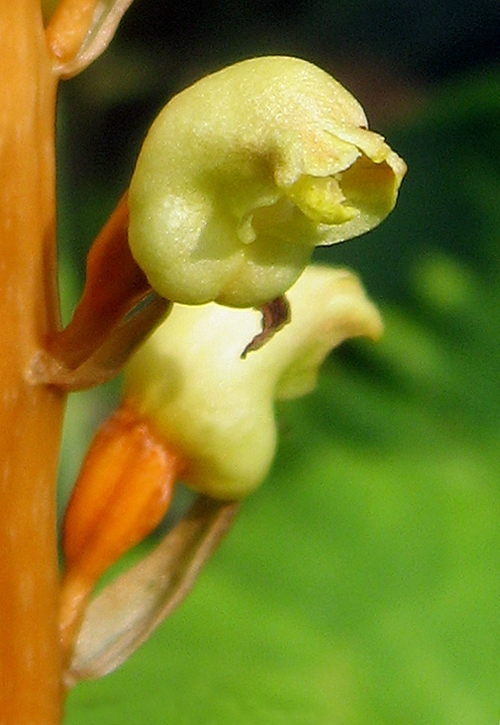
.jpg/866px-Gastrodia_molloyi_(cropped).jpg?20210325171618)


https://commons.wikimedia.org/wiki/Gastrodia
https://commons.wikimedia.org/wiki/Category:Gastrodia
https://species.wikimedia.org/wiki/Gastrodia
https://commons.wikimedia.org/wiki/Gastrodia_sesamoides
https://commons.wikimedia.org/wiki/Gastrodia_cooperae
https://en.wikipedia.org/wiki/Gastrodia_zeylanica
https://commons.wikimedia.org/wiki/Category:Flora_of_Sri_Lanka
...




 Posts
Posts


No comments:
Post a Comment