To a global, virtual, free, open, {future degree- & credit-granting}, multilingual University & School for the developing world and everyone, as well as loving bliss ~ scottmacleod.com
I'm glad there seems to be a fair amount of interest in an online component to your course - https://www.academia.edu/s/19ac1100ab - this autumn, Nelson and All! If we proceed with this online component in a few weeks, what you'll need is a gmail address and G+ page, as well as an avatar in Second Life which you can get here - secondlife.com/download - and then teleport here - http://maps.secondlife.com/secondlife/Berkman/165/212/25 - (if we want to explore Harvard's virtual island and even build touristic objects, as well).
In terms of my virtual research, Tourism Studies, and this course, check out Harbin Hot Springs' Gate House in Google Street View / Earth / Maps here, and walk down the road to Middletown, California here, for example -
- and add some of your photos (I've added a photo here with the name "Helianth"), as Google Street View invites here (or to another part of the world where you do your tourism research) ... and per "ethno-wiki-virtual-world-graphy" (see this label here - http://scott-macleod.blogspot.com/search/label/ethno-wiki-virtual-world-graphy). I'm planning to give a talk about this as method at the Tourism Studies Working Group on Friday, November 6th at 5pm at UC Berkeley in the Gifford Room, and will hopefully broadcast this video in a G+ Hangout too.
As a film-realistic 3D interactive build-able virtual earth develops, I hope we as (STEM) researchers will all be able to add our data, pictures, videos, and languages even (and historically too). I think this real-time virtual earth (think Google Street View with SL plus) will become a very important site of Tourism Studies' academic research over time, and comparatively too.
Hi Nelson, Muzzo, Kathleen, Cecilia, Naomi, Hilary, Cele,
I'd like to offer to facilitate access to your seminar online so people can participate in this course from where they are in the world. We could do this a) in Google group video Hangouts (where you could possibly give a talk for the first part of the class, which would be recorded and watched again in this course next year), and possibly also on b) Harvard's virtual island in Second Life with voice and text (where we might even each explore building a "marked site," to use Dean MacCannell's definition, and then visiting each others ' touristic destinations in this 3D interactive virtual world ).
To get an idea of one way these interesting interactive "classrooms" would work, please see this course I'm currently teaching online -
http://worlduniversityandschool.org/InfoTechNetworkSocGlobalUniv.html - on behalf of World University and School (which has a Tourism Studies' wiki subject page for open teaching and learning - http://worlduniversity.wikia.com/wiki/Tourism_Studies - and for which WUaS hopes to hire graduate students and eventually faculty in the future).
As I mentioned in my first post here, I'd like to explore further thinking through my second Harbin book in terms of tourism in your seminar.
Would all of you be interested in participating in this course if it were online (as well as taking place at the same time out of the Anthropology department at Berkeley)?
Best,
Scott *
Great, Nelson!
Thank you.
I'm interested in both publishing my actual / virtual Harbin book in the context of your course.
Harbin Hot Springs, after its recent devastating fire, lives on virtually in the book I plan to publish soon (I'm indexing it now), and I hope too now that I may be able to add many, many photographs as a anthropological record of "before the fire." And as my first Harbin book gets published (hopefully this autumn 2015 even) - http://www.scottmacleod.com/ActualVirtualHarbinBook.html - I'm hope that I can lay some groundwork for my second virtual Harbin book. I imagine actual Harbin will be rebuilt soon and become very differently beautiful again. Per my "The Making of Virtual Harbin as Ethnographic Field Site - https://youtu.be/3nhvcHw54GE - I hope this well happen realistically, interactively and in 3D for STEM research in Google Earth. I hope this will potentially dovetail beautifully and NEWLY with "The re-making or re-building of actual Harbin" for far-reaching parallel closures and re-openings anthropologically and tourism-wise too. Looking forward to exploring this in your course potentially. Thank you.
Scott
http://worlduniversityandschool.org/
Great and informative Wikimedia Foundation Language Engineering Team conversation for Wikipedia translation now in 289 languages today ....
Enjoyed participating in this meeting and mentioning preparing to give CC World University and School - http://worlduniversityandschool.org - to Wikidata re translation, best STEM CC OCW (CC MIT OCW in 7 languages CC YALE OYC) and potentially for ALL 7941 languages -
Social History of the Internet videos for the course "Information Technology, Network Society and the Global University" http://worlduniversityandschool.org
These video lectures are from a series about the information technology revolution, vis-a-vis long time UC Berkeley Professor Manuel Castells' work. These video focus on the social history of the internet. I created this video for a course I teach on "Society and Information Technology," online only here and on Harvard's Berkman island in Second Life, the 3-D virtual world - http://socinfotech.pbwiki.com. See, too, the course web page - http://worlduniversityandschool.org/InfoTechNetworkSocGlobalUniv.html.
*
Information Technology and the Network Society video lectures at
Next week English-learning will continue re this new course "Information Technology, the Network Society and the Global University" ~ http://worlduniversityandschool.org/InfoTechNetworkSocGlobalUniv.html ~ which begins Saturday, September 19 (through12/12), from 11 am - 1 pm Pacific Time (California). Readings and syllabus are developing and will change a little with more online resources.
There will be ESL speaking and writing opportunities as conversation in this course. We may blog or write in social media such as in our online G+ Profile pages for conversation for English-learning as well.
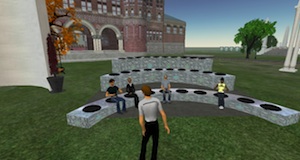
In the second hour, we may go to Harvard's virtual island in Second Life for further conversation. Please downland and get an avatar here - https://secondlife.com/downloads/. And then please visit Harvard's virtual island here -http://slurl.com/secondlife/Berkman/114/70/25. The links for this and more are all below too.
September 19 - December 12, 2015, 11a-1p, Pacific Time in Google + group video Hangouts accessible here - https://plus.google.com/u/0/+ScottMacLeodWorldUniversity/posts - and on Harvard's virtual island in Second Life - http://slurl.com/secondlife/Berkman/114/70/25
Welcome to the 'Information Technology, the Network Society and the Global University' on Harvard's virtual island course web site, a course about how the Network Society has developed, vis-à-vis long-time Professor at UC Berkeley, UoSC, and University of Catalonia (UOC), in Barcelona, Manuel Castells' research on the Information Technology revolution. In this course, we'll examine how the Information Technology revolution represents a paradigm shift, as significant as previous industrial revolutions, from an empirically grounded analysis of the present. The argument for this course is that information generation / processing is the driver of change in society. The information revolution in the Internet Age comes from people producing their information and exchanging it over the net, from the double logic of identities and networks. We'll also draw on http://worlduniversity.wikia.com/wiki/Network_Society (accessible from http://worlduniversity.wikia.com/wiki/Internet_Studies) as well as other World University wiki resources.
This virtual course is 'placeless.' Lectures and discussions will take place both in group video in the first hour and in-world in the Meeting Area on Harvard's island in the virtual world of Second Life in the second hour.
This class is aimed at undergraduate students of all backgrounds and interests. It does not require specific disciplinary knowledge and is designed to be understood by any student with a general level of information about society, politics, the economy, and international affairs, regardless of the student's major. Interested graduate students are welcome. A series of talks will analyze the interaction between society and contemporary information technologies, in a multicultural and comparative perspective. Talks will cover 11 topics, which will be subdivided in specific themes. Specific required online media resources will be assigned for each topic.
Pre-requisites:
For non-sociology students; consent of the instructor.
Requirements:
Regular Participation. Engaging Required Media Resources.
*
SCHEDULE OF TALKS
(number between brackets indicate number of talks)
0. Introduction: Technology and Society (1)
1. The Information Technology Revolution: History, Geography, Actors (Microelectronics, computers, telecommunications, genetic engineering) (2)
2. The Internet Society: Social history of the Internet. The cultures of the Internet. Virtual communities and sociability online. Social movements, political conflicts, and the Internet. (4).
3. The New Economy: Technology and Productivity. E-business and the new economy. Globalization: financial markets, international trade, transnational production networks, internationalization of the labor force. The new international division of labor: inclusion and exclusion in the global networks of the new economy. (4)
4. The Digital Divide: (a) Technology, poverty, and minorities in the U.S. (b) Inequality, poverty, and social exclusion in the Information Age (c) The digital divide in a global perspective. (3)
5. The transformation of management, work, and employment: the network enterprise, flexible work, and the individualization of capital labor relations. (3)
6. Gender relations in the Information Age. (2)
7. The Informational City: information technology and spatial transformation (2)
8. The New Media and the culture of real virtuality. (2)
9. Informational Politics and the Network State (2)
10. The new world disorder: war and peace in the Age of the Internet (1) Conclusion: Technology and Social Responsibility (1)
11. Communication Power (1)
REQUIRED MEDIA RESOURCES and READINGS
(Numbers refer to the topics in the program)
**
0. Manuel Castells "Identity and Change in the Network Society"
1. Manuel Castells, "The Rise of the Network Society,” 2 nd edition, Oxford: Blackwell, 2000, chapter 1: "The Information Technology Revolution,” pp.28- 76
2. a) Janet Abbate "Inventing the Internet,” Cambridge: MIT Press, 1999, pages 1-6, 44-81, and 181-220.
b) Eric S. Raymond "The cathedral & the bazaar. Musings on Linux and open source by an accidental revolutionary," Sebastopol, Ca: O'Reilly, 1999, pages 7 - 78.
c) Barry Wellman and Milena Gulia "Net-Surfers don't ride alone: virtual communities as communities," on Barry Wellman (editor) "Networks in the global village,” Boulder, Colorado: Westview Press, pp. 331-366
3. a) Manuel Castells "Information technology and global capitalism" in Will Hutton and Anthony Giddens "On the edge. Living in global capitalism," London: Jonathan Cape and New York: The New Press, 2000, pages 52-74 b) David Held et alter "Global Transformations,” Stanford: Stanford University Press, 1999, pages 189-282.
Please watch video:
Please read transcript:
*
4. a) Manuel Castells "End of Millennium,” Oxford: Blackwell, 2nd edition, 2000, chapter 2 "The rise of the fourth world,” pages 68-82 and 128-152
b) U.S. Department of Commerce, National Telecommunications and Information Administration "Failing through the net: toward digital inclusion. A report on American's access to technology tools,” Washington DC: October 2000 (the whole report minus the methodology appendix)
c) David Bolt and Ray Crawford "Digital Divide. Computers and Our Children's Future,” New York: TV Books, pages 23-71
d) Manuel Castells "Information technology and global development," keynote address to the Economic and Social Council of the United Nations, May 12, 2000 (text provided in class - available on-line from the United Nations).
Please watch video:
Please read transcript:
*
5. Martin Carnoy "Sustaining the new economy. Work, family and community in the Information Age," Cambridge: Harvard University Press, 2000, pages 14- 104
Please watch video:
Please read transcript:
*
6. a) Juliet Webster "Shaping Women's Work. Gender, Employment and Information Technology,” Harlow: Longman, 1996, pages 33-1 10, and 176- 192
b) Martin Carnoy "Sustaining the new economy,” pages 105 -151. 7. a) William J. Mitchell "E-topia," Cambridge: MIT Press, pp. 31-68
b) James O.Wheeler, Yuko Aoyama, and Barney Warf "City space, industrial space and cyberspace" in Wheeler, Aoyama and Warf (eds.) "Cities in the telecommunications age," New York: Routledge, 2000, pages 3-17
c) Andrew Gillespie and Ronald Richardson "Teleworking and the city: Myths of workplace transcendence and travel reduction,” in Wheeler, Aoyama and Warf (eds) "Cities in the telecommunications age,” 2000, pages 228-248
Please watch video:
Please read transcript:
*
8. a) Bruce M. Owen "The Internet challenge to television,” Cambridge: Harvard University Press, 1999, pages 197-333.
b). William Dutton "Society on the line. Information politics in the digital age,” New York: Oxford University Press, 1999, chapter 10: "Wiring the global village: shaping access to audiences,” pages 257-277
Please watch video:
Please read transcript:
*
9. Manuel Castells, "The power of identity,” Oxford: Blackwell, 1997, chapter 5 "A powerless state?," pages 244-276 and 299-308, and chapter 6 "Informational politics and the crisis of democracy,” pages 309-353.
Please watch video:
Please read transcript:
*
10. John Arquilia and David Ronfeldt "The emergence of noopolitik. Toward and American Information Strategy,” Santa Monica, CA: Rand Corporation, 1999 (whole book, 89 pages).
Please watch video:
Please read transcript:
*
11. Jan A.G.M. van Dijk "Review of Manuel Castells (2009), Communication Power,"
Oxford, New York: Oxford University Press. (571 p.) ISBN 978-0-19-956-701-1. To appear in Communications, The European Journal of Communication (2010) http://www.utwente.nl/bms/mco/bestanden/CastellsCommunicationPowerReview.pdf
="" face="Comic Sans MS, fantasy"> ="" face="Comic Sans MS, fantasy">
***
="" face="Comic Sans MS, fantasy">="" face="Comic Sans MS, fantasy">World University and School - like Wikipedia with Greatest Universities' OpenCourseWare - incorporated as a nonprofit effective April 2010, and has been a 501(c)(3) tax-exempt.
***
="" face="Comic Sans MS, fantasy">World University & School is a community of learners and teachers who value — and are themselves strengthened by — the rich diversity of its participants. In order to cultivate a flourishing teaching, learning and creating conversation in a diverse and complex world, WUaS welcomes all languages, students, families, faculty, board members, and staff with differences based on (but not limited to) race, color, ethnicity, religion, age, gender, sexual orientation, family structure, and economic background.
May
explore developing a Friendly-informed World University and School's
"Quaker Institute for the Future," or similar, weekly talk online focusing on "Academic Horizontal Democracy" coming into
conversation with the form (and hiring of enormous numbers of interns
and fellows) of the Berkman Center for Internet and Society
at Harvard Law School at Harvard University's Tuesday at 9:30 am PDT
talks when Harvard is in session ... and perhaps on Thursdays at noon or
12:30 pm PDT (3:30 EDT). How to find the Quaker-thinkers who attended
Haverford, Swarthmore as undergraduates, now studying for the Ph.D.s, and Quaker Stanford graduate students,
and post Docs, and very young professors to give these talks - and in
ways that rock about information technology, law, STEM, medicine,
humanities ... and eventually fly them out ...? It could be great to
have an in-person lunch brown-bag gatherings at Berkeley Monthly Meeting
or SFFM, for example, as we also broadcast these on the web over the
decades, and archive these too ... all in the name/process of Friendly
WUaS community building too.
Will be asking you about interesting
Quaker thinkers over time, I think :)
Thank you, thank you, thank you!
Scott
*
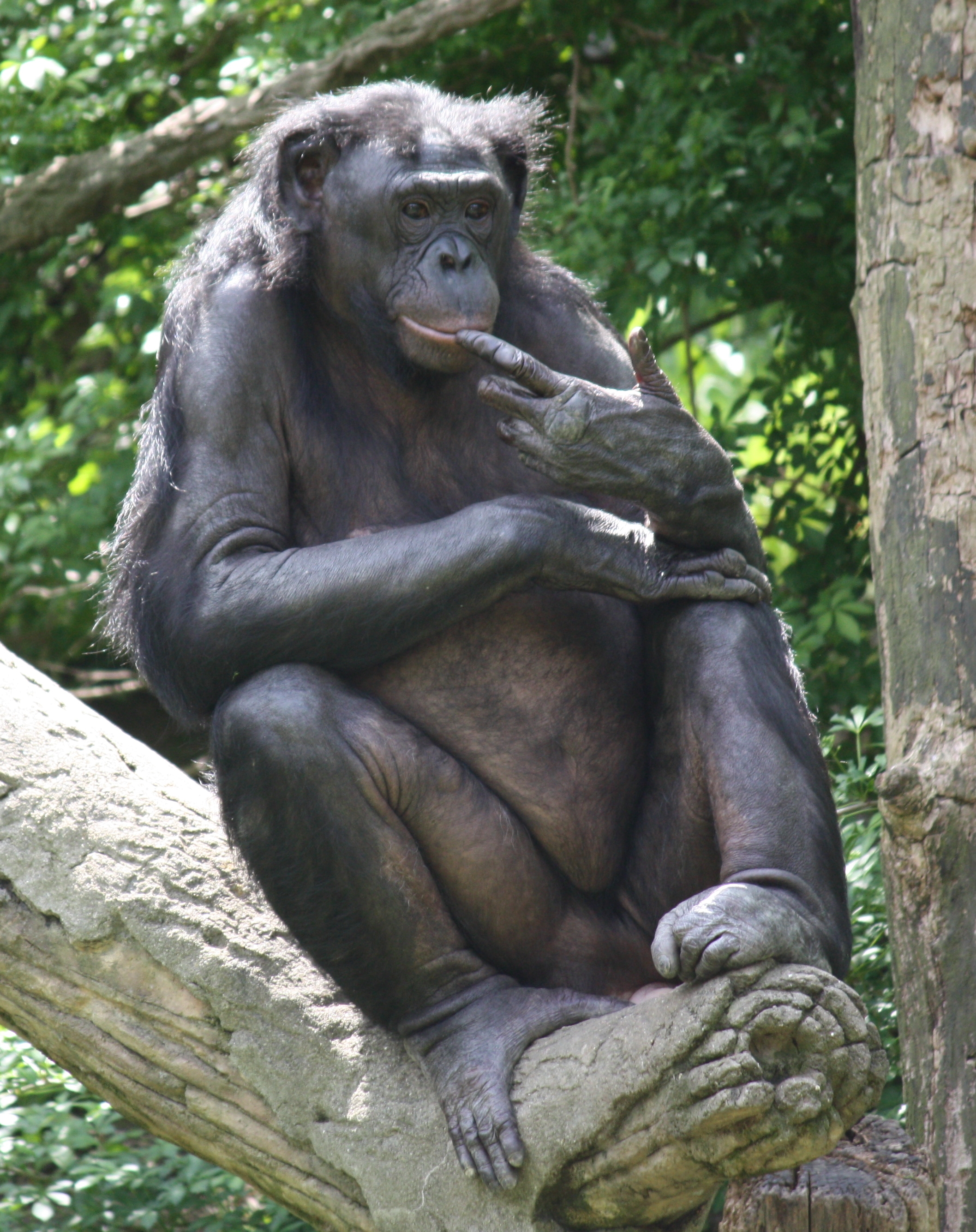
A Quaker Peace-Making course based on primatological videos and primate research taught at a Haverford or Swarthmore, for example, and beginning with Bonobos as a reference primate?
And where we all can add videos to this wiki subjects, and well as create new related wiki subjects ...
... and it added to my reading/understanding of Bonobos as peaceful, non harming, egalitarian, matriarchal, whereas Chimps can be aggressive and do a kind of primitive war ... and also vis-a-vis Gorillas and Orangutans and all of the approximately 376 species of higher primates ...
Brainstorming - "Information Technology, the Network Society, and the Global University"...
meets again next Saturday (through mid-December) at 11am Pacific Time on Harvard's virtual island in Second Life and at noon in Google + Hangouts here -
Scott's an anthropologist of #PhysicalDigital Harbin Hot Springs' Heart Consciousness Church @HarbinBook (on #TwitterX), as ethnographic field site - https://goo.gl/maps/7gSsSTweRCBo9gf87 - who is currently writing "Society, Info Tech & the Global Univ", who also finds fascinating the internet, ideas, poetry, sociology, art, science, genetics of aging reversal & extreme longevity drug therapies emerging (with FDA approval), philosophy, history, music, love and life ~ as well as the anthropology of info tech & counterculture :) - scottmacleod.com; Am also the president or head of, and professor at, best STEAM CC OCW wiki World Univ & Sch & Academic @WUaSPress, planned in 7,159 living languages with machine translation, (aka the WUaS Corp) planning free online degrees in ~200 countries & in their main languages, where you can #WikiTeach, or #WikiLearn, or #WikiCreate - https://wiki.worlduniversityandschool.org/wiki/Subjects (See too "Yoga Notations": http://www.scottmacleod.com/yoganotations.html). Identity-wise, a Nontheist f/Friendly Quaker - a NtF or NtQ - with Unitarian Universalist sympathies as well, and a player of Scottish bagpipes, & an academic
.jpg)
_on_Istrian_coast_(Adriatic_sea).jpg)









_flower,_opening.jpg)


.JPG)

.jpg)

 Posts
Posts