To a global, virtual, free, open, {future degree- & credit-granting}, multilingual University & School for the developing world and everyone, as well as loving bliss ~ scottmacleod.com
Into an emerging #RealisticVirtualEarth -When can we start interacting with or coding these #Turingmachines, (or attend online lectures or talk with profs @Cambridge_Uni eg in any of the past 8 centuries eg in a #RVEForHistory & think #GStreetView with #GTimeSlider w #GPegman)?
Into an emerging #RealisticVirtualEarth -When can we start interacting with or coding these #Turingmachines, (or attend online lectures or talk with profs @Cambridge_Uni eg in any of the past 8 centuries eg in a #RVEForHistory & think #GStreetView with #GTimeSlider w #GPegman)?
Gemini 4 Neon recreated Alan Turing’s 1936 study at @Cambridge_Uni in interactive 3D.
Using archival photos in @Antigravity, the model built Room X.8 at King’s College with a running Universal Turing Machine. https://t.co/mHYg9CW6jJ
Into an emerging #RealisticVirtualEarth -When can we start interacting with or coding these #Turingmachines, (or attend online lectures & courses at @Cambridge_Uni eg in any of the past 8 centuries even eg in a #RVEForHistory & think #GStreetView with #GTimeSlider w #GPegman)?
Into an emerging #RealisticVirtualEarth -When can we start interacting or coding with these #Turingmachines (or attending online lectures and courses at @Cambridge_Uni eg in any of the past 8 centuries even eg in a #RealisticVirtualEarthForHistory (& think #GStreetView with #GTimeSlider w #GPegman becoming people)?
Also -
Undergraduate students
Undergraduate teaching at the University is provided by both the University and the Colleges.
University teaching is provided by your Faculty or Department and usually takes the form of lectures, seminars, classes, and practicals (where relevant).
College teaching usually takes the form of supervisions; they are the responsibility of your College, although in some subjects this is co-ordinated through a Faculty or Department on behalf of the Colleges.
Thank you for writing. This is an automated reply to let you know that I am spending the majority of my time at Google DeepMind, leading AI Safety & Alignment. If you're asking about reviews, talks/seminars, or external committees, it's unlikely that I'll be able to make it work at this time.
So sorry about the inconvenience!!
--
Yours,
--anca
*
Liebe Anca,
Vielen Dank für Ihre Nachricht – herzliche Grüße.
Thank you for your message, and Greetings.
(Ich habe von 1974 bis 1979 die High School in Pittsburgh – die Shady Side Academy – besucht; du hast ja deinen Doktortitel an der CMU erworben. Außerdem habe ich von 1981 bis 1982 ein Jahr lang in München studiert und dort – während meines insgesamt 13-monatigen Aufenthalts – die letzten zweieinhalb Monate bei einer Quäkerfamilie gewohnt. Da du ja, soweit ich weiß, aus Bremen stammst...)
(I went to high school in Pittsburgh at Shady Side Academy from 1974-79 and regarding you getting your PhD from CMU, and I also studied for a year in Munich from 1981-1982, living with a Quaker family there for the last 2 1/2 months of 13 months, regarding you being from Bremen I think).
World University and School beabsichtigt, eine deutschsprachige „Deutschland World University & School“ zu entwickeln. Dabei könnten weite Teile des englischsprachigen „MIT OpenCourseWare“-Angebots ins Deutsche übersetzt werden – möglicherweise eingebettet in eine realistische virtuelle Erde. Im Hinblick auf die Entwicklung – etwa in Zusammenarbeit mit Google DeepMind – spielt das Thema Sicherheit eine wichtige Rolle; siehe dazu auch die nachstehenden Tweets.
World University and School seeks to develop Deutschland World University & School - https://wiki.worlduniversityandschool.org/wiki/Germany - but in German, possibly translating much of MIT OCW in English into German ... and potentially much in a realistic virtual earth and AI safety will be important regarding building with Google Deep Mind, and see the PS Tweets below.
Frohes Thanksgiving – und danke für die E-Mails von Google Scholar mit Hinweisen auf neue wissenschaftliche Artikel, die für Ihre Forschung relevant sind, sowie auf Zitate in wissenschaftlichen Publikationen!
Happy Thanksgiving, and thanks for your new related research Google Scholar Alerts' scholarly articles' citations Google Scholar emails!
Into an emerging #RealisticVirtualEarth -When can we start interacting with or coding these #Turingmachines, (or attend online lectures or talk with profs @Cambridge_Uni eg in any of the past 8 centuries eg in a #RVEForHistory & think #GStreetView with #GTimeSlider w #GPegman)?
Into an emerging #RealisticVirtualEarth -When can we start interacting with or coding these #Turingmachines, (or attend online lectures & courses at @Cambridge_Uni eg in any of the past 8 centuries even eg in a #RVEForHistory & think #GStreetView with #GTimeSlider w #GPegman)?
- Scott GK MacLeod Founder, President, CEO & Professor at / of best STEAM CC licensed OCW, Wiki, World University & School (WUaS) - USPS US Post Office, PO Box 132, General Delivery, Canyon, CA 94516 - https://www.youtube.com/@ScottMacLeodWorldUniversity/videos
1) non-profit 501(c)(3) Public Charity building on CC-4 licensed MIT OCW in 7 languages -
How are #FDAclinicalTrials for the #GeneticDrugTherapy #EpigeneticReprogramming #ER100 for two glaucoma conditions going?
https://t.co/1IzoB04LZ7 ~
ER-100 is widely considered a localized cellular #AgingReversalGeneTherapy
https://t.co/GSOyFv3Cd6 #WUaS
https://t.co/hJoNCM0lei ~
Note - & to https://wiki.worlduniversityandschool.org/wiki/Religious_Studies @WorldUnivAndSch ... wished #Gurpurab in the #Canyon94516USPO ...Re #Canyon94516 out of which the #WUaSAcademicMedicalCenter & #WUaSunivs & @WUaSPress & #WUaSEducationalServicesStores may grow further & in Sikh countries too
#BlessedGurpurab
Note - & to https://t.co/rHcJ4W2aC6 @WorldUnivAndSch ... wished #Gurpurab in the #Canyon94516USPO ...Re #Canyon94516 out of which the #WUaSAcademicMedicalCenter & #WUaSunivs & @WUaSPress & #WUaSEducationalServicesStores may grow further & in Sikh countries too
Thanks for your great talk at #HarvardARDD2026 @KejunYing & with much relevance for even a #RealisticVirtualEarth & a #RVEforExtremeLongevity & a #RVEforAgingReversal I think -
Kejun Ying -
"HealthFlux is a pan-modal world model that forecasts risk for 1,000+ diseases. ESM-Life relates protein structure to lifespan across species."
Thanks for your great talk at #HarvardARDD2026 @KejunYing & with much relevance for even a #RealisticVirtualEarth & a #RVEforExtremeLongevity & a #RVEforAgingReversal I think https://t.co/dpPGSBbYvK -https://t.co/vfJEzK1FBY -https://t.co/FmGQzWmWh6 -https://t.co/0btdBRlGg7 ~
What a week. RH is proved, GTA 6 is out, and my @ARDD_Meeting talk is on YouTube. Bet you missed at least one xd
HealthFlux is a pan-modal world model that forecasts risk for 1,000+ diseases. ESM-Life relates protein structure to lifespan across species.
What a week. RH is proved, GTA 6 is out, and my @ARDD_Meeting talk is on YouTube. Bet you missed at least one xd
HealthFlux is a pan-modal world model that forecasts risk for 1,000+ diseases. ESM-Life relates protein structure to lifespan across species.
https://t.co/0HnOUD5isG
Notes - 1) Jay Bhattacharya NIH - Biomedical Engineering 2) @reidhoffman Interesting: In blind evaluations by AI, AI-generated studies scored higher on experimental rigor, while human research scored higher on originality and significance, AND 3) Yue Jiang - recruiting PhD students for Fall 2027! If you’re excited about developing AI models to simulate user behaviors
Note: To https://t.co/tala5xx0A2 & https://t.co/3U6sZQii2H @WorldUnivAndSch -Collaborate with #NIBIB in developing a #RealisticVirtualEarth a #RealisticVirtualEarthFor a #RVEforBiomedicalEngineering a #RVEfor3Dprinting & see #PeterNorvig's INCREDIBLE art. https://t.co/tkjQyy8mW7?
@NIHDirector_Jay Translating scientific ideas into real-world solutions often begins with a prototype.
The National Institute of Biomedical Imaging and Bioengineering (NIBIB)’s MakerSpace provides researchers with the tools and expertise to rapidly design, fabricate, and test new devices using technologies such as 3D printing and digital manufacturing. The Makerspace lab is run by the NIH-wide Center for Biomedical Engineering Technology Acceleration (BETA Center).
By accelerating iteration and experimentation, this resource helps NIH scientists move promising biomedical concepts from the drawing board toward practical application.
Translating scientific ideas into real-world solutions often begins with a prototype.
The National Institute of Biomedical Imaging and Bioengineering (NIBIB)’s MakerSpace provides researchers with the tools and expertise to rapidly design, fabricate, and test new devices using technologies such as 3D printing and digital manufacturing. The Makerspace lab is run by the NIH-wide Center for Biomedical Engineering Technology Acceleration (BETA Center).
By accelerating iteration and experimentation, this resource helps NIH scientists move promising biomedical concepts from the drawing board toward practical application.
Reid Hoffman @reidhoffman Interesting: In blind evaluations by AI, AI-generated studies scored higher on experimental rigor, while human research scored higher on originality and significance.
Promising findings for Human + AI partnership in research.
Interesting: In blind evaluations by AI, AI-generated studies scored higher on experimental rigor, while human research scored higher on originality and significance.
Promising findings for Human + AI partnership in research.
https://t.co/dvOmwpjA4E
Yue Jiang @YueJiang_nj Our lab (https://lnkd.in/gQYzRxZe) is recruiting PhD students for Fall 2027! If you’re excited about developing AI models to simulate user behaviors, and build the next generation of intelligent GUIs (either on screens or in AR/VR), we’d love to see you apply to Utah!
🎓 Our lab (https://t.co/Jp9rXVCgBN) is recruiting PhD students for Fall 2027! If you’re excited about developing AI models to simulate user behaviors, and build the next generation of intelligent GUIs (either on screens or in AR/VR), we’d love to see you apply to Utah!
philosophy of scientific inquiry with a realistic virtual earth for stem
#PhilosophyOfScientificInquiry w #RVEForSTEM #WUaS
"Ontology of Simulations & Virtual Reality:
Philosophers like @davidchalmers42 argue that virtual environments & causal interactions within them can constitute genuine reality rather than mere illusion"
philosophy of scientific inquiry with a realistic virtual earth for stem
Ontology of Simulations and Virtual Reality:Philosophers like David Chalmers argue that virtual environments and causal interactions within them can constitute genuine reality rather than mere illusion
Using a realistic virtual Earth for STEM shifts the philosophy of scientific inquiry from passive observation of fixed physical objects to active experimentation across coupled, multi-scale systems. Instead of treating models as mere illustrations, learners test causal mechanisms, examine emergent behavior, and confront how underlying assumptions shape what counts as evidence. [1, 2, 3]
Core Philosophical Dimensions
Epistemology and Model-Based Inquiry: Scientific knowledge in a virtual Earth comes from building, perturbing, and falsifying coupled models of atmosphere, geology, and biology. Learners evaluate how parameters, spatial resolution, and boundary conditions constrain truth claims rather than treating simulation output as raw ground truth. [1, 2]
Holism vs. Hypothetico-Deductive Reductionism: Many virtual labs rely on narrow hypothetico-deductive steps, yet Earth systems are deeply interconnected and non-linear. Drawing on post-positivist philosophy of science (such as Duhem and Kuhn), realistic planetary simulations highlight holistic system feedback, where changing one variable ripples across entire ecosystems. [1, 2]
Ontology of Simulations and Virtual Reality: Philosophers like David Chalmers argue that virtual environments and causal interactions within them can constitute genuine reality rather than mere illusion. In STEM, a realistic virtual Earth acts as an epistemic instrument—a structured world where causal relationships can be manipulated safely and repeatedly at planetary scales. [1, 2, 3, 4]
Emergence and Complex Causality: Agent-based and coupled Earth models help students trace how local rules produce macro-scale patterns—such as climate shifts, evolutionary dynamics, or resource cycles—bridging micro-level mechanisms and macro-level phenomena. [1, 2, 3]
Epistemic Humility and Verification: Because every simulation encodes human assumptions and approximations, rigorous inquiry requires comparing virtual runs against empirical field observations, checking for model artifacts, and distinguishing physical limits from computational constraints. [1, 2, 3]
Pedagogical and Practical Implications
Counterfactual & Scale Manipulation: Learners can run "what-if" experiments—altering atmospheric composition, topography, or land use—across timescales impossible in a physical lab. As explored in Hands-On STEM in a Virtual World, interactive virtual models let students manipulate variables in system models and observe cascading effects without physical constraints. [1, 2]
Designing Beyond Rigid Scripts: Research on simulation-based laboratories shows that rigid, single-path experiments can oversimplify how science actually works. Open-ended virtual Earth environments support authentic inquiry when learners formulate competing hypotheses, test edge cases, and revise models when predictions fail. [1, 2]
To tailor this further, let me know:
Your target STEM discipline or grade level (e.g., Earth science, physics, ecology, or university/K–12)
Whether you want to focus on epistemology and philosophy of science, curriculum/simulation design, or hands-on inquiry activities
- Scott GK MacLeod Founder, President, CEO & Professor at / of best STEAM CC licensed OCW, Wiki, World University & School (WUaS) - USPS US Post Office, PO Box 132, General Delivery, Canyon, CA 94516 - https://www.youtube.com/@ScottMacLeodWorldUniversity/videos
1) non-profit 501(c)(3) Public Charity building on CC-4 licensed MIT OCW in 7 languages -
What does the genome of a human look like at the cell level in a realistic virtual earth for genomes compared to say the genome for a Douglas fir tree in a realistic virtual earth and say compared to a sea anemone's genome?
At the cell level inside a realistic virtual earth for genomes—where you zoom from a whole organism into a single cell, across the nuclear envelope, and down to chromatin loops and base pairs—each genome looks distinct in scale, chromosome count, packing density, and spatial organization. [1, 2, 3, 4]
1. Human Genome (Homo sapiens)
Scale & Chromosomes: Roughly 3.1 billion base pairs per haploid set (about 6.2–6.3 billion in a diploid body cell) packed into 23 pairs (46 total) of nuclear chromosomes, plus a small ~16.6–17 kb circular genome inside mitochondria.
3D Nuclear Architecture: Stretched end-to-end, one cell's nuclear DNA spans roughly 2 meters (about 6 feet), folded 200,000-fold or more inside a nucleus roughly 8–10 micrometers wide.
Virtual View: You see discrete chromosome territories partitioned into chromatin loops (often hundreds of thousands of base pairs long, anchored by CTCF and regulatory enhancers) and active vs. inactive compartments, with roughly half of the sequence made up of repetitive elements and only ~1–2% coding directly for proteins. [1, 2, 3, 4, 5, 6, 7]
Scale & Chromosomes: A massive conifer genome of roughly 15–16 billion base pairs (about five times the size of a single human set) organized into 13 pairs (26 total) of chromosomes.
3D Cellular Context: Inside a plant cell framed by a rigid cell wall, large vacuoles, and chloroplasts, the nucleus holds far more total DNA per chromosome on average than a human nucleus.
Virtual View: Zooming along a single chromosome reveals vast expanses of repetitive DNA and long introns interspersed with tens of thousands of gene models—including expanded or specialized families tied to conifer traits like light-harvesting, drought stress, and pathogen defense. [1, 2, 3, 4, 5, 6]
Scale & Chromosomes: A compact animal genome of roughly 270–450 million base pairs (around one-tenth the size of a human set) arranged across 15 chromosome pairs (30 total), with no distinct heteromorphic sex chromosomes.
3D Cellular Context: Far less bulk "filler" DNA per chromosome than a Douglas fir, yet rich in ancestral animal regulatory circuitry and conserved gene linkages shared with vertebrates.
Virtual View: You see tightly packed, gene-dense chromosomal blocks where ancient developmental and cell-type gene toolkits sit alongside familiar meiotic structures (such as the synaptonemal complex) in a much smaller base-pair footprint. [1, 2, 3, 4, 5, 6, 7]
In a realistic virtual earth at the cellular level, these three genomes would look like completely different landscapes inside the cell nucleus.
The human genome sits at about three billion base pairs across forty-six chromosomes, forming distinct neighborhoods with open, active regions alongside tightly packed, quieter zones.
A Douglas fir genome is massive by comparison, spanning roughly sixteen billion base pairs across twenty-six chromosomes. Inside a virtual Douglas fir cell, you would see sprawling stretches of repetitive sequences and jumping elements taking up most of the terrain, with active genes scattered like small islands across a vast plain.
A sea anemone genome is much smaller and more compact, often around a few hundred million base pairs. In a virtual cell, it would look like a streamlined, dense micro-world that still holds a surprisingly rich set of developmental genes despite the anemone's simpler body plan.
Greetings, and thanks for your autoreply in the UN Partner Portal email thread (initially from Rifai in Sri Lanka at Freedom College) inviting editing of Wikidata, Lydia.
- having had some bad experiences in the past editing Wikipedia for example.
How please to remove this sentence for example -
When McLeod announced nine months after the accident that child mortality in a ten-mile radius around the plant had doubled, he was fired by the governor.[1]
since it's false, and sounds made up by someone named Kate Brown, and also the spelling of my father's last name has been incorrect for years? My father was very critical of the Thornburg administration as Secretary of Health for the state of Pennsylvania in 1979, having been installed 12 days before the nuclear meltdown, and left the administration after some months to return to his position as Professor in the Graduate School of Public Health at the University of Pittsburgh, and possibly to teach Grand Rounds in the University of Pittsburgh Medical School which he did for some time after moving to Pittsburgh with his family in 1974.
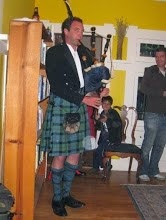
Scott's an anthropologist of #PhysicalDigital Harbin Hot Springs' Heart Consciousness Church @HarbinBook (on #TwitterX), as ethnographic field site - https://goo.gl/maps/7gSsSTweRCBo9gf87 - who is currently writing "Society, Info Tech & the Global Univ", who also finds fascinating the internet, ideas, poetry, sociology, art, science, genetics of aging reversal & extreme longevity drug therapies emerging (with FDA approval), philosophy, history, music, love and life ~ as well as the anthropology of info tech & counterculture :) - scottmacleod.com; Am also the president or head of, and professor at, best STEAM CC OCW wiki World Univ & Sch & Academic @WUaSPress, planned in 7,159 living languages with machine translation, (aka the WUaS Corp) planning free online degrees in ~200 countries & in their main languages, where you can #WikiTeach, or #WikiLearn, or #WikiCreate - https://wiki.worlduniversityandschool.org/wiki/Subjects (See too "Yoga Notations": http://www.scottmacleod.com/yoganotations.html). Identity-wise, a Nontheist f/Friendly Quaker - a NtF or NtQ - with Unitarian Universalist sympathies as well, and a player of Scottish bagpipes, & an academic


 Our lab (



 Posts


