Sunday, August 31, 2008

Hair: Harbin as Assemblage, Ashram, Envisioning Anew, and Its Milieu

Harbin as Assemblage

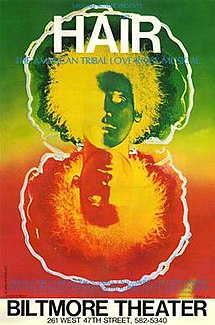
Harbin is a very virtual place – and I think this has to do with its culture or 'assemblage' in a Foucauldian sense – and this assemblage is both beautiful, unique and a discourse. In many ways, Harbin could have inspired "Hair: The Tribal Love-Rock Musical," except that Harbin is in northern California ~ Hair Poster.


{Eastern} Spirituality at Harbin

Harbin is also an ashram, in a sense. People come to Harbin in a similar way to that which they might spend time in an ashram in India, but this Harbin emerged in the 1970s in northern California with a lot of experimentation and innovation, and was created by a wide variety of hippies. Many of these folks went to India in the 60s and 70s and had spiritual teachers, from the East and West, but mostly with Eastern spiritual names. And around 2005, Harbin built its Temple, a very beautiful structure that harbinizes - harmonizes with and reflects a oneness - with a Harbin 'vision.'

At Harbin, some people are very sincere in their engagement with Indian spiritual traditions, through service, devotion, meditation or self-study, for example. Harbin, while supportive and receptive to these practices, is its own assemblage, with its own practices, which I see as embracing and innovating with some of these spiritual practices. The 1960s and 1970s also drew a lot on an amazingly widespread array of spiritual practices from the East, although Hinduism and India did feature prominently. And a fair number of people at Harbin - residents and guests - have and use spiritual names, for a variety of reasons.

Now, in 2008, people at Harbin are still engaging far-reaching spiritual language, but in a slightly less-widespread way as in the 1970s, I think.

I've seen some beautiful yoga asana (postures) done on the sun deck in the past few days. I think this is a result of the wide-spread growth of yoga beginning in the 1960s and 1970s.

And all of these practices bring practitioners at Harbin closer to a kind of oneness.


Envisioning the Possible

Harbin also shows people a whole new range of possibilities. Coming from outside – the SF Bay Area or northern California - it sort of 'resets' what you might think is possible to the possible again. Harbin is very cool this way. So, if one's been away from Harbin for a while, it reminds you that creative possibilities exist. And if you're completely new to Harbin, it can be very mind-expanding. In a sense, Harbin opens the possibility to envision things anew.


Harbin's Milieu

A day at Harbin tends to take on a life of its own in remarkable ways. People's 'flow' emerges in relation to Harbin's milieu. (Harbin may minimize cell phone use and wireless internet access to shape this possibility.)


...

Saturday, August 30, 2008

Leaf: Harbin - Conference Center, Dances, Seeing, Human Condition


The Conference Center, with its outdoor pools, that I've rarely seen anyone in (but I also have not yet taken a workshop here), provides space for workshops ranging from Human Awareness Institute's "Love, Intimacy, and Sexuality" to "Laughter" workshops, to space for musical events and dances. All of these workshops and events happened at Harbin in the spring of 2008. I've mostly done unconditional dance in the Conference Center, over numerous years (since around 1995, when I first came to Harbin). The Conference Center's physical design facilitates both dancing - there's ample space, as well as both carpeted and nice, wooden floors on which to dance - as well as a sense of harmony, openness, and simplicity. The building has clean lines with a lot of wooden beams and walls, a high ceiling, a porch and surrounding open area where other workshops could be held in parallel. It's settled in a lovely, wooded location, across a wooden bridge, and separate from Mainside with its Stonefront Lodge, the guest rooms in Azalea, Walnut, Fern, and the main pool area, and the (new) cob and bail Temple (2005) across the creek, as well as the Domes on the same side of the valley, and the village where many residents live up the main Harbin road, and all the rest of Harbin's buildings. As part of Harbin, the Conference Center facilitates possibilities for guests and residents to come together for dancing, and the taking of workshops which come to define Harbin's culture, - assemblages or patterns that make up the life of Harbin. This includes what people like to do at Harbin - the free ideas of Harbin - that is, Harbin's fabric of life. Harbin's dances, Kirtan (chanting), and evening events all include Harbin residents and guests, and bring this community together in a variety of ways. After the dances, many people often go to the pools, which inform much of the tenor of life, and the Harbin experience. When workshops are taking place in the Conference Center, dances are held in the Temple, which is also a lovely space, but smaller.


Harbin Dances

The dances are interesting at Harbin. They involve an exchange of non-verbal energy, where people find a kind of 'flow: the psychology of optimal experience' experience, but which also unify the group and Harbin, and through movement. The way I see it, if tensions emerge 'neurophysiologically' at Harbin, where language won't mediate, dance opens possibilities to see who a person 'is,' that they dance freely, which somehow rights things.


***

Someone has strung a tie die hammock to the right of the Heart pool between two grape arbor supports, and is lying in it. I haven't seen that before. I continue to see things at Harbin again and again which I haven't seen. For all its constancy – there are only a few new buildings since Ishvara bought the land in 1972 - there's still a lot of newness and nowness.


Seeing

People seem to like to see and be seen, and this process is quite open here at Harbin. In fact, Harbin's pool area is designed for this in a way. Men and women undress together in the dressing room, into and out of which people can see. The pool's water is clear and it often has a light blue light, (although this morning it was deep green blue) and the area around the pool is very visually open, so people see here too. From Fern kitchen one level above the pools, one can see both the pool area, and part of the pool. The walkway through the middle of the pool area is visible from all angles. Sometimes people dress very spectacularly and walk through this area. Although 'watching' the human dance - the human condition - through millennia seems to continue, it's often been mediated in a stadium, or by media, while at Harbin it's very immediate.


How is it that the day smiles here at Harbin, especially on weekends? People come out, take their clothes off, talk with friends, soak in the pools, seem pretty content and relaxed in a natural way, that emerges from the milieu. There's normal, content, human happiness, as well as community at Harbin.


...

Friday, August 29, 2008

Cosmos: Harbin Art, Unreally-Realness and Words

Art at Harbin is emerging. And there are a lot of artists here, each unique in his or her own way.

The Domes, e's paintings, the water way, the Temple, the Dragon Gate, the Whale in the hot pool, the railings in the hot pool, d's photos, as well as a lot of other art in the Harbin woodwork. The Harbin Valley itself is very beautiful, and I see it as art, too. View Stonefront Lodge and Harbin Mainside at night from and including the Temple, and you might see a vision of Shangri-la - Ounmalin on the water (Ursula LeGuin). Much of this beauty has happened organically, - it just unfolded, accreted and came together as a whole. Design also played a significant role. And this art and beauty contributes richly to Harbin's virtualness.


Un-really Real

Harbin is very un-really real - a kind of 'magical realism' has arisen here – and in Northern California. There are a lot of long-haired folks here, all living quite fully, especially when they get here. And if Harbin didn’t exist, someone would have to invent it. And Harbin kind of lives itself. No one is in charge, in a sense, and it's very self-regulating, in a Taoist sense. Some dramas unfold here between the residents and visitors, among residents and among guests. And lots is said and thought – some negative - about how Harbin is changing, and what goes on here. But people just keep coming through the gate, each on their own trip, and all varied, which kind of balances out and puts into perspective some of the dramas here, as well as life.

Harbin's virtualness emerges in peoples' minds, through a kind of shared experience, shared vision (culture?), and perhaps shared neurophysiology. This informs a lot of different experiences.


Words

To “Harbinize” – after soaking in the pools, - coming in touch with a kind of harmony, happiness and relaxed space, that is in sync with the fabric of Harbin. This stems directly from the oneness - the unique relaxation response (my language) - that the pools give rise to.

Thursday, August 28, 2008

Balm: Harbin Hot Springs as Healing Place, Identity

Harbin is a healing place. So many people find wellness here, through an amazingly wide variety of approaches - both spiritual and health promoting - as well as by just going into the pools. Ishvara envisioned it from the beginning as a Gestalt Center with hots springs, as well as a place informed by Taoism, – that is, Lao Tzu and Chuang Tzu's thinking, I think. And there’s a great degree of freedom here to do just what wants, interact freely in the way one can create, - with a community to support this.

Harbin is a place of energy, an energy center, that, in its complexity, is hard to characterize. It's in the water, the earth of the Harbin Valley, in people's interactions, and takes form elsewhere.

People wear beautiful, colorful clothes here, – and people come to shine.

Interactions with people can be very real at Harbin, with folks who aren’t alienated. Recently I met a very present and beautiful woman, with her boyfriend, who is from Santa Cruz. She had long dark hair, with some colors woven into it, which looked like they were streaming down. When I first saw them together she was naked sitting in his lap on a chair, - so relaxed and open - among a whole bunch of other people, all lying naked on the sun deck near the pools.

In Harbin's culture, 'readings' of what people want take shape in interesting ways, and play out in remarkable ways, and sometimes indirectly.

So, there is a lot of individualism here.

And people with strong personalities come to stay and play here. Harbin often receives them and these folks find a place here, but in other cases not. In general, Harbin is a very receptive and fluid place socially.

What works out in the soup is a kind of hippie commune in the 2000s, - where people come to stay for years. But in response to this degree of stability or longevity, Harbin doesn’t seem to move in the direction of more structure, authoritarianism, or any corporate-like practice. It's quite non-hierarchical; Harbin's culture is great.


People play music by the river. People sleep in tents - and through the winter, too - and some of these tents are very beautiful, with lovely fabrics inside.


And decisions get made through talking, where people say what they will do and do this, with all their human foilibles, but at other times decisions emerge in unspoken ways. In general though, Harbin folks make responsible decisions, informed by a vision of the Harbin experience - its identity - and the meditative qualities of the pools that can evoke oneness.

So, friendly hippie culture in all its variety is settled here - a kind of Harbin identity. People embody it. Northern California and the world gave rise to it – from its roots in the 1960s and 70s – and it finds a degree of sustainability here. Those residents who stay the longest seem to me to take a slightly retiring, living-in-a-village approach. There are a lot of Harbin residents, but you don't see very many of them. They seem to slip quietly into life in and around the Harbin Valley and Middletown area here.

Children come to visit here, too, with their parents. And residents have kids.


And the processes of coming inwardly, and softening - the relaxation response - are very present here, too. People relate often from this soft space or place, and with imagination and warmth.


To some degree at Harbin, people find a way to define their own lives, in response to modernity, post-modernity, the system, through a kind of Harbin identity, a way of categorizing the world, of otherness.

Tuesday, August 26, 2008

Canopy: World University: The Global, Virtual/Digital, Open, Free, Degree-Granting, Multilingual University & School

Here's our new wiki introduction for World University - worlduniversity.wikia.com/wiki/World_University. Feel free to add to it.

Welcome to World University

The Global, Virtual/Digital, Open, Free, Degree-Granting, Multilingual University & School


where anyone can take or post (teach) classes


We're presently in the process of both envisioning and realizing a global, degree-granting (Ph.D., M.D., I.B., & Music School, etc.), free-to-students, open, virtual university and school, with great universities (e.g. Harvard, MIT, Ivy League Schools, Stanford, U.C. Berkeley, Oxford, T.U.M., Sorbonne, L.M.U., Juilliard, Cambridge, Cal Tech, etc.) as key players, using a Wikipedia model, and for everyone and especially the developing world - that anyone can edit, primarily by adding or taking courses.


In many ways, World University is already open. You can take classes, for example, through MIT's Open Course Ware by clicking on the courses to the left, and learn, for example, what is the equivalent of a Masters in Physics or in "Society, Technology and Science" at MIT right now. MIT's Open Course Ware's listing contains around 1800 courses, with many video lectures already posted. Or you can post a very fun class about Mozart, massage, painting, calculus, sculpture or your area of specialization. Also, create a page with what you know, what courses you'd like to teach or take, and what courses you've taken. Use the links to the left to begin adding a free course, by language, country, degree, or to take a course.


For the time being, World University might offer degrees over a 10 year horizon. So, for example, World University might offer four courses, at first, in each of these countries and in many languages, to be engaged possibly on One Laptop Per Child and video-capable, programmable iPhone-like devices. And people in these countries, of course, can add their own courses to this Wiki, with knowledge they would like to share. In terms of possible degree-granting, Harvard professors, for example, might also teach 4 courses at the undergraduate level, and 1 graduate level course, in the fall of 2009, for matriculated students and with at-large participation possible, simply by having a camera in their classroom, and another instructor in a virtual world. A video-capable, iPhone-like device would allow people who are illiterate to take and post courses to this wiki. But credit and degree-granting isn't yet pragmatic. If two paths emerge in World University, - degree and open course ware, - MIT Open Course Ware is our model for degree-granting academic course work.


While all countries (around 200, perhaps starting with the countries in GlobalVoicesOnline.org), and all languages, (possibly 3000, but starting with those languages in Wikipedia) will be part of this, we'd like to focus at first on the countries that MIT's One Laptop Per Child is also engaging - Rwanda, Ethiopia, Colombia, Haiti, Mexico, Peru, USA (Birmingham, Alabama), Uruguay, Afghanistan, Mongolia, Cambodia, & Papua New Guinea - as well as your interests.


Almost every aspect of learning that takes place in a classroom or learning situation now, is possible to engage interactively in virtual worlds like Second Life today, and these virtual world technologies will develop a lot in the next few years.


World University may extend thousands of years into the future, potentially generating a remarkable archive of courses over time.


This multilingual University is open to almost all possible courses, including Ph.D.-related ones, and those in Medicine, Music (both Western and Indian classical, with possible instrumental training), Veterinary Medicine, Law, Electrical Engineering, etc., as well as 'harmonizing' and therapeutic courses in fields like yoga, Watsu, and acupuncture.


People ultimately train their own bodyminds in whatever learning context, and World University may well facilitate this in new ways. World University furthers a familiar approach to knowledge generation where learning also occurs through various forms of dialogue and conversation, such as that which occurs in seminars and through libraries, books and journals. And World University will engage the far-reaching potentials of the Information Technology revolution to make learning and teaching - knowledge exchange, very widely construed - global and innovative in an ongoing way.


Envision learning, teaching and idea-exchange anew, building on the existing 'University.' Here are some tools to do so: a wiki, video, as well as interactive virtual worlds with group type chat, voice, and real time streaming video. :) Add your own.


worlduniversity.wikia.com/wiki/World_University


Enjoy!


Calochortus plummerae: Theorizing Anthropology vis-a-vis Computing

To speculate about theorizing anthropology vis-a-vis computing, I'd like first to suggest that human bodyminds are like computers, that is, we're input / output bodymind systems that have sex {sperm in vagina is input} and have babies {which is output}, eat (input) and defecate (output), can read music (input) and play musical instruments (output), can study medicine, for example, with course readings, etc., (inputs), giving rise, after mental processing, to medical interventions, diagnoses, prescription-writing (outputs), design of clinical studies, etc., as well as hear/read a very wide range of ideas and speak about them, processing them neurally and symbolically.


I'd like then to explore the idea that human communication - primarily involving symbolization - is like networking computers sharing software {there are 3000-8000 languages}, with meme-influenced subcultures shaping culturally relative understandings.

But, John Money's "Concepts of Determinism" - pairbondage, troopbondage, abidance, ycleptance, foredoomance (Money 1988: 116-118) - are transcultural, transhistorical, and universal, and therefore fascinating to articulate with the culturally relative processes (such as language) above.


I'd then like to suggest that evolutionary biology~nature-the world creates human computers {input output systems}.

Culture is common software which develops.

And people learn, and can theorize anthropology anew.

Monday, August 25, 2008

Fish: Harbin Hot Springs, Immersion as Method, Pools

It’s the qualities of immersion and mingling which people experience in the Harbin warm pool that is a very good example of how soft, fluid, together and free-form life can be. People trickle in and out of the pools any time all year long, and 'harmonize,' in a sense. It’s the well-being (that can lead to happiness), togetherness and, in some ways, the not-knowing-people yet still being curiously connected through water, that is so interesting. The language that Harbin posts in the pool area on signs, for example, states that the warm pool is a meditation zone. And people meditatively, in a relaxed, unique-to-the-Harbin-pools way, commune in the milieu of Harbin and especially in the pools and pool area. A remarkably wide variety of people and experiences merge together in the Harbin pools, naturally with neurophysiological effects.

People from all walks of life, of all ethnicities, come to the Harbin pools, and return again and again, because they like them, and Harbin's milieu. Harbin is diverse and multicultural, and reflects, significantly, its proximity to the San Francisco Bay Area and being in northern California. And most people go naked in the Pool area, and this adds to the harmonizing effects of the Harbin pools and milieu.

Conducting fieldwork at Harbin gives new meanings to the ethnographic method and practice of immersion - participant observation - in the field, where life in the the Harbin warm pool, significantly, comes to parallel key aspects of field work. At Harbin, the warm pool becomes the field site, in an anthropological sense. To begin to understand Harbin ethnographically is to engage life in Harbin's pools, in all its variability and fluidity, and write about it. This process may well involve exploring the neurophysiology of the 'relaxation response' elicited by the Harbin pools, especially the warm and heart pools, from the 'inside.' Like a fish in water, immersion is key to learning about Harbin.

The waters, especially the warm pool, both draw people and come to significantly influence the culture at Harbin itself, as well as in the surrounding communities outside of Harbin in Lake County.

Saturday, August 23, 2008

Whale: Harbin Poem Haiku-ish


A Harbin poem

Light in the whale room
Hot water! – cool – go deep inside
Up to the cold pool.


...


Friday, August 22, 2008

Seed: Learning at Harbin, Workshops and Singularity

Harbin Hot Springs offers the following opportunities as courses, workshops or gatherings:

Watsu, water dance, healing dance, Human Awareness Institute "Love, Intimacy and Sexuality" workshops, Tantric Love & Ecstasy workshops, Kirtan (chanting), massage, Yoga, (life - Harbin's culture) and many other areas. It's a fascinating range of therapeutic practices and teachings, that have emerged uniquely at Harbin in the aggregate, and around the baths.

Harold Dull created Watsu {water shiatsu} in the Harbin pools. Watsu is an unique-to-Harbin art & social form.

And each of the above makes up a unique community at Harbin.

How to explore these, for example, Watsu movement in water, in the creation of a virtual world will be interesting.

In terms of social theory, Harbin Hot Springs, in my view, is a remarkable example of singularization. In explaining how social objects gain meanings, the writer and social theorist Igor Kopytoff emphasizes the possibility of commodities or objects gaining social meanings in spheres apart from those determined by exchange, focusing specifically on the process of singularization. Using Durkheim as a starting point, he proposes a counterdrive to commodification in the form of culture, where excessive commodification is anti-cultural (Kopytoff 73).

"And if, as Durkheim saw it, societies need to set apart a certain portion of their environment, marking it as “sacred,” singularization is one means to this end.

Culture ensures that some things remain unambiguously singular, it resists the commoditization of others; and it sometimes resingularizes what has been commoditized (Kopytoff 73)."

Using a Durkheimian analysis, he thus suggests that the shaping of homogenized cultural meanings, i.e. commodification, occurs within the context of consumption and production and then examines the possibility of other possible spheres where social and cultural forces oriented to uniqueness shape meaning. By assuming a Durkheimian perspective and arguing that societies construct individuals and things in different ways, however, Kopytoff, fails to consider the role of authorship or agency in shaping social processes, which ascribe meaning to objects (MacLeod, May 24, 2002 - http://scottmacleod.com/papers.htm).


In my ethnographic research, the founder of Harbin, Ishvara, has engaged an unique form of authorship in its creation, in conjunction with the very great number of people who have come through Harbin's gate since 1972.


Kopytoff, Igor. `The cultural biography of things: commoditization as process', in Arjun Appadurai (ed), The Social Life of Things: Commodities in Cultural Perspective, Cambridge. Pp. 64-91.

Thursday, August 21, 2008

Music: Virtual Harbin, "The Magic Flute" and "Flow: the Psychology of Optimal Experience"

Here's a virtual chat conversation with a friend from a few months ago (Feb. 2008) about creating virtual Harbin vis-a-vis possible 'Flow: The Psychology of Optimal Experience" experiences therein:

...me: When I listen to some recordings of “Die Zauberfloete" {"Magic Flute"} arias, I regularly experience far-reaching neural cascades of great pleasure, - a specific 'information technology' giving rise to the chemistry of bliss.
Bos: All you need is a listening device...
me: The term "religio" does seem to open possibilities of a kind of connectedness I associate with bliss, which might have been furthered with psychedelics - the oracles at Delphi may have had a similar chemical aspect related to those pools [smile]
Bos: So how does one take this bliss to the masses?
me: virtual worlds' information technology, ... so naturally
Bos: I don't think the whole planet will fit in the hot tub
me: redefining naturally
Bos: but maybe you're onto something
me: away from chemistry, but toward information technology.
Bos: The big problem is to fully flood the body with an experience that may only be virtual
me: bath tubs facilitate the relaxation response, and while there aren't 6.5 billion bath tubs for all of the worlds' population, and I don't want to start a bath tub soaking craze, soaking in warm water in bath tubs does facilitate the Relaxation Response
Bos: I doubt that taking the laptop into the bathtub will make virtual Harbin real
me: When listening to "Die Zauberfloete," {Mozart's Magic Flute}, my mind is often fully absorbed - the definition of "flow" - focused mind . . .
Bos: I suspect the experience is more complicated than that. Yes. Not everyone gets this from the same things, and you want people to experience this together, I think.
me: Re-focusing some cultural practices of enjoyment might re-orient people to a kind of relaxation response - flow - bliss experience . . . These are elements of it . . . how to synthesize them into an accessible whole is the question . . .
Bos: I guess the question is what does technology bring to the task?
me: And a virtual world makes possible some of this in novel ways . . . being there (not the film) {Have you visited the "Gardens of Bliss" in Second Life, where I get visceral responses to both flight there and its beauty?}
Bos: I think more Virtual Reality technology is needed
me: For pragmatic reasons, I think I'll probably start with something like Second Life because it works and it's easy . . . it also privileges the visual (and auditory), which gives one a kind of overview (so to speak) of the specific kinds of flow experiences that Harbin's milieu makes possible . . .
Bos: Visual is the vast majority of the human sensory system
me: and Harbin is clothing optional, which seems to ease people's mind - a part of Harbin's flow, and why people go to Harbin
Bos: Thus, it's the best way to get info into the mind
me: [smile] yes of Harbin's 'flow'
Bos: Yes, I understand the experience from nude beaches and hot tubs, saunas, etc. But I wonder if it can be replicated in Second Life
me: Harbin also has 1700 acres of land, and it's 'chill' - meditative - relaxed, - due to the hot springs' retreat culture they create, the warm pools' "relaxation response," (I think) and what has emerged there . . .
me: virtual worlds are a start . . . and the very beautiful natural environment of Harbin, is another difficult aspect to 'simulacrate' – to represent accurately in a virtual world. This is yet another aspect of the Second Life - Real Life disjunction
Bos: I think being naked may be more important than being with other people who are naked. The contact with sun, wind and water may be more than the sort of shy intimacy between people on a nude beach (to color it with my experiences anyway). Yes, the natural world's beauty is hard to replicate in Second Life.
me: The pool area at Harbin is very visual, - seeing others in the pool area has been what it's designed for. I think this is significant and eases people's minds, I hypothesize . . .
Bos: There seems to be different tastes in Second Life, different senses of what's beautiful. Much of Second Life seems to embody a fantasy of what people wish they could experience in real life
me: Harbin requires membership {in Heart Consciousness Church}, and most everybody pays at the gate. Signs at Harbin are also important, and help to shape milieu, - so a "virtual world" - Harbin is a starting point
Bos: tropical beaches, fantastic architecture
me: Real Life Harbin is a realizing vision. Harbin has very nice and unique architecture, that has emerged gradually and organically, and is a starting place for modeling virtual Harbin
Bos: Yes. You're onto something there.
me: onto the day?
Bos: Maybe recreating the Harbin environment for Harbin members who can't get there in real life is a start. Then, if you flood the Second Life place with real Harbin people, they may bring the experience with them.
me: Yes . . . but I want to create the possibility for 'flow' experiences that may be novel as Virtual Worlds develop
Bos: It may be a matter of enough willpower coming to the virtual place to make the vision real
me: Does milieu shape ethos/discourse, that then gives rise to roles and actions?
Bos: I think it might have to be the reverse in virtual Harbin
me: One University I'm in contact with has made a significant investment in Second Life, and doesn't have much happening there. They even have a staff helping to develop their in-world . . . Hmmm
Bos: I'd bet it's very hard to create a place in Second Life that produces an experience
me: "Place" is the beginning in my analysis, and representational process . . .
Bos: I think the people produce the experience out of a sense of longing for something that they want in real life
me: real life Harbin isn't movable, so I drove out here (in January from the east coast). . . [smile]
Bos: But is place created by people or are we created by place?
me: And Harbin emerged from counterculture
Bos: Why is a sunset beautiful?
me: questions of determinism . . . co-constitution
Bos: But I think Harbin is rare in real life. And there are many beautiful places. Some put you into "flow" experience, but lack the social element of a Harbin
me: . . . I'll probably start with as much similarity with Real Life as possible in virtual Harbin - so people will have to pay at the gate in virtual Harbin, making it a little 'rare.' I envision this project first as a new kind of ethnography
Bos: I don't think you can reproduce the beauty sufficiently to make that the trigger. The trigger for "flow" will have to be the people.
me: There is an element of unfolding organically, that will develop . . .
Bos: Yes, pay at the gate is probably helpful, since it will select for people who want to be there. Do you need permission from real life Harbin? ...
me: First, a relatively realistic topography, and then I'll see what emerges, vis-à-vis Harbin....
Bos: If the right people approve, I suppose it may be worth some risk to go for it.
me: I like Harbin.


Metaphorically, I think a kind of improvisational opera is occurring at Harbin everyday, with each person's enjoyment and experience a contributing internal voice and instrument. I wonder sometimes how people might complement and add to this far-reaching Harbin experience, to facilitate furthering loving bliss there.

Curiously, I think exploring the relaxation response further, especially in the pools, may facilitate this.


Back to the pools . . .