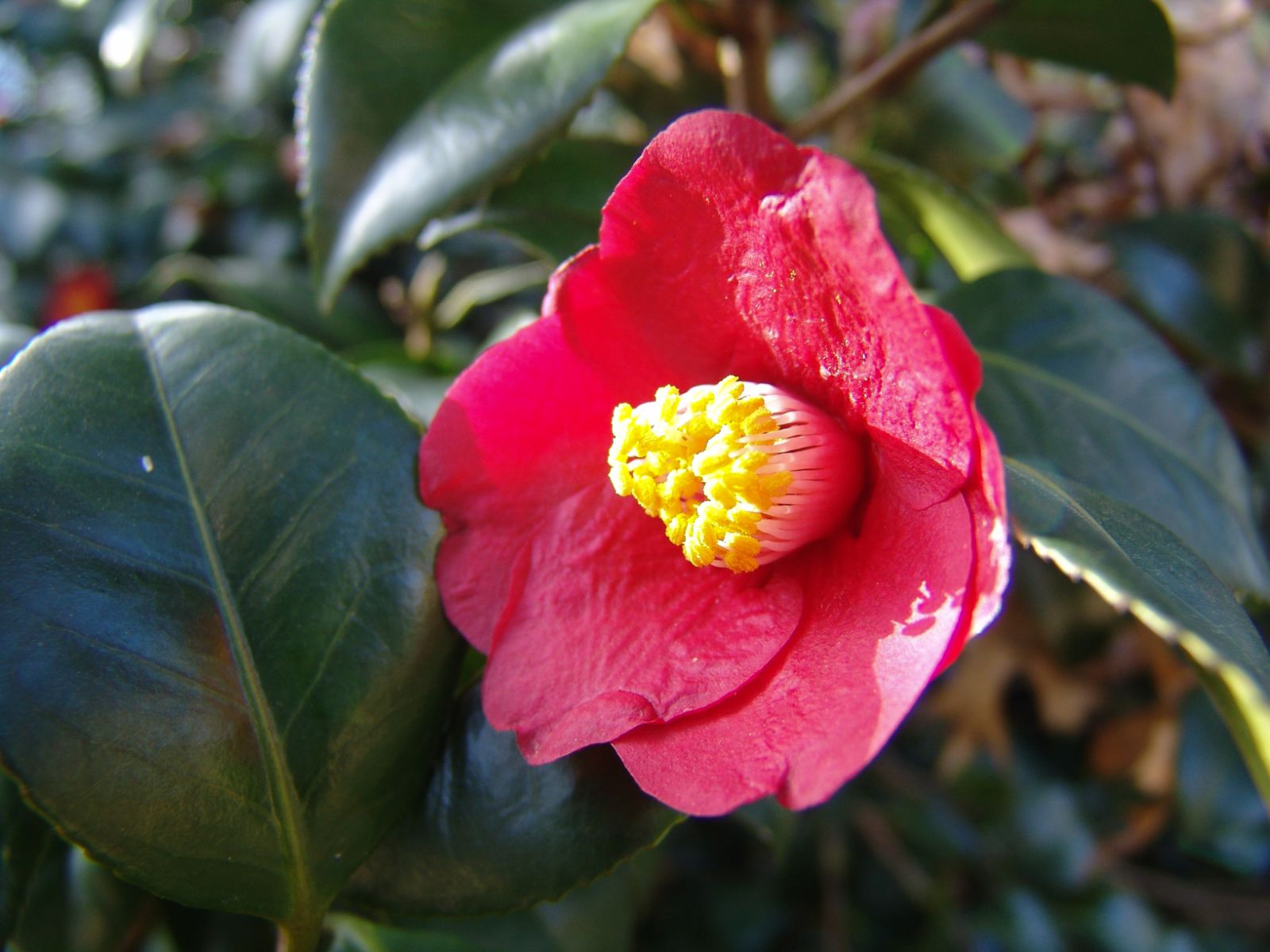
Sat 2/28/26 ~ Restorative Yoga class on Saturdays (and as we may live to 150 and well beyond:)?
Dear Dick (Robb MD, possibly posthumously, also a professor in Harvard Medical School), UU Chris Michaels, Annie, Alden, Donna, George and Maitreyi (both professors in Harvard Medical School too), Ma/Janie, Peter (Norvig AI), Yogis, All,Yoga greetings! A little restorative Yoga exploratoration tomorrow, Sat Feb 28, 2026 at around 8 am PT, 11 am ET 8:30 pm India time and in your zone ... Seeking to explore inside meditatively ~AExplore from this with Angela for 5 minutes or so at first -BAnd then explore some of this same video seating in easy cross-legged pose, or half-lotus, or especially sitting on a chair, for a few minutes -(adapting the video for sitting up?)CI found thisYoga tree of 8 limb Yoga great in Pinterest ... and with its allusions to genetics even, implied -A way to explore Yoga philosophy in many ways ~DAnd then another 5 minutes of so with a kind of introduction toPranayama - breathing explorations Yogically with Angela too -EAnd I found this book new Yoga book for me recently, and actually met one of its authors, Marlynn, whom I appreciated a lot, in a Data & Society webinar from near DC, yesterday morning, Th 2/26/26 -The #HarvardMedSch #GuideToYoga: 8 Weeks to Strength, Awareness, & Flexibility by #MarlynnWeiMDJD, & #JamesEGrovesMD, 2017.The #HarvardMedSch #GuideToYoga: 8 Weeks to Strength, Awareness, & Flexibilityby #MarlynnWeiMDJD, & #JamesEGrovesMD, 2017.Introduction to yoga: the chair sequenceModified Sun Salutation#HarvardHealthPubs #YogaWUaS: https://wiki.worlduniversityandschool.org/ wiki/Subjects ~ ANDhttps://www.linkedin.com/posts/scott-macleod-4691a011a_ harvardmedsch-guidetoyoga- marlynnweimdjd-activity- 7432884780775456768-ZR81
https://www.linkedin.com/posts/scottgkmacleod_ harvardmedsch-guidetoyoga- marlynnweimdjd-activity- 7432885023135125505-IkxR
https://www.linkedin.com/posts/world-university-and- school_subjects-world- university-and-school-wiki- activity-7432884248946278400- mZ4e FAnd Dick and Chris, and all, check out and do the first Harvard Yoga pose chair Yoga video -GAnd further, this Harvard Yoga pose might interest people who want to eventually try Sun SalutationModified Sun SalutationANDHAnd as we may live to 150 and well beyond:),I came to wonder further how we and scientists could Yogically even study or explore our cells relating to the Yoga poses and meditations we do and even the cells in our brains.And when Stanford Law and Bioethics' professor Hank Greely posted the following this morning, I asked the following too -how else is it possible to study brain cells & neuron cells w #brainwaveHeadsets, & in their cells, through the cranium, besides by EEG & MRI processes scientifically:https://g.co/gemini/share/1089acbe4a4a & how to add these data to an iterating # RealisticVirtualEarthForCells? #WUaScellBio ~ Retweeting -Long @undarkmag story on human neural organoids undark.org/2026/02/26/bra… Conflict of interest warning: it quotes me. A lot. Check out the Undarkmagazine article ...IHow to study the cells and neurons of the brain, and meditation and even loving bliss, and with headbands and brainwave headsets too, in my 2nd Harbin Hot Springs' ethnographic book project, while soaking in the Harbin warm pool or in our homes in a virtual Harbin hot springs, and with STEM research on the brain and body mind planned too - and re Yoga and asana and breathing and meditation?JAnd in these regards, here are some related research queries -
Which databases to draw from first @GeoChurch #PeterNorvig in dev #LLMmodels for "#CellularTransitions #AcrossHumanLifeStages" #RealisticVirtualEarth #RVEforExtremeLongevity #RVEforCells in our #PhysicalDigital #AvatarAgentElectronicHealthRec ords (& re
https://scott-macleod.blogspot.com/2026/02/kokio- keokeo-or-hawaiian-white- hibiscus.html ?)
https://x.com/Q_YogaMacFlower/status/2025267685572182468
https://x.com/WorldUnivAndSch/status/2025267346122985906 AND again -KHow to dev databases & #LLMmodels for "#CellularTransitions #AcrossHumanLifeStages" from #HarvardMedicalSchool @ embryo, 10, 20, - 90+ yo re dates @ #HarbinHotSprings' #GateHouse in #GStreetView w #GTimeSlider: 2007, 2012, 2024: https://goo.gl/maps/7gSsSTweRCBo9gf87 ? https://x.com/WorldUnivAndSch/status/2025750494682198267
https://x.com/WUaSPress/status/2025751095369404510 ANDLWhich databases to draw from first @GeoChurch #PeterNorvig in dev #LLMmodels for "#CellularTransitions #AcrossHumanLifeStages" #RealisticVirtualEarth #RVEforExtremeLongevity #RVEforCells in our #PhysicalDigital #AvatarAgentElectronicHealthRec ords (& re
https://scott-macleod.blogspot.com/2026/02/kokio- keokeo-or-hawaiian-white- hibiscus.html ?)
https://x.com/Q_YogaMacFlower/status/2025267685572182468
https://x.com/WorldUnivAndSch/status/2025267346122985906 MLooking forward to exploring some of this all together tomorrow as individuals on our own Yoga journeys ... and as we grow stronger, with awareness, and fitter too .. and as we may live to 150 years of age and well beyond. (And here's a fascinating rigorous clinical trial out of Brown University, with Brown Professor John Sedivy as the PI, I think, and other universities in New England studying slowing aging - https://scott-macleod.blogspot.com/2026/01/ asparagus-gharoensis.html). Know of other clinical trials in process in a related longevity vein, and with possible Yoga explorations too? Please let us know in this developing Yoga and Longevity conversation. Namaste, all the best, Happy Yoga explorations, warm regards,ScottOn Sun, Feb 22, 2026 at 9:51 AM Scott Yoga Mac Flower MacLeod <yogamacflower@gmail.com> wrote:Dear Dick (Robb MD, possibly posthumously, also a professor in Harvard Medical School) Annie, Alden, Donna, George and Maitreyi (both professors in Harvard Medical School), Ma/Janie, Byron, Peter (Norvig AI), Yogis, All,Yoga greetings from the Yoga van in the SF East Bay hills. A little further what I'm calling Jnana Yoga (thinking yoga, I'm calling this - re asking questions) (https://en.wikipedia.org/wiki/J%C3%B1%C4%81na_yoga) ... Could imaging of cell types for machine learning predictive purposes be construed as a kind of Yoga and re connecting with or joining with cells (brainstorming -wise)?
Ann Brown <annieb@gorge.net>, Jane MacLeod <jkbmacleod@icloud.com>, Alden F Briscoe <ABriscoe@brakeleybriscoe.com>, Donna Leet MD <donna.leet@ucsf.edu>, Ed Smyth <esmythmd@gmail.com>, Pin - Siddartha Mazumdar <sid.mazumdar@gmail.com>, Byron Hann <byronhann1@gmail.com>, Tom Hess <yogitom@comcast.net>, fracka@gmail.com, George Church <gchurch@genetics.med.harvard.edu>, Joan Kidder <kidderjoan@gmail.com>, Sandy MacLeod <sandysculpture@hotmail.com>, Shawn T Flaherty <pgh.shawn@yahoo.com>, Marti - Maitreyi Mazumdar <maitreyi.mazumdar@childrens.harvard.edu>, Elliott Thurston <esthurston@hotmail.com>, Peter Norvig <pnorvig@google.com>, robert@neffs.net, Timmothy & A Brown <timmothybrownbrown@gmail.com>, Abigail Sophie Burnyeat <ab2.smo@uhi.ac.uk>, Linda Argote <argote@andrew.cmu.edu>, Brad & Arlene MacLeod <macleod@usm.maine.edu>, Scott MacLeod <helianth@gmail.com>, Dick & Chris Michaels <christine.michaels4@gmail.com>, Kathryn Norgang <yebo.kathryn@gmail.com>, Lillian & Ruben Thomas <lillianbthomas57@gmail.com>, "Hugh M. Thomas" <h.thomas@miami.edu>, drvaria.gegindia@gmail.com, Linda Meacci Yoga <info@lindameacciyoga.com>, Marc Dupuis <marco.dupuis@gmail.com>, Matthew King <king.matthewt@gmail.com>, doortjevankooten@yahoo.com, bill.gates@gatesfoundation.org, Barbara van Schewick <schewick@stanford.edu>, Gerry & Mary Lou Kennedy <geraldkennedy1155@gmail.com>, John & Gretchen Kidder <jkidder@vtc.edu>, Joichi Ito <Joiito@gmail.com>, Scott MacLeod <sgkmacleod@worlduniversityandschool.org>, Nick Thompson <npt134@gmail.com>, Charles Nesson <nesson@gmail.com>, Stephon Owens <StephonO87@gmail.com>, Erica Robb Thaler <erica.thaler@uphs.upenn.edu>, Doug & Zoe Billman <dbillman@rcn.com>, "David S. Kong" <dkong@mit.edu>, Jillian Chelson Briscoe <yogapac@yahoo.com>, info@pranayogawellbeing.com, Dick Robb <rrobbmd@verizon.net>, Lucy Robb <lucylrobb@gmail.com>, Henry Robb <robb-h@comcast.net>, Cliona Robb <clionarobb@comcast.net>, John Sargent MD <jsargent@tuftsmedicalcenter.org>, Cherry Thun <c_thun@yahoo.com>, Eric Thun <eric.thun@sbs.ox.ac.uk>, Pete Thun <peter_thun@yahoo.com>, Chris Thun <chris_thun@yahoo.com>, Kirsten Thun Dunn <dunnvt@comcast.net>, MacLeod Mark and Roberta <mark_k_macleod@yahoo.com>, Scott MacLeod <yogamacflower@gmail.com>, Lydia Pintscher <lydia.pintscher@wikimedia.de>, "rappleberry@aya.yale.edu" <rappleberry@aya.yale.edu>
* * *
First exploration of Gemini AI to build a virtual Harbin Hot Springs for ethnographic book project # 2 - https://aistudio.google.com/ - and SO MUCH potential for all of us to co-make a #RealisticVirtualHarbin #HotSprings (w a #RealisticVirtualEarth) . . .
Google AI Studio Gemini AI Nano Banana
竹取亭円山 有馬温泉湯めぐりVR
https://youtu.be/X6YBetANDUI ... and viewable in a digital mask, and for Yoga meditation from our home bathtubs (and eventually for a 2nd Harbin Hot Springs' ethnographic study and creation of a Realistic Virtual Harbin Hot Springs for History - https://scott-macleod.
https://x.com/HarbinBook/
https://x.com/WorldUnivAndSch/
https://x.com/sgkmacleod/
https://x.com/WUaSPress/
https://x.com/TheOpenBand/
https://x.com/scottmacleod/
https://x.com/Q_YogaMacFlower/
Retweeting -
Sundar Pichai
@sundarpichai
Introducing Nano Banana 2, our best image model yet

It uses Gemini’s understanding of the world and is powered by real-time information and images from web search. That means it can better reflect real-world conditions in high-fidelity.
Check out "Window Seat," a demo using Nano Banana 2’s world understanding to generate more accurate views from any window in the world, pulling live local weather info with 2K/4K specs. The precision is mind blowing.
Rolling out today as the new default in the @Geminiapp, Search (across 141 countries), and Flow + available in preview via
@GoogleAIStudio and Vertex AI. Also available in Google
@Antigravity.
https://x.com/sundarpichai/
SO MUCH potential for all of us to co-make a #RealisticVirtualHarbin #HotSprings (w a #RealisticVirtualEarth) in #GStreetView w #GTimeSlider & even w new #WUaSscience & #SocialScience #EthnoWikiVirtualWorldGraphy theory #TextInTheSideBar &for 2nd #HarbinEthnography @HarbinBook ~ https://t.co/C45ePv5pPj
— HarbinBook (@HarbinBook) February 27, 2026
https://x.com/HarbinBook/
https://x.com/WorldUnivAndSch/
https://x.com/sgkmacleod/
https://x.com/WUaSPress/
https://x.com/TheOpenBand/
https://x.com/scottmacleod/
https://x.com/Q_YogaMacFlower/
Retweeting -
Sundar Pichai
@sundarpichai
Introducing Nano Banana 2, our best image model yet
It uses Gemini’s understanding of the world and is powered by real-time information and images from web search. That means it can better reflect real-world conditions in high-fidelity.
Check out "Window Seat," a demo using Nano Banana 2’s world understanding to generate more accurate views from any window in the world, pulling live local weather info with 2K/4K specs. The precision is mind blowing.
Rolling out today as the new default in the
@Geminiapp
, Search (across 141 countries), and Flow + available in preview via
@GoogleAIStudio
and Vertex AI. Also available in Google
@Antigravity.
Introducing Nano Banana 2, our best image model yet 🍌🍌
— Sundar Pichai (@sundarpichai) February 26, 2026
It uses Gemini’s understanding of the world and is powered by real-time information and images from web search. That means it can better reflect real-world conditions in high-fidelity.
Check out "Window Seat," a demo… pic.twitter.com/zhe8tC4jCL
https://x.com/sundarpichai/
*
You have no Paid Project. Please view the Projects Page to choose a Project and Upgrade. Go to Projects Page"
*
Onsen tiltable Youtube video information technology -
竹取亭円山 有馬温泉湯めぐりVR
VR180
Official - 竹取亭円山 - Taketoritei Maruyama
*
Camellia japonica: Sat 2/28/26 ~ Restorative Yoga class on Saturdays (and as we may live to 150 and well beyond:)?
*


https://oratio.jp/p_column/tsubakinoshima?type=c_en
https://www.treesandshrubsonline.org/articles/camellia/camellia-japonica/
https://en.wikipedia.org/wiki/Camellia_japonica
https://commons.wikimedia.org/wiki/Category:Camellia_japonica
...



 Posts
Posts