consciousness > reality re #Yoga
Asked #GeminiAIrePhilosophy where has #YogaPhilosophy as in #8LimbYogaPhilosophy gone regarding #WesternPhilosophy eg #MindBodyConsciousness 'Yoga Philosophy Meets #WesternAcademia' https://g.co/gemini/share/
Asked #GeminiAIrePhilosophy where has #YogaPhilosophy as in #8LimbYogaPhilosophy gone regarding #WesternPhilosophy eg #MindBodyConsciousness 'Yoga Philosophy Meets #WesternAcademia' https://g.co/gemini/share/
consciousness > reality re #Yoga
— QuakerYogaMacFlower (@Q_YogaMacFlower) February 3, 2026
Asked #GeminiAIrePhilosophy where has #YogaPhilosophy as in #8LimbYogaPhilosophy gone regarding #WesternPhilosophy eg #MindBodyConsciousness 'Yoga Philosophy Meets #WesternAcademia' https://t.co/AeznqGlXU7 See #YogaWUaS: https://t.co/mbAywKY2YY ~
https://x.com/Q_YogaMacFlower/
Just -
Yoga ideas#QuakerYogaMacFlower#DesiderataWUaShttps://t.co/T87aiIKdtn
— QuakerYogaMacFlower (@Q_YogaMacFlower) July 23, 2024
~#ToolifyAIWUaS #WUaSBliss https://t.co/JduoSZBunA
~#YogaNotationsWUaShttps://t.co/mbAywKXv9q
~#YogaWUaS @https://t.co/N8dTPJVDQ0#FriendlyQuakerWUaS 🥰#WUaSabolition in #RealisticVirtualEarth #WUaSYoga ~ pic.twitter.com/7qYN61Dkb5
Yoga philosophy, specifically the Eight Limbs (Ashtanga), originates from Patañjali’s Yoga Sutras. It provides a structured framework for living a purposeful, ethical, and disciplined life aimed at spiritual liberation.
The Eight Limbs
Yamas: Ethical restraints (non-violence, truthfulness).
Niyamas: Personal observances (purity, contentment).
Asana: Physical postures.
Pranayama: Breath control.
Pratyahara: Sensory withdrawal.
Dharana: Concentration.
Dhyana: Meditation.
Samadhi: Enlightenment or oneness.
Would you like me to break down the specific meanings of the Yamas and Niyamas?
Yoga Philosophy Meets Western Academia
where has yoga philosophy as in 8 limb yoga philosophy gone how has it developed regarding Western philosophy such as metaphysics epistemology mind-body Consciousness questions in recent decades academically
In recent decades, the Eight Limbs (Ashtanga) of Yoga have moved from the periphery of "Eastern mysticism" into a specialized academic field known as Yoga Studies.
1. Metaphysics: Redefining Dualism
Academics are using Yoga’s Sāṃkhya dualism—the split between Purusha (pure consciousness) and Prakṛti (matter/nature)—to challenge the traditional Western Cartesian dualism (mind vs. body).
The Shift: In Yoga, the "mind" (intellect, ego, and memory) is considered part of matter, not consciousness.
Development: Philosophers like David Chalmers and Bernardo Kastrup are referenced in comparative studies to explore whether consciousness is a "fundamental property" of the universe rather than an emergent property of the brain.
2. Epistemology: Validating Inner Experience
Yoga philosophy relies on three Pramanas (sources of knowledge): Perception, Inference, and Testimony.
Academic Trend: There is a growing focus on "First-Person Epistemology." Researchers are debating if meditative insights (Samadhi) can be considered "valid knowledge" alongside empirical scientific data.
Integration: Cognitive science now utilizes phenomenology to study how yogic "witness consciousness" (Sakshin) changes a person's objective understanding of reality.
3. Mind-Body & Consciousness
The Eight Limbs are increasingly analyzed as a psychosomatic technology rather than just a religious path.
Consciousness Studies: Yoga is used as a model to solve the "Hard Problem of Consciousness" by suggesting that awareness can exist without mental content.
Applied Philosophy: Ethics (Yamas/Niyamas) and breathwork (Pranayama) are studied as tools for "emotional regulation," bridging the gap between abstract metaphysics and clinical psychology.
Note: Modern scholarship (e.g., David Gordon White, James Mallinson) has highlighted that the "Eight Limbs" were actually marginal for centuries until being revived and "Westernized" in the late 19th century as a response to colonial science.
Would you like me to find specific academic journals or key contemporary philosophers who specialize in this comparative work?
https://yogaresearch.org/2023/
https://www.religion.ucsb.edu/
https://en.wikipedia.org/wiki/
white@religion.ucsb.edu
http://www.modernyogaresearch.
https://web.archive.org/web/
https://web.archive.org/web/
https://www.yogaanytime.com/
The Yoga Sutra of Patanjali: A Biography
David Gordon White
The rise, fall, and modern resurgence of an enigmatic book revered by yoga enthusiasts around the world
https://press.princeton.edu/
Yoga in Practice
Edited by David Gordon White
Primary texts in yoga, from ancient times to today
https://press.princeton.edu/
https://www.religion.ucsb.edu/
Yoga ideas

consciousness > reality re #Yoga
— QuakerYogaMacFlower (@Q_YogaMacFlower) February 3, 2026
Asked #GeminiAIrePhilosophy where has #YogaPhilosophy as in #8LimbYogaPhilosophy gone regarding #WesternPhilosophy eg #MindBodyConsciousness 'Yoga Philosophy Meets #WesternAcademia' https://t.co/AeznqGlXU7 See #YogaWUaS: https://t.co/mbAywKY2YY ~
* * *
Asked #GeminiAIrePhilosophy where has #YogaPhilosophy as in #8LimbYogaPhilosophy gone regarding #WesternPhilosophy eg #MindBodyConsciousness 'Yoga Philosophy Meets #WesternAcademia' https://g.
consciousness > reality re #Yoga
— QuakerYogaMacFlower (@Q_YogaMacFlower) February 3, 2026
Asked #GeminiAIrePhilosophy where has #YogaPhilosophy as in #8LimbYogaPhilosophy gone regarding #WesternPhilosophy eg #MindBodyConsciousness 'Yoga Philosophy Meets #WesternAcademia' https://t.co/AeznqGlXU7 See #YogaWUaS: https://t.co/mbAywKY2YY ~
https://x.com/Q_YogaMacFlower/
Yoga Philosophy Meets Western Academia
where has yoga philosophy as in 8 limb yoga philosophy gone how has it developed regarding Western philosophy such as metaphysics epistemology mind-body Consciousness questions in recent decades academically
In recent decades, the Eight Limbs (Ashtanga) of Yoga have moved from the periphery of "Eastern mysticism" into a specialized academic field known as Yoga Studies.
1. Metaphysics: Redefining Dualism
Academics are using Yoga’s Sāṃkhya dualism—the split between Purusha (pure consciousness) and Prakṛti (matter/nature)—to challenge the traditional Western Cartesian dualism (mind vs. body).
The Shift: In Yoga, the "mind" (intellect, ego, and memory) is considered part of matter, not consciousness.
Development: Philosophers like David Chalmers and Bernardo Kastrup are referenced in comparative studies to explore whether consciousness is a "fundamental property" of the universe rather than an emergent property of the brain.
2. Epistemology: Validating Inner Experience
Yoga philosophy relies on three Pramanas (sources of knowledge): Perception, Inference, and Testimony.
Academic Trend: There is a growing focus on "First-Person Epistemology." Researchers are debating if meditative insights (Samadhi) can be considered "valid knowledge" alongside empirical scientific data.
Integration: Cognitive science now utilizes phenomenology to study how yogic "witness consciousness" (Sakshin) changes a person's objective understanding of reality.
3. Mind-Body & Consciousness
The Eight Limbs are increasingly analyzed as a psychosomatic technology rather than just a religious path.
Consciousness Studies: Yoga is used as a model to solve the "Hard Problem of Consciousness" by suggesting that awareness can exist without mental content.
Applied Philosophy: Ethics (Yamas/Niyamas) and breathwork (Pranayama) are studied as tools for "emotional regulation," bridging the gap between abstract metaphysics and clinical psychology.
Note: Modern scholarship (e.g., David Gordon White, James Mallinson) has highlighted that the "Eight Limbs" were actually marginal for centuries until being revived and "Westernized" in the late 19th century as a response to colonial science.
Would you like me to find specific academic journals or key contemporary philosophers who specialize in this comparative work?
* * *
What is reality? - In ... western psychological (even psychoanalytic) concept of reality re language ? What is reality here?
- The Symbolic (Language/Law): This is the order of words, syntax, and social laws. Reality for humans constitutes itself through the Symbolic. As Lacan famously put it, "it is the world of words that creates the world of things". Language imposes structure on raw sensory experience.
- The Imaginary (Image/Self): This involves ego formation, identification, and illusion. We create a "reality" by organizing images (like in the mirror stage), but this is often based on misrecognition.
- The Real (The Void): This is not "reality." The Real is what lies outside language and representation, resisting symbolization entirely (e.g., trauma, raw need). It is that which cannot be put into words.
- Psychical Reality: Unconscious fantasies, wishes, and traumas often feel more "real" to the subject and have a greater impact on behavior than objective reality.
- Reality Testing: The ego's task is to distinguish between what is happening in the external world and what is produced by internal, unconscious fantasy.
- Signifiers: The unconscious functions through signifiers (words/sounds) rather than direct contact with objects.
- Speaking Subject: The subject is "spoken" by language, as they are born into a pre-existing system of language, laws, and cultural symbols.
- Empty Speech vs. Full Speech: In therapy, the subject often speaks a "fictitious" reality, but through analysis, they can reveal the "truth" that is usually hidden in the gaps, pauses, or symptoms of their speech.
- Word-presentations: Linked to conscious, secondary thought processes and reality testing.
- Thing-presentations:
Associated with unconscious, primary processes (preverbal). - The maturation of the ego involves bringing "thing-presentations" (images/drives) into connection with "word-presentations" (language).
--
* *
What is David Chalmers' theory of consciousness regarding 'reality' re his most recent book, and regarding virtual reality?
- Virtual Realism: Chalmers argues that virtual worlds are not "second-class" or illusions. If a virtual experience is sufficiently immersive and interactive, it is a form of reality.
- Definition of Real: He defines reality based on digital objects having causal powers, being real entities, and not being mere hallucinations.
- Simulation Hypothesis: He argues that it is possible we are living in a simulation created by a future civilization, and that this scenario is not a reason to doubt the existence of reality.
- Technophilosophy: The book uses technology (AI, VR) to explore classic philosophical questions about the mind, existence, and knowledge.
- Consciousness and Substrate Independence: He maintains that consciousness is substrate-independent, meaning it can emerge from digital, silicon-based systems just as it does from biological brains.
* *
Asked #GeminiAIrePhilosophy where has #YogaPhilosophy as in #8LimbYogaPhilosophy gone regarding #WesternPhilosophy eg #MindBodyConsciousness 'Yoga Philosophy Meets #WesternAcademia' https://g.co/gemini/share/
consciousness > reality re #Yoga
— QuakerYogaMacFlower (@Q_YogaMacFlower) February 3, 2026
Asked #GeminiAIrePhilosophy where has #YogaPhilosophy as in #8LimbYogaPhilosophy gone regarding #WesternPhilosophy eg #MindBodyConsciousness 'Yoga Philosophy Meets #WesternAcademia' https://t.co/AeznqGlXU7 See #YogaWUaS: https://t.co/mbAywKY2YY ~
https://x.com/Q_YogaMacFlower/
*




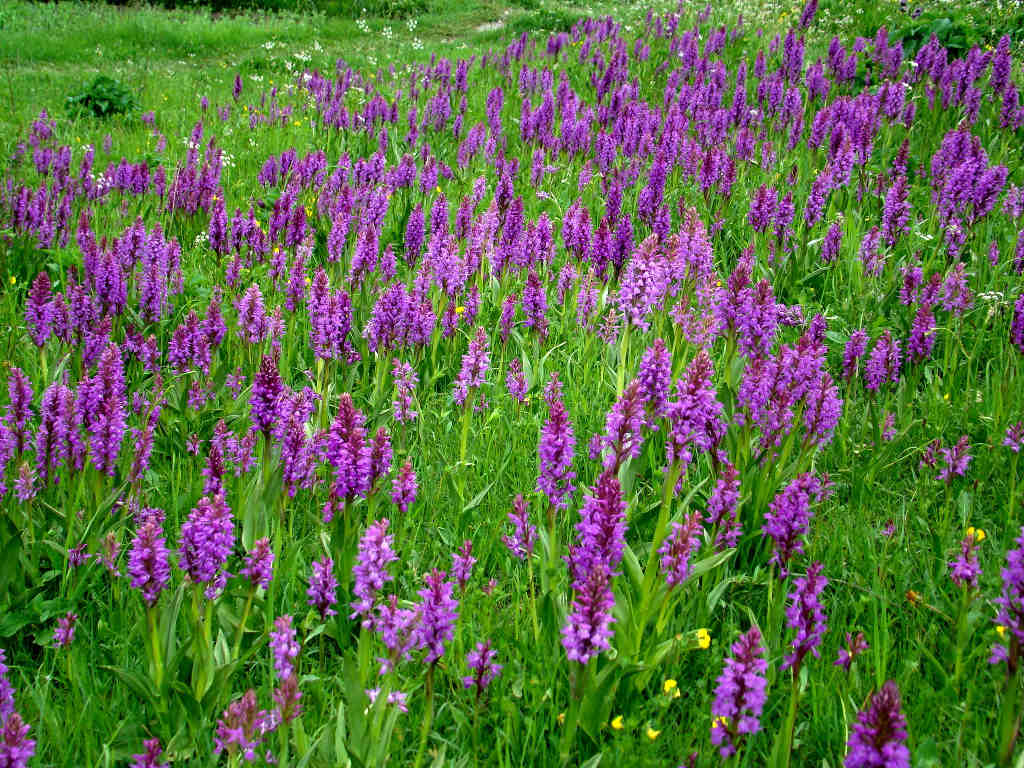
https://www.flowersofindia.net/catalog/slides/Himalayan%20Marsh%20Orchid.html

https://efloraofindia.com/efi/dactylorhiza-hatagirea/
https://greathimalayannationalpark.org/salam-panja/
https://en.wikipedia.org/wiki/Dactylorhiza_hatagirea
...




 Posts
Posts


No comments:
Post a Comment