Love in nature? Why is this video of two otters holding paws twice, like long loves, so easy to anthropomorphize? (These otters are actually in captivity, but they appear to be 'wild' otters - otters may be born and raised in captivity, but their engagement with humans is relatively brief historically, so perhaps they remain quite wild. We don't know, for example, if there was a couple near the camera modeling 'hand holding' here). Do otters in the wild hold paws regularly? What might be its evolutionary significance? If some kind of pairbonding (vis-a-vis John Money's "Concepts of Determinism," why this kind?). After looking on the internet, it seems to me that a more fruitful hypothesis might be that it has to do with a kind of troopbonding (again vis-a-vis Money). For example, "Sea otters often rest in groups called “rafts”. Rafting sea otters sometimes hold paws to stay together" (http://www.vanaqua.org/education/aquafacts/seaotters.html).
youtube.com/watch?v=epUk3T2Kfno
*
Humans think about such fascinating things, and then do (or write about) them, especially relative to other life forms on earth ...
Ecstasy - MDMA? Koellisch (Anton Köllisch) synthesized it around 1912, and someone thought to ingest it in the 1930s ... what a delight? Hmmmm ... (MDMA and LSD profoundly influenced the 1960s and early 70s).
Circuses?
Opera?
Music?
Thinking in India ...
The origins of life (Darwin, Crick and Watson)
The nature of the universe, the solar system and the cosmos (Hawkings and astrophysics)
An open, virtual World University and School - http://worlduniversity.wikia.com/wiki/World_University - which is editable, and potentially in all languages, nation states, subjects and at all levels.
These are pretty unique expressions of symbolic reality relative to all 160 species of higher primates, closest to us genetically. Is this all due originally to the development of the larynx (see Deacon's "The Symbolic Species: The Coevolution of the Brain and Language"), and our ability to eventually talk, exchange ideas and symbolize?
***
Back to the Harbin pools ...
Is Harbin an ongoing Rainbow Gathering?
(http://scott-macleod.blogspot.com/2009/10/otters-holding-paws-love-in-nature.html - October 11, 2009)
Sunday, October 11, 2009


Friday, October 9, 2009
Lake Malawi: A Graduate Student at Berkeley Says He Will Keep An Eye on Open, Malawian Teaching & Learning Digital Material at World Univ & Sch
A graduate student who studies in the UC Berkeley Anthropology department, and focuses his research on the African country of Malawi, said today he would keep an eye on the Malawi teaching and learning material at World University & School, and add links sometimes, as he finds them.
worlduniversity.wikia.com/wiki/Nation_States
This is great. It's the first time someone has said explicitly they would engage and help develop a specific nation state at World University & School. It's often people who are part of the Malawian community (identity is powerful) living in the United States and the West who generate most of this.
worlduniversity.wikia.com/wiki/Nation_States
This is great. It's the first time someone has said explicitly they would engage and help develop a specific nation state at World University & School. It's often people who are part of the Malawian community (identity is powerful) living in the United States and the West who generate most of this.
Thursday, October 8, 2009
Godwit: Theorizing Tourism and the Internet, UC Berkeley, Webcast
I'm giving a talk theorizing Tourism and the Internet at UC Berkeley on Friday, October 9, 200 at 4pm Pacific Time for the Tourism Studies Working Group -
tourismstudies.org/Events/Colloquia_2009-2010.htm.
I'll stream this to
justin.tv/scottmacleod.
*
The paper it's based on is here: scottmacleod.com/papers.htm (4th item from the bottom presently).
(http://scott-macleod.blogspot.com/2009/10/godwit-theorizing-tourism-and-internet.html - October 8, 2009).
tourismstudies.org/Events/Colloquia_2009-2010.htm.
I'll stream this to
justin.tv/scottmacleod.
*
The paper it's based on is here: scottmacleod.com/papers.htm (4th item from the bottom presently).
(http://scott-macleod.blogspot.com/2009/10/godwit-theorizing-tourism-and-internet.html - October 8, 2009).
Wednesday, October 7, 2009
Galapagos Tortoise: Quiet Morning, Roosters are Crowing, Trees All Around
quiet morning,
roosters are crowing,
trees all around
(http://scott-macleod.blogspot.com/2009/10/galapogos-tortoise-quiet-morning.html - October 7, 2009)
Tuesday, October 6, 2009
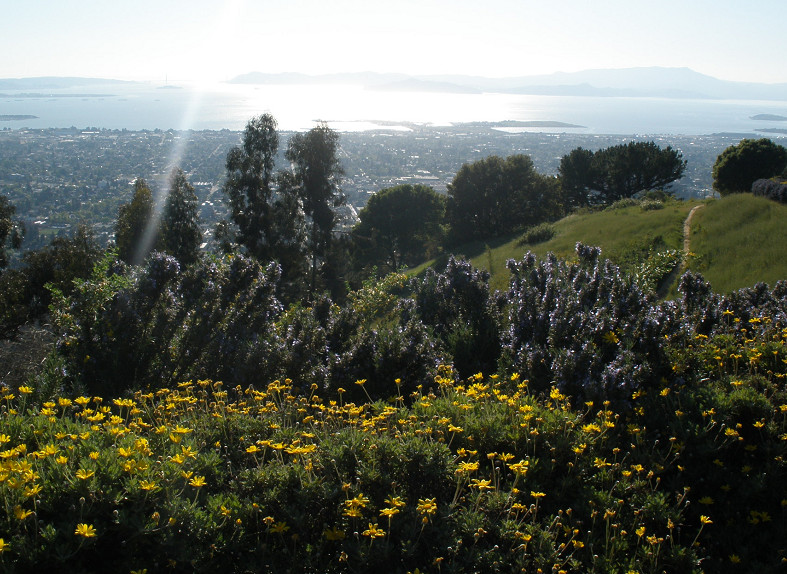
San Francisco Bay Area Flowers: Soundsuit, Inuit & Papua New Guinean Art, Beatle's George Harrison
San Francisco Bay Area
In the Golden Gate Park at the newly renovated de Young art museum, I saw an amazing unnamed (Soundsuit) artwork by Nick Cave in the Saxe room. It was the free day at the de Young. The building is lovely inside.
*
The Inuit art was also particularly beautiful.
**
The art from Papua New Guinea is extensive and impressive. Papua New Guinea has an amazing 700 languages.
***
Here's George Harrison of the Beatles
George Harrison of the Beatles talks with Dick Cavett about music, the Beatles, meditation, drugs, England, John Lennon, Indian music ... The Beatles are great ... a time capsule of and seeds for the anthropology of counterculture and information technology?
(FULL) George Harrison on the Dick Cavett Show Part 1
https://youtu.be/Ee8gRroI6fo
See, too:
https://youtu.be/3RoVDLMfkU0
(http://scott-macleod.blogspot.com/2009/10/san-francisco-bay-area-flowers.html - October 6, 2009)
Monday, October 5, 2009
Bee Keepers: When Berkeley Professors Become Informants, Ideas Since at Least the 1960s
When Berkeley professors become informants in the anthropology of counterculture and information technology, it's probably happened before in similar other contexts, too. But professors at Berkeley and Stanford who were around in the 60s and 70s would make fascinating informants for that time.
They'd probably try to empower their anthropologist student interlocutors :)
*
At Harbin Hot Springs more than a month ago, I saw the following Bumper stickers:
Restore Hetch Hetchy
Give Bees a Chance
Free Tibet
These are ideas that were around in the 1960s, as well, I think.
**
Bee people - people interested in bees are fascinating. Somehow the 'culture' of bees affects how they think and behave. And this unique bee-keeping culture has been around much longer than the 1960s.
The 1960s delved into all kinds of fascinating sub-cultures, like bee-keeping. See, for example, the at least 10 volumes of the Foxfire books on Appalachia on topics like:
Foxfire 1: Hog Dressing, Log Cabin Building, Mountain Crafts and Foods, Planting by the Signs, Snake Lore, Hunting Tales, Faith Healing, Moonshining
Foxfire 2: Ghost Stories, Spring Wild Plant Foods, Spinning and Weaving, Midwifing, Burial Customs, Corn Shuckin's, Wagon Making and More Affairs of Plain Living
by Eliot Wigginton
Here's a limited Preview from Foxfire 4 in Google Books:
books.google.com/books?id=l1Y9FaKmGuwC&pg=PR9&dq=foxfire+books&ei=ID7NSqztHYnokASom9W9Bw#v=onepage&q=foxfire%20books&f=false

(http://scott-macleod.blogspot.com/2009/10/bee-keepers-when-berkeley-professors.html - October 5, 2009)
Sunday, October 4, 2009
Kentucky Bluegrass: Daja Vu, Too - in the Golden Gate Park today, Communitas There, With Awareness
Daja vu, too ... in the Golden Gate Park today, at the "Hardly Strictly Bluegrass" Music Festival (and happening).
The 1960s and 70s - countercultural influences, if you will - are somewhat close to the surface in the San Francisco Bay Area. And today's festival was ongoing seeding of the same. It took place in the park in 3 or 4 venues at around 27th Avenue, and a lot of folks came to this festival. People milled around on this cool autumn day, some dancing, some eating, and all listening. The festival was free. (Thanks to the organizers and funders).
*
I look for times when people find 'flow: the psychology of optimal experience' experiences, and I saw more people happy, relaxed and dancing than I do generally, - mostly from the music in the air.
**
When the music was really happening for me, I explored explicitly freeing my mind in the park observing and engaging mentally the tent peaks, the trees, the moving people, individuals with interesting pieces of clothing, faces, dancing ... all to come richly into the moment, and open to transforming my perceptions and thinking into kinds of 'art.'
It's particularly the high notes - the high, male tenor voices, and the fine, high-noted picking - that get me kind of high, and which freedoms I can begin to cultivate especially in relation to a lovely surrounding environment, with observation.
While there was good bluegrass - Ralph Stanley and his band, for one - and I heard the names Scruggs and Randall and other famous names, but perhaps of relatives, there was also a fair amount of rock and roll.
***
This festival didn't take place in Second Life, so people around the world couldn't participate, but it did draw out alternative and music-loving San Francisco. (It would have been easy to produce in Second Life).
****
The political messages I heard in the music were about forgiving debt to African countries, and universal health care in the U.S, in an English accent by one performer.
*****
There were a lot of booths selling food, and the smells in the air were great.
******
A San Francisco bicycle collective offered bicycle parking en masse. This was an instance of progressive, sensible thinking and planning. Some folks at this festival had long hair and dreads, but not everyone by any means.
*******
This festival shaped a kind of communitas in a S.F. urban park setting which was great.
********
Thinking about a friend I met the evening before with whom I found a connection ... :)
*********
Relaxation response... :)
(http://scott-macleod.blogspot.com/2009/10/kentucky-bluegrass-daja-vu-too-in.html - October 4, 2009)
The 1960s and 70s - countercultural influences, if you will - are somewhat close to the surface in the San Francisco Bay Area. And today's festival was ongoing seeding of the same. It took place in the park in 3 or 4 venues at around 27th Avenue, and a lot of folks came to this festival. People milled around on this cool autumn day, some dancing, some eating, and all listening. The festival was free. (Thanks to the organizers and funders).
*
I look for times when people find 'flow: the psychology of optimal experience' experiences, and I saw more people happy, relaxed and dancing than I do generally, - mostly from the music in the air.
**
When the music was really happening for me, I explored explicitly freeing my mind in the park observing and engaging mentally the tent peaks, the trees, the moving people, individuals with interesting pieces of clothing, faces, dancing ... all to come richly into the moment, and open to transforming my perceptions and thinking into kinds of 'art.'
It's particularly the high notes - the high, male tenor voices, and the fine, high-noted picking - that get me kind of high, and which freedoms I can begin to cultivate especially in relation to a lovely surrounding environment, with observation.
While there was good bluegrass - Ralph Stanley and his band, for one - and I heard the names Scruggs and Randall and other famous names, but perhaps of relatives, there was also a fair amount of rock and roll.
***
This festival didn't take place in Second Life, so people around the world couldn't participate, but it did draw out alternative and music-loving San Francisco. (It would have been easy to produce in Second Life).
****
The political messages I heard in the music were about forgiving debt to African countries, and universal health care in the U.S, in an English accent by one performer.
*****
There were a lot of booths selling food, and the smells in the air were great.
******
A San Francisco bicycle collective offered bicycle parking en masse. This was an instance of progressive, sensible thinking and planning. Some folks at this festival had long hair and dreads, but not everyone by any means.
*******
This festival shaped a kind of communitas in a S.F. urban park setting which was great.
********
Thinking about a friend I met the evening before with whom I found a connection ... :)
*********
Relaxation response... :)
(http://scott-macleod.blogspot.com/2009/10/kentucky-bluegrass-daja-vu-too-in.html - October 4, 2009)
Saturday, October 3, 2009
Koala Mother with Baby in Pouch: Koalas in the Trees are Free
Koalities
Koalas in the trees are free
in their ease in natural Costa Rica.
Tree-hugging and loving,
their softness and slowness
show nature's contentment
via natural selection.
Why are they so adorable?
How can I hold one so that
its ease spreads to its cuddler?
Koala, please invite me into your trees,
so that with ease we might,
as honey bees,
co-create your sweetness together.
Mmmm ... and the relaxation response, too.
Then, Koala, I be you, and we be we.
"Drop not thy babies from the tree,"
evolutionarily, ~ so we come down,
this alone to do, and then up we go,
and we be free, with our babies.
We like slow, with young in belly pouch,
especially in the trees.
I want to be with my Koalas,
whose metabolisms are slow,
and who are free in their trees
in my beautiful Costa Rica.
Koala, I love you ~ let's we be we,
and be free.
*
I'm interested in suggestions of lines for this poem from friends. :)

(http://scott-macleod.blogspot.com/2009/10/koala-mother-with-baby-in-pouch-koalas.html - October 3, 2009)
Friday, October 2, 2009
Costa Rican Koala: Loving Bliss Practice Idea, And Practices to Elicit Loving Bliss
In pursuing thinking about love, love in some of its best senses, and loving bliss in this blog, I find myself not often building upon the ideas that one can practice loving bliss. I wrote about this awhile ago in this letter ~ scottmacleod.com/LovingBlissPractices.htm, with its interesting resources, as well. But I haven't written too much about critical inquiry processes vis-a-vis loving bliss - asking questions about it - as significant as practice. And inquiry about loving bliss doesn't necessarily bring me to the experience of loving bliss itself, but thinking about eliciting loving bliss is a kind of engaged 'flow: the psychology of optimal experience' experience.
So to get to the neurophysiology of loving bliss, practice it. Here are some practices:
Loving practices
Practices to Elicit Loving Bliss
A basis for loving bliss (the following open the way to bliss for me, - explore innovative ways for yourself):
relaxing into the relaxation response (Benson 1972)
releasing and breathing practices (especially delicious ones)
{a healthy bodymind also seems important, - walking, yoga asana, swimming, dancing, a good diet, and flax seed omega-3 fatty acids taken with food, and a daily multivitamin?}
For bliss {each of the following can be a rich kind of flow experience, - especially when cultivating bliss; in some ways these are 'technologies' for bliss}:
listening to music (iTunes)
* arias in Mozart's "Magic Flute," especially the Queen of the Night's
o "O zittre nicht" aria (on youtube.com)
o "Der Holle Rache" (on rhapsody.com)
* Yo-Yo Ma playing J.S. Bach's "Cello Suites" (here's the Prelude)
* The Belleville A Cappella Choir, recorded by ethnomusicologist Alan Lomax (on pandora.com)
dancing (especially New England contra-dance for me)
singing & improvisational, play singing
making music
playing and working with kids
eating extraordinary food
making love, intimacy, sexuality & coitus
conversing (mind-expanding & receptive, intellectual conversation)
engaging great music, poetry, literature, art, etc.
enjoying incredible nature, natural areas, wildflowers, flowers ..., - richly
traveling
opening to bliss while moving back and forth between Harbin Hot Springs' hot (113 F / 60 C) & cold (60 F / 15 C) pools
shaping a virtual world to explore practices of loving bliss?
smiling ~ beaming :))
~ What helps you elicit bliss naturally?
For love:
reciprocated, ongoing affection for another, a friend
exploring love in art, music, and ideas with a dear friend, and/or friends
nameless, loving understandings between friends who love one another
receiving and giving warmth and love with a radiant friend
Practice loving bliss:
consider using language that works for you as a kind of art or technology to bring these qualities of bliss to your bodymind in a variety of ways
> learn loving bliss through practice
{guidelines for practicing loving bliss vis-à-vis practicing a musical instrument}
> rekindle a lovingly blissful memory in your bodymind, and let this flower
> explore loving bliss {with friends} ~ dream it ~ write about it~ focus on it ~ create it :)
scottmacleod.com/LovingBlissPractices.htm
(http://scott-macleod.blogspot.com/2009/10/building-upon-costa-rican-koala-loving.html - October 2, 2009)
So to get to the neurophysiology of loving bliss, practice it. Here are some practices:
Loving practices
Practices to Elicit Loving Bliss
A basis for loving bliss (the following open the way to bliss for me, - explore innovative ways for yourself):
relaxing into the relaxation response (Benson 1972)
releasing and breathing practices (especially delicious ones)
{a healthy bodymind also seems important, - walking, yoga asana, swimming, dancing, a good diet, and flax seed omega-3 fatty acids taken with food, and a daily multivitamin?}
For bliss {each of the following can be a rich kind of flow experience, - especially when cultivating bliss; in some ways these are 'technologies' for bliss}:
listening to music (iTunes)
* arias in Mozart's "Magic Flute," especially the Queen of the Night's
o "O zittre nicht" aria (on youtube.com)
o "Der Holle Rache" (on rhapsody.com)
* Yo-Yo Ma playing J.S. Bach's "Cello Suites" (here's the Prelude)
* The Belleville A Cappella Choir, recorded by ethnomusicologist Alan Lomax (on pandora.com)
dancing (especially New England contra-dance for me)
singing & improvisational, play singing
making music
playing and working with kids
eating extraordinary food
making love, intimacy, sexuality & coitus
conversing (mind-expanding & receptive, intellectual conversation)
engaging great music, poetry, literature, art, etc.
enjoying incredible nature, natural areas, wildflowers, flowers ..., - richly
traveling
opening to bliss while moving back and forth between Harbin Hot Springs' hot (113 F / 60 C) & cold (60 F / 15 C) pools
shaping a virtual world to explore practices of loving bliss?
smiling ~ beaming :))
~ What helps you elicit bliss naturally?
For love:
reciprocated, ongoing affection for another, a friend
exploring love in art, music, and ideas with a dear friend, and/or friends
nameless, loving understandings between friends who love one another
receiving and giving warmth and love with a radiant friend
Practice loving bliss:
consider using language that works for you as a kind of art or technology to bring these qualities of bliss to your bodymind in a variety of ways
> learn loving bliss through practice
{guidelines for practicing loving bliss vis-à-vis practicing a musical instrument}
> rekindle a lovingly blissful memory in your bodymind, and let this flower
> explore loving bliss {with friends} ~ dream it ~ write about it~ focus on it ~ create it :)
scottmacleod.com/LovingBlissPractices.htm
(http://scott-macleod.blogspot.com/2009/10/building-upon-costa-rican-koala-loving.html - October 2, 2009)
Thursday, October 1, 2009
Orchid Calypso Borealis: Harbin is Just Like the Outside World
"Harbin is just like the outside world," someone said as I arrived there last night.
After setting my sleeping gear up on a platform in a beautiful area among oaks, and near a dry, seasonal river bed, I proceeded along the village path to the pool area.
The heart pool was closed for cleaning, and so I went into the warm pool ... home again. The easing that occurs when one enters a beautiful body of water at about 98 degrees Fahrenheit is hard to replicate elsewhere. (Living in cities - and sometimes among people? - seems to bring people into mental patterns that are not very easing, and it's only coming to the Harbin pool area, as well as thinking about releasing {and focusing on it - http://relaxationresponse.org/steps}, that what release is, experientially, becomes obvious.
*
It was windy in the middle of the night. I wondered whether my sleeping bag's bag had blown away.
**
(I wonder if John Muir visited Harbin in the late nineteenth or early twentieth century, - so I googled this but didn't find anything about it. The information I found did remind me that where I live, in Canyon, California, is quite close to where Muir lived in Martinez in the East Bay, starting around 1880).
The Orchid Calypso Borealis was of John Muir's favorite flowers.
...
I saw an old friend in the restaurant who excels extraordinarily with ideas. He articulates a wide-ranging reading, with a kind of synthesis which, when, in conversation, heightens the interchange and friendship. He's also very generous with his understanding and his remarkable insights, and able to converse in multiple modes of thinking, from science to math, to the highest aspirations of inventive and psycho-inspirational, spiritual thinking.
****
Later I saw another friend close to the warm pool, who also adventures in life - into realms of thinking and freedom that are wondrous.
Seeing and talking with him reminded me of this 4 part round I love, which ends with just a hint of irony. So I sang it to him briefly, sitting on the bench outside the dressing room, and very close to the Harbin warm pool.
Take the time to sit in silence,
Take the time with a friend,
Take the time to sit in silence,
with a friend, with a friend, with a friend.
Oh a sometimes no words are spoken,
I just look into your eyes,
so deep into your eyes.
Sometimes no words are spoken,
I just look into your eyes.
Love, Love, Love, Love ...
Love, Love, ...
Love, Love, Love, Love, ...
Today, just for today,
Today I will believe
that those I love love me
*****
Both of these friends were influenced by the freedom-thinking (and freedom-seeking) movements of the 1960s and 70s, and, in many ways, aspire to more freedom.
******
And Harbin seems to me, too, to have a wholeness - a kind of inside - relative to the the rest of the world, and modernity.

(http://scott-macleod.blogspot.com/2009/10/orchid-calypso-borealis-harbin-is-just.html - Oct 1, 2009)
Subscribe to:
Posts (Atom)

 Posts
Posts