Looks like a great molecular & cellular track record, with data sets & #ModelOrganisms, with which to pursue #XPrize - https://raolab.jhmi.edu/
Celebrating 30 years at Johns Hopkins!
The Rao Lab opened its newly refurbished doors in Jan, 1993 in the historic Wood Basic Science building of the Physiology Department at Johns Hopkins School of Medicine. At the time, the internet was in its infancy and we sent messages by FAX. In our first few years at Hopkins, we used yeast as a model organism and discovered several new families of ion transporters, establishing multiple independent research directions de novo which we are still busy pursuing today!
Over the years, our experimental reach has become diverse and multidisciplinary, harnessing the range of available models: (i) bacterial orthologs for structural insights, (ii) yeast for data mining and functional screening of human variants, (iii) 3D organoids and polarized epithelia for cell biological and transport studies and (iv) mouse models and patient databases for pathophysiological insight. Currently, we apply these approaches broadly to understand the cellular and molecular basis of cancer, disorders of the skin, and neurological and metabolic disease.
https://x.com/WorldUnivAndSch/
Developing a conceptual "Realistic Virtual Earth for Aging Reversal" structured like Google Street View with a time slider is an incredibly ambitious and fascinating framework. To bridge the gap between high-level digital mapping and rigorous, peer-reviewed molecular biology—like the transport and cell biology research conducted at Rajini Rao's lab at Johns Hopkins or George Church's genomics work at Harvard—the project needs to translate macroscopic "geography" into microscopic biological landscapes.
To make this platform scientifically valid, World University and School (WUaS) could structure the architecture around Biological Time-Mapping. Instead of city streets, the user navigates cellular pathways, and the "Time Slider" manipulates underlying genetic, epigenetic, and metabolic variables across model organisms.
Here is a practical roadmap for designing this platform, starting with the simplest model system: C. elegans.
Phase 1: The Blueprint for C. elegans (The Pilot Organism)
The tiny transparent roundworm C. elegans is the ideal starting point because its entire cellular lineage is mapped (exactly 959 somatic cells in the adult hermaphrodite), and its lifespan is a manageable 2 to 3 weeks.
Mapping the Street View (The Connectome & Cellular Atlas):
Instead of physical roads, the coordinate system maps onto the worm's anatomical layout. "Street View" nodes allow a user to zoom into specific tissue systems (e.g., the gut, muscles, or its 302 neurons).
The Time Slider (The Epigenetic/Transcriptomic Clock):
Moving the slider from Day 1 to Day 20 would visually and quantitatively alter the cell. As the slider moves forward, the rendering shows cellular attrition—mitochondrial fragmentation, accumulation of lipofuscin (cellular waste), and wrinkling of the cuticle.
The "Aging Reversal" Toggle:
To scientifically prove aging reversal virtually, the platform must integrate known genetic interventions. For instance, if a user toggles the
daf-2gene mutation (which inhibits insulin/IGF-1 signaling) or inputs a caloric restriction parameter, the Time Slider’s trajectory changes in real time, showing a 100% extension in lifespan and prolonged cellular integrity.
To see how these variables interact in a simplified model, you can play with this interactive C. elegans aging simulator. Adjust parameters like environmental temperature, caloric intake, and genetic pathways to observe how they alter the biological timeline:
Phase 2: Scaling Across 10 Model Species
Once the framework functions for C. elegans, the virtual environment can expand across the phylogenetic tree. To bridge the gap from single cells to complex human pathophysiology, WUaS could integrate these 10 distinct model organisms:
| Phylum / Class | Model Organism | Scientific Value to Aging Reversal |
| Fungi | Saccharomyces cerevisiae (Yeast) | Perfect for high-throughput screening of ion transporters and basic cellular health, mirroring the foundation of the Rao Lab. |
| Nematoda | C. elegans (Roundworm) | Completely mapped cellular lineage and rapid lifespan testing. |
| Insecta | Drosophila melanogaster (Fruit fly) | Highly complex organ systems (heart, gut) and complex behaviors controlled by conserved aging pathways. |
| Actinopterygii | Danio rerio (Zebrafish) | Incredible regenerative capabilities; provides insights into tissue regeneration and spinal cord repair. |
| Killifish | Nothobranchius furzeri | The shortest-lived vertebrate model, ideal for rapidly testing systemic vertebrate rejuvenation interventions. |
| Mammalia (Rodent) | Mus musculus (Mouse) | The gold standard for preclinical translation, sharing mammalian tissue pathology and immune complexity with humans. |
| Mammalia (Feline) | Felis catus (Domestic Cat) | Excellent model for natural age-related metabolic conditions and cognitive decline similar to humans. |
| Mammalia (Chiroptera) | Myotis lucifugus (Little Brown Bat) | Extreme longevity relative to body size; carries unique viral tolerance and DNA repair mechanisms. |
| Mammalia (Rodent) | Heterocephalus glaber (Naked Mole-Rat) | Negligible senescence; naturally resistant to cancer and protein degradation throughout a 30-year lifespan. |
| Mammalia (Primate) | Macaca mulatta (Rhesus Macaque) | The closest bridge to human clinical trials for tracking complex neurological, metabolic, and cardiovascular aging clocks. |
Phase 3: Scientific Validation & Multi-Omic Integration
To transform this from a simple visualization into a platform that can genuinely scientifically prove cellular rejuvenation, the engine must ingest real-world lab data:
The Rao Lab Angle (Ion Transporters & Proteostasis): Reversing aging requires maintaining cellular pH and clear waste management. The platform can integrate multi-omic databases tracking how specific ion transporter families (like NHE or SPCA pumps studied at Johns Hopkins) prevent the toxic intracellular calcium spikes or protein misfolding common in neurodegenerative aging.
The Church Lab Angle (Epigenetic Reprogramming): The Time Slider should track the epigenetic landscape (like the Horvath Clock). When a virtual intervention applies Yamanaka factors ($Oct4, Sox2, Klf4, c-Myc$), the timeline calculates the reset of DNA methylation patterns back to a youthful state without erasing cell identity.
Crowdsourced Open Science: Operating under an open-source university framework like WUaS allows global labs to upload their transcriptomic and proteomic datasets directly. If a lab discovers a novel small molecule that extends mouse lifespan, uploading the dataset updates the "Virtual Earth" slider for that species automatically.
To better understand the paradigm shift behind this type of research—moving from viewing aging as irreversible damage to treating it as a dynamic "software" or epigenetic problem that can be reset—you can watch this quick overview:
The Tech Stack for WUaS
To build this, the platform could overlay web-based spatial engines (like Three.js or open-source map frameworks like Leaflet/MapLibre) with deep learning frameworks. Instead of loading geographic tiles, the engine streams multi-dimensional biological data tiles (epigenetics, proteomics, histology) smoothly as the user scrolls deeper into the virtual organism.
By grounding the user interface in the familiar mechanics of a street map and a timeline, it makes the dense, multi-omic layers of longevity science accessible to researchers, educators, and students worldwide.
https://x.com/WorldUnivAndSch/
https://x.com/scottmacleod/
https://x.com/sgkmacleod/
https://x.com/Q_YogaMacFlower/
https://x.com/TheOpenBand/
HarbinBook
@HarbinBook
Looks like a great molecular & cellular track record, with data sets & #ModelOrganisms, with which to pursue #XPrize - https://raolab.jhmi.edu
@madamscientist
#SiddharthaMazumdarHHS How might
@WorldUnivAndSch
collaborate & with #
https://x.com/HarbinBook/
https://x.com/TheOpenBand/
https://x.com/sgkmacleod/
https://x.com/WUaSPress/
https://x.com/scottmacleod/
https://x.com/WorldUnivAndSch/
HarbinBook
@HarbinBook
Looks like a great molecular & cellular track record, with data sets & #ModelOrganisms, with which to pursue #XPrize - https://raolab.jhmi.edu
@madamscientist
#SiddharthaMazumdarHHS How might
@WorldUnivAndSch
collaborate & with #
https://x.com/HarbinBook/
| from: | Scott MacLeod sgkmacleod@worlduniversityandschool.org | ||
| to: |
| ||
| bcc: |
| ||
| date: | Jun 12, 2026, 11:42 AM | ||
| subject: | Re: [Medianthro] Digital Ethnography short course | ||
| mailed-by: | worlduniversityandschool.org |
Scott
Scott GK MacLeod
https://scott-macleod.
Giant Anteater: Looks like a great molecular & cellular track record, with data sets & #ModelOrganisms, with which to pursue #XPrize ... blog post
| from: | Victoria Nash victoria.nash@oii.ox.ac.uk | ||
| to: |
|
Associate Professor & Senior Policy Fellow
Oxford Internet Institute
University of Oxford
https://www.oii.ox.ac.uk
Do note that as I juggle work and family life I may resort to working on evenings or weekends. Please don’t feel any pressure to respond out of usual working hours
* * *
ao/Re: Ask Traffic Form - Submission Number: 19209
Scott MacLeod sgkmacleod@worlduniversityandschool.org | |||
| to: |
| ||
| date: | Jun 12, 2026, 12:00 PM | ||
| subject: | Fwd: ao/Re: Ask Traffic Form - Submission Number: 19209 | ||
| mailed-by: | worlduniversityandschool.org |
From: Ask Traffic <AskTraffic@alameda.courts.ca.
Date: Thu, Jun 11, 2026 at 4:21 PM
Subject: ao/Re: Ask Traffic Form - Submission Number: 19209
To: sgkmacleod@
Sent: Wednesday, June 10, 2026 1:39 PM
To: Ask Traffic <AskTraffic@alameda.courts.ca.
Subject: Ask Traffic Form - Submission Number: 19209
Submitted on Wed, 06/10/2026 - 13:39
Submission Number: 19209
Submitted by: Gordon MacLeod,
Submitted values are:
NameGordon MacLeod
Driver's License Number
B3841088
Email Address
sgkmacleod@
Phone Number
4124780116
Question or Comment
Greetings. I sent in a $233 payment on a check to the Alameda Superior Court via the USPS yesterday Tu June 9, 2026 for a traffic ticket citation # 7NFF0004V. What do I need to do next please? Thanks, (Scott) Gordon K MacLeod

*
_Kakadu_2.jpg/960px-Comb-crested_jacana_(Irediparra_gallinacea_novaehollandiae)_Kakadu_2.jpg)
_chick_Kakadu.jpg/1920px-Comb-crested_jacana_(Irediparra_gallinacea_novaehollandiae)_chick_Kakadu.jpg)
_juvenile_Kakadu.jpg/1920px-Comb-crested_jacana_(Irediparra_gallinacea_novaehollandiae)_juvenile_Kakadu.jpg)
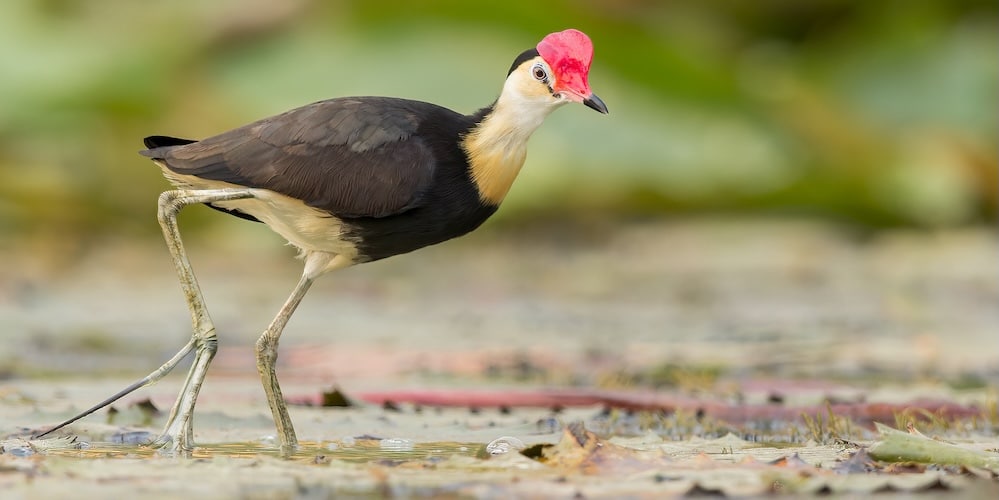
_Fogg_Dam_2.jpg/1920px-Comb-crested_jacana_(Irediparra_gallinacea_novaehollandiae)_Fogg_Dam_2.jpg)

https://en.wikipedia.org/wiki/Comb-crested_jacana
https://commons.wikimedia.org/wiki/Category:Irediparra_gallinacea
https://species.wikimedia.org/wiki/Irediparra_gallinacea
https://en.wikipedia.org/wiki/Jacanidae
....



 Posts
Posts


No comments:
Post a Comment