Monday, October 18, 2010

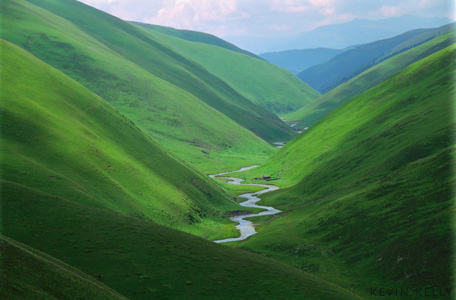
Tibet valley: Digital communication technologies give one the ability to shape oneself, Cyber hippy subjectivity?, And to shape virtual worlds


Harbin ethnography:


... The ability to use language – in actually creating virtual Harbin in OpenSim and Second Life, as well as communicating in this virtual Harbin - to create new forms of New Age, hippy 'spirituality,' where actual, physical, intimate, fluid, aqueous forms like Watsu (water shiatsu), dance, drumming, and even scripting and computer coding, can find enjoyable form, with new social interactivity, now digitally, and will allow Harbin consciousness to communicate itself further.

These digital communication technologies give one the ability not only to shape oneself – new forms of cyber-hippy subjectivity? – but also, concurrently, to shape virtual worlds, as well as communicate in them in multiple ways (e.g. text chat, by voice, by building things, and even rudimentarily with brain-computer devices). These expressions of agency, as I see it, which can be freeing, find novel expression in the milieu of both actual Harbin and virtual Harbin, in their emergence from the 1960s, where in, for example, the Harbin warm pool, or in being oneness or exploring the 'now' in Harbin's valley, multiple possibilities emerge, but particularly, perhaps, in relation to the bodymind, and intimacy, especially in the clothing-optional warm pool, and pool area. Such creative possibilities, due to communication technologies, allow one, too, to explore kinds of freedom through conversation, both in the Harbin pool area, as well as potentially in virtual Harbin, from one's bath tub, and, for example, while digitally building, programming or scripting innovatively. Hippies did what they wanted to in the 1960s and early 70s – in relation to modernity, in this interpretation of counterculture – including take a lot of LSD, ecstasy, mushrooms, smoking pot, and making art, some of it political, as well as making music, for example. As examples of agency, hippies' sometimes wild explorations of, and orientations to, freedom and creativity in the 1960s can fascinatingly inform developments of avatar agency, or freedom of choice for interactive, digital figures/representations. Hippies in the 1960s did this with enough money, for example, to go to a lot of rock and roll concerts and buy a lot of LPs/records/vinyl, so, in the context of modernity, the kinds of freedom here refer to individual agency as radical, far out, and revolutionary responses to consumerism, environmental pollution and multiple other negative aspects of the modern world, but as part of modernity (only a few hippies went to the mountain top to live); hippies were free agents, and were neither docile (Foucault) nor alienated (Marx) – (but perhaps sometimes overdosed:). Cyber-hippy avatar agency here refers, then, to the possibility of – see the Rorty example in this blog url: http://scott-macleod.blogspot.com/search/label/avatar%20agency. So agency here refers to the human agency to create avatar agency – cyber-hippy, avatar agency in this book - through programming, and perhaps writing, too, as in this example. Thus agency, imagination and the milieu originating out of the 1960s give form to ongoing, potential generation of countercultural Harbin, as well as cyber-hippy, avatar agency.

Not only can these digital, communication technologies via the internet make possible connecting consciousnesses (e.g. Tan Le's “A Headset that Reads Your Brainwaves” - http://www.ted.com/talks/tan_le_a_headset_that_reads_your_brainwaves.html, and Andrew Junker's Brainfingers - http://brainfingers.com) – as well as make potential avatar agency (e.g. in the Rorty example above), and now potentially in virtual worlds, they also open the possibility for developing, digital communication creativity and innovation via computer languages. ...


*


https://en.wikipedia.org/wiki/Geography_of_Tibet


(http://scott-macleod.blogspot.com/2010/10/tibet-valley-digital-communication.html - October 18, 2010)

Sunday, October 17, 2010

Witch hazel: met someone today who had been at Harbin Hot Springs in late 60s & early 70s, he was Director of the U.C. Davis Experimental College, and taught a 'class' on Harbin called 'Hydro Thermo Dynamics' :) ... about Harbin and, it seems, soaking in the Harbin warm and hot pools, There are no texts or student papers from that time, he said - no records that he knows of. UC Davis provided the vehicles, Silver Space Ship near Harbin Warm Pool, Friendly Gathering


... met someone today who had been at Harbin Hot Springs in the late 1960s and the early 1970s. For about 2 1/2 years, from 1970-1972, he was Director of the U.C. Davis Experimental College, and taught a 'class' on Harbin called 'Hydro Thermo Dynamics' :) ... about Harbin and, it seems, soaking in the Harbin warm and hot pools. There are no texts or student papers from that time, he said - no records that he knows of. UC Davis provided the vehicles, and the course went over to Harbin from the Sacramento area as much as once every 2 weeks. Both this Experimental College (I found this brief history of Experimental College online - (this link no longer works - http://ecollege.ucdavis.edu/index.cfm?page=Pubs&Pub_id=102 - but here as of Oct 7, 2017 is a mention of the history - https://asucd.ucdavis.edu/units/experimental-college/) and such a class are totally a thing of the 1960s. :) He remembers a silver space ship on the hill to the north of the Harbin warm pool during that time. No such space ship 'art' is there today, although there is a fair amount of other art around the warm pool these days. I met William at College Park Quarterly Gathering, a Quaker retreat not far from Grass Valley this weekend. It's quite a fortuitous meeting, because I'm interested in that time at Harbin, and haven't met many people who were there and enjoy talking about it, - and especially at a Friendly Gathering, as an unexpected context and a kind of serendipity. We met at lunch on the last day of this retreat (where I had asked a nontheistic Friend on a panel (of four people) on the subject of nontheistic Friends a question about eliciting loving bliss, as a biological process), and after we had just met, he asked if I knew of Don Hamrick who was at Harbin in the late 1960s. At first I didn't know whom he was talking about, but later remembered Hamrick's name from the Harbin history "Harbin Hot Springs: Healing Waters, Sacred Lands," as someone - kind of a hippy and 'scientist' - who had been involved with psychedelics and the 'Frontiers of Science" at Harbin in the late 1960s, in a time when Harbin may have been a little dilapidated, chaotic, and financially unstable, with some hippies (and Hells' Angels) coming for visits. As mature, friendly and informative William was telling me about the silver space ship near the warm pool, he pretended to put a hit of acid under his tongue. I suspect that there was a lot of tripping on acid and other drugs at Harbin at that time.

William lives in northern California, not as far north as Black Bear Ranch (a well-known commune especially in the 60s and 70s in northern California, but pretty far north, and off the grid - (meaning he generates his own electricity, and has his own water supply) and seems to live a pretty sane life. Not a Friend (Quaker), he came with a friend who is active in a Quaker Meeting on the north coast. William gets internet from a satellite dish and uses it for managing his money, etc., was unsure what he'd find at a Quaker Gathering, and was pleasantly surprised by the easy-goingness of this gathering, I think. As a hippy in the 1960s and 70s, he is still living as a kind of hippy. (I lived from 1979-1987 in Portland, Oregon, in collective houses, while studying at Reed College, and know the culture of the west coast of which we are both are a part, - especially influenced by the forests everywhere from the north coast of California well into British Columbia; I was active in the Cathedral Forest Action Group which was engaged in nonviolent activism to preserve Old Growth forests in the Pacific NW in the mid-1980s).

I was delighted to meet William, and we may meet at Harbin at some point to see how being at Harbin jogs his memory, and what else I can come to understand particularly about the late 1960s and early 70s vis-a-vis Harbin. He spent a fair amount of time at Harbin throughout the 1970s and some of the 1980s, he said, and was last there in 1991. He remembered the Village Path, and mentioned an old bridge perhaps near the warehouse. I would guess that much of Harbin was similar then to today, since Ishvara and Heart Consciousness Church and folks at Harbin then inherited the existing guest buildings. A room cost $8-10 a night in the late 70s, William said.

I want to learn about the silver space ship near Harbin warm pool. I would guess it was there for tripping, and as an evocative symbol.


(Some links about Don Hamrick I've found:
http://www.archive.org/post/259704/missing-1969-shows
http://seminal.firedoglake.com/diary/73722
http://en.wikipedia.org/wiki/Harbinger_Community ... now ... https://web.archive.org/web20171229013054/http://en.wikipedia.org/wiki/Harbin_Hot_Springs ... ).


(http://scott-macleod.blogspot.com/2010/10/witch-hazel-met-someone-today-who-had.html - October 17, 2010)

Saturday, October 16, 2010

Seed pod: Models for Social 'Bliss Elicitation,' Ravi Shankar, Raga, Guitar Four-hands, Two Brains Together

Both videos below are social and remarkable examples of peaking, and are the best examples of loving bliss elicitation at editable World University & School's 'Loving Bliss eliciting' subject page -

http://worlduniversity.wikia.com/wiki/Loving_Bliss_%28eliciting_this_neurophysiology%29 ...


Ravi Shankar, Ali Akbar Khan and Alla Rakha Khan - RAGA -


They're listening to each other and listening here :). And they're improvising.

(http://www.youtube.com/watch?v=jsrJvGBkfKk ... a model for bliss like the Raga above and the guitar four hand below).


I can elicit bliss with both of these, on my own, with computer, wherever I am (so, alone), and I see these videos as models of social blissing - both musically for musicians playing or singing together, and also in inventive ways. I also see 'Loving Bliss' brain chemistry in these musicians.


İşte Gitarı Konuşturmak Ben Buna Derim


Guitar Four-hands? Now, wait a minute ... cross-handed, too :)

Lovely music, as well ...

http://www.dailymotion.com/video/xaavt9_yyte-gitary-konuyturmak-ben-buna-de_music ...

http://www.facebook.com/video/video.php?v=1107177801715 :)


Are their brains synchronized? It seems so.


Both videos are social, interactive, mutual, musical-as-model and harmonious. They're examples to play with, to move toward, as how-tos, and as models for ways in which tones and full engagement can lead to great enjoyment.


How might we learn from these to create new 'blissing' forms? ...

Here's one way:
http://scottmacleod.com/GuidelinesPracticingLovingBlissvavMusicalInstrument.htm

and here are 'Loving Bliss Practices':)
http://scottmacleod.com/LovingBlissPractices.htm


Other ways?


(http://scott-macleod.blogspot.com/2010/10/seed-pod-models-for-bliss-elicitation.html - October 16, 2010)

Friday, October 15, 2010

Bulrush: Ability to use language to create virtual Harbin in OpenSim & Second Life, as well as to communicate in this virtual Harbin

Harbin ethnography:


... Significantly, vis-a-vis the internet and the world wide web, this communication can be now carried out via a distributed, real time, worldwide, communication network, - especially via a nascent, virtual Harbin.

The ability to use language – in actually creating virtual Harbin in OpenSim and Second Life, as well as communicating in this virtual Harbin - to create new forms of New Age, hippy 'spirituality,' where actual, physical, intimate, fluid, aqueous forms like Watsu (water shiatsu), dance, drumming, and even scripting and computer coding, can find enjoyable form, with new social interactivity, now digitally, and will allow Harbin consciousness to communicate itself further.

These digital communication technologies give one the ability not only to shape oneself – new forms of cyber-hippy subjectivity? …


(http://scott-macleod.blogspot.com/2010/10/bulrush-ability-to-use-language-to.html - October 15, 2010)

Thursday, October 14, 2010

Wilderness plant community: With respect to Foucault, Communication practices I'm interested in, Creative New Age forms in virtual Harbin

Harbin ethnography:


... Both writing (ethnography) and programming (vis-a-vis virtual world building), as practices, could then contribute to problematizing the care of the self in new ways.

With respect to Foucault, (as well as vis-a-vis his studies of sexuality, the communication practices I'm interested in, vis-a-vis actual and virtual Harbin, emerging out of the freedom-seeking movements of the 1960s, are communal, idea-sharing oriented, and emerge into a new space – the Harbin pamphlet “Living the Future” (1996) is one example of this – through the creation of both actual and virtual Harbin, where life at actual Harbin may find novel, creative, New Age forms in virtual Harbin. Significantly, vis-a-vis the internet and the world wide web, this communication can be now carried out via a distributed, real time, worldwide, communication network, - especially via a nascent, virtual Harbin.

The ability to use language – in actually creating virtual Harbin in OpenSim and Second Life, as well as communicating in this virtual Harbin ...


(http://scott-macleod.blogspot.com/2010/10/wilderness-plant-community-with-respect.html - October 14, 2010)

Wednesday, October 13, 2010

Wild onsen: Harbin dance

Harbin Dance


Evening

In the beginning of the dance,
people move easily, slowly & freely.

I see a lot of yoga poses this eve,
and creative asana, too - O, Harbin ...

... and, here, some friends.
People start to stand & sway,

and amis move widely,
their beautiful clothes

flowing freely all the while,
dancing, dancing, dancing.

This music moves me not,
so as {hippie} Harbin,

dance freedom
unfolds, all around -

people exploring moving
energy, in their freedom -

I head for the pools,
to soak.

My ear, my right ear,
has had pressure for days,

so, this eve - a first -
I don't submerge,

thinking babying my ear
seems clear-ly sensible.

It's different - head under
for me, is transformative -

I miss going under,
yet my ear is thankful.


To bed, after the hot pool,
and what ideas came in water?

Add the nontheist Friends'
Google Docs' correspondence to

World University & School's
nontheist Friends' subject?

Generate loving bliss communications,
similar to these,

as correspondence conversations,
as well ? :)


Day

The day is autumny,
cool, fresh, but not cold.

How can we all get to loving bliss,
secularly, when and as we want it,

because we are content & well,
and bliss's qualties are elicitable,

by music, a series of tones, MDMA,
affection from & for another?

Loving friends seem to be the limiting thing,
and sex can help with bliss.

Friends can generate this, but,
furthur, what practices lead

to rocking out?


To submerge in the waters soon,
this poem's monologue may

move to curious, silent communication,
with others, in the warmth, communally,

and voice-free, ~
in the Harbin warm pool,

with its own music.


People's nakedness here
is welcome, freeing & beautiful.

Thank you, Harbin,
for your warm pool's voice,

your countercultural music,
your real freedom

via naked bodyminds, and intimacy,
all around, and warm water's

relaxation response,
via - dare I say ... meditation,

natural & watery? Nay, -
the relaxation response is apropos,

and better, yea, just
soaking in the warm pool.


How to soar, to fly, neurophysiologically ...
and with Harbin as music ~

in new ways?


Don't just read this,
I invite you

- wherever you are -
to elicit loving bliss anew. :)


To the pools - now -
Is this ethnography?
Is this anthropology

of warm water meditation,
of traveling to the onsen


for freedom & regeneration?
To the waters, now ...


(http://scott-macleod.blogspot.com/2010/10/wild-onsen-harbin-dance.html - October 13, 2010 & October 12, 2010)

American wilderness: Michel Foucault, Care of the Self, How it would work in Virtual Harbin

Harbin ethnography:


... Residents in the actual Harbin Village may well go in and out of their houses, if they choose to, in virtual Harbin, while participating in these far-reaching, digital, communicative practices, especially by participating in the building of virtual Harbin, perhaps like building the Harbin Temple in 2005.


Foucault's Care of the Self and Harbin Hot Springs

In examining how caring for the self functions, Michel Foucault, in the 'Course Summary' in his "Hermeneutics of the Subject," problematizes how caring works. For Foucault, care of the self - epimeleia heautou and cura sui (Foucault 1982: 491) - refers philosophically to taking care of oneself and being concerned about oneself. For Foucault, this involves a kind of therapeutic practice, and also having free time to further this. For Foucault, even as a philosophical activity, it's “a form of activity, where the term epimeleia itself refers not just to an attitude of awareness or a form of attention focused on oneself; it designates a regular occupation, a work with its methods and objectives" (Foucault 1982:493). So the questions I'll problematize in this essay are: “How would care of the self 'function' on-the-ground at Harbin Hot Springs?” What does the concept of self-knowledge (Foucault 1982:494), in caring for the self, refer to for Foucault, using Harbin as a site of inquiry? And what does the concept of askesis (Foucault 1982:498) refer to, also in relation to Harbin. Lastly, what are examples of practices of care of the self at Harbin? Harbin is significant as a site of inquiry because it's an unique assemblage that may make possible specific ways to care for the self.

Foucault uses the metaphor of a farm as his first example of how caring for the self would function, presumably referring to farming practices - caring for and raising plants and animals, presumably as one would oneself. Engaging this metaphor, the aspect of how caring for the self 'functions' that I'm most interested in, vis-a-vis Foucault, has to do with the flourishing and effortlessness that farms at certain times of the year exhibit, to which the practice of farming as a form of caring would give rise.

Foucault's starting point is the “Alcibiades,” concerning the care of the self, in relation to politics, pedagogy, and self-knowledge. With regard to pedagogy, engaging the practice of philosophy – thinking as an activity - provides a method for caring of the self at all ages. For Foucault, this consists of three functions: 1) a critical function (unlearning), 2) struggle (engagement) and 3) the culture of the self which is therapeutic and curative (Foucault 1982:495-496).

For Foucault, care of the self occurs through askesis (self-formation) – training as an athlete would (Foucault 1982:498). For Foucault this includes 1) listening, 2) writing, and 3) taking stock of oneself (Foucault 1982:500). These activities of self-formation engage then the activity of thinking – the practice of philosophy. The purpose of these care of the self techniques, through askesis, is to link together the truth and the subject.

So, the problematization that interests me most, in terms of caring for the self, vis-a-vis the metaphor of the farm, and the practices of self-learning and askesis (self-formation), is how one might cultivate this flourishing which a farm exhibits at certain times of the year, through pedagogy and askesis, informed by philosophy, as a set of practices, in relation to Harbin Hot Springs.

As a farmer can help a farm to flourish through practices that shape it, caring for the self at Harbin Hot Springs, a hot springs' retreat center in northern California that emerged from counterculture in the early 1970s, occurs in a specific assemblage of practices for caring of the self. Fieldwork is one important approach to understanding this assemblage. In addition to examining Harbin ethnographically as a field site, I'd like to problematize the care of the self vis-a-vis Harbin additionally by creating a virtual Harbin - an interactive assemblage - in the form of a field (farm) or even a field site. Creating a virtual Harbin Hot Springs might then even make possible a cultivation of comparable assemblages - actual and virtual Harbins - both of which might lead to an understanding of the care of the self vis-a-vis flourishing, in the ongoing examination of how caring for the self functions.

To further this problematization, and in conclusion, if one constructed a virtual Harbin using OpenSimulator (using open access virtual world software which engages the Second Life library of resources) as open equipment (Koopman et al 2007), how would care of the self function, in terms of pedagogy and askesis in this context? Both writing (ethnography) and programming (vis-a-vis virtual world building), as practices, could then contribute to problematizing the care of the self in new ways.

With respect to Foucault, (as well as vis-a-vis his studies of sexuality, the communication practices I'm interested in, vis-a-vis actual and virtual Harbin, emerging out of the freedom-seeking movements of the 1960s, are communal, idea-sharing oriented, and emerge into a new space – the Harbin pamphlet “Living the Future” (1996) is one example of this – through the creation of both actual and virtual Harbin, where life at actual Harbin may find novel, creative, New Age forms in virtual Harbin. ...


*

Masanobu Fukuoka (pioneer of ‘natural farming’ in Japan and author of "One Straw Revolution") and Bill Mollison

http://www.newint.org/features/2007/07/01/10_mollison.jpg


(http://scott-macleod.blogspot.com/2010/10/american-wilderness-michel-foucault.html - October 13, 2010)

Tuesday, October 12, 2010

Butterfly-Flower: Am curious how to bring eliciting Loving Bliss neurophysiology (subject) at WUAS with the budding wiki Music School

... am curious how to bring eliciting Loving Bliss neurophysiology (subject) at WUAS (http://worlduniversity.wikia.com/) with the budding wiki Music School - and facilitate both music-making and bliss-elicitation in additional creative ways .... there are already a lot of interactive resources on these pages already.


Loving Bliss (Eliciting this neurophysiology)


http://worlduniversity.wikia.com/wiki/Loving_Bliss_%28eliciting_this_neurophysiology%29


AND


World University Music School

http://worlduniversity.wikia.com/wiki/World_University_Music_School.


There are so many possibilities here via the Internet, especially :)


(http://scott-macleod.blogspot.com/2010/10/butterfly-flower-am-curious-how-to.html - October 12, 2010)

Creek bed: The actual Harbin village is a road with homes on it, for residents, called 'The Village'

Harbin ethnography:

... These now, multimedia, communicative practices give form to new kinds of ongoingly, creative, communicative practices.

The actual Harbin village is a road with homes on it, for residents, called 'The Village,' which is near the Harbin Warehouse, and which feels a little like a row of houses that were planned to be part of a village at one point but didn't generate the fabric of life, including commerce which some villages do, - nevertheless, it is the “Harbin Village,” both in name, and actually; as 'place,' the so-named 'village path' leads along a beautiful hillside and creek bed from the Harbin pool area to these dwellings in “The Village”. The Harbin residents here, and in the nearby Trailer Park, have television, and internet access has become available in at least the Trailer Park in the last year or so. While Virtual Harbin may well become a global Harbin village, for ongoing actual Harbin practices, such as Watsu (water shiatsu), accessible by anyone around the world with one gigabyte of RAM (random access memory) and a video card on their computer, as a communicative practice, it will make it possible for all of us in the future to don headsets which read brainwaves, and interact together in a Virtual Harbin in Second Life, and potentially while making music together. Residents in the actual Harbin Village may well go in and out of their houses, if they choose to, in virtual Harbin, while participating in these far-reaching, digital, communicative practices, especially by participating in the building of virtual Harbin, perhaps like building the Harbin Temple in 2005.


Foucault's Care of the Self and Harbin Hot Springs

In examining how caring for the self functions, Michel Foucault, in the 'Course Summary' in his "Hermeneutics of the Subject," problematizes how caring works. ...


(http://scott-macleod.blogspot.com/2010/10/creek-bed-actual-harbin-village-is-road.html - October 12, 2010)

Monday, October 11, 2010

Humanity: WUaS as an open teaching & learning WIKI will benefit potentially all 6.7 billion of us, and 9 billion to come

World Univeristy and School - http://worlduniversity.wikia.com/ - as open teaching & learning wiki will benefit potentially all 6.7 billion of us. Teach, Learn, Create Here


... and Now, in your language.


(Wikipedia, by way of comparison is in around 272 languages). :)


‎... and 9 billion to come ....


(http://scott-macleod.blogspot.com/2010/10/humanity-wuas-as-open-teaching-learning.html - October 11, 2010)